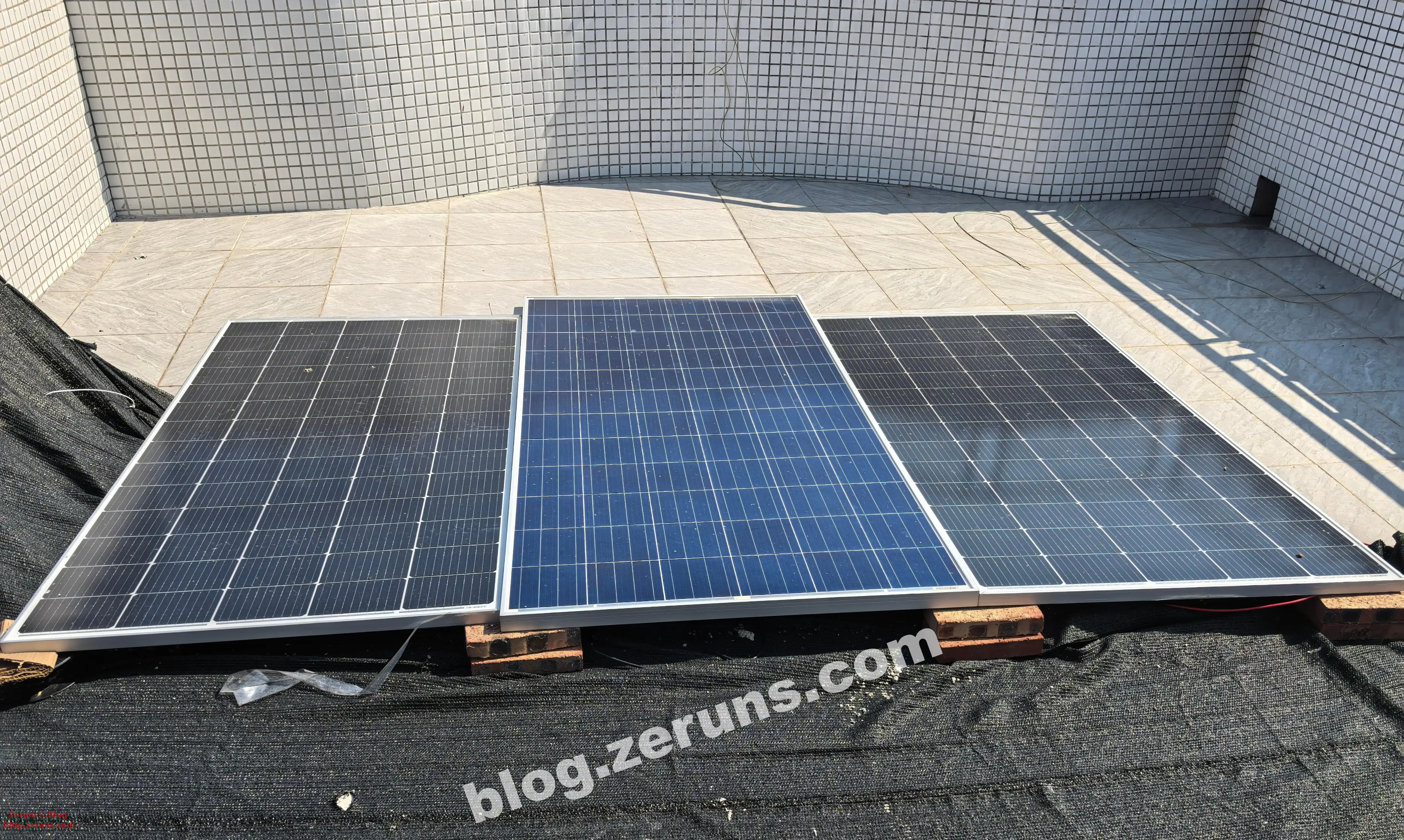
在家里天台自建了一个小型光伏发电站,3块太阳能板日发电量4度。
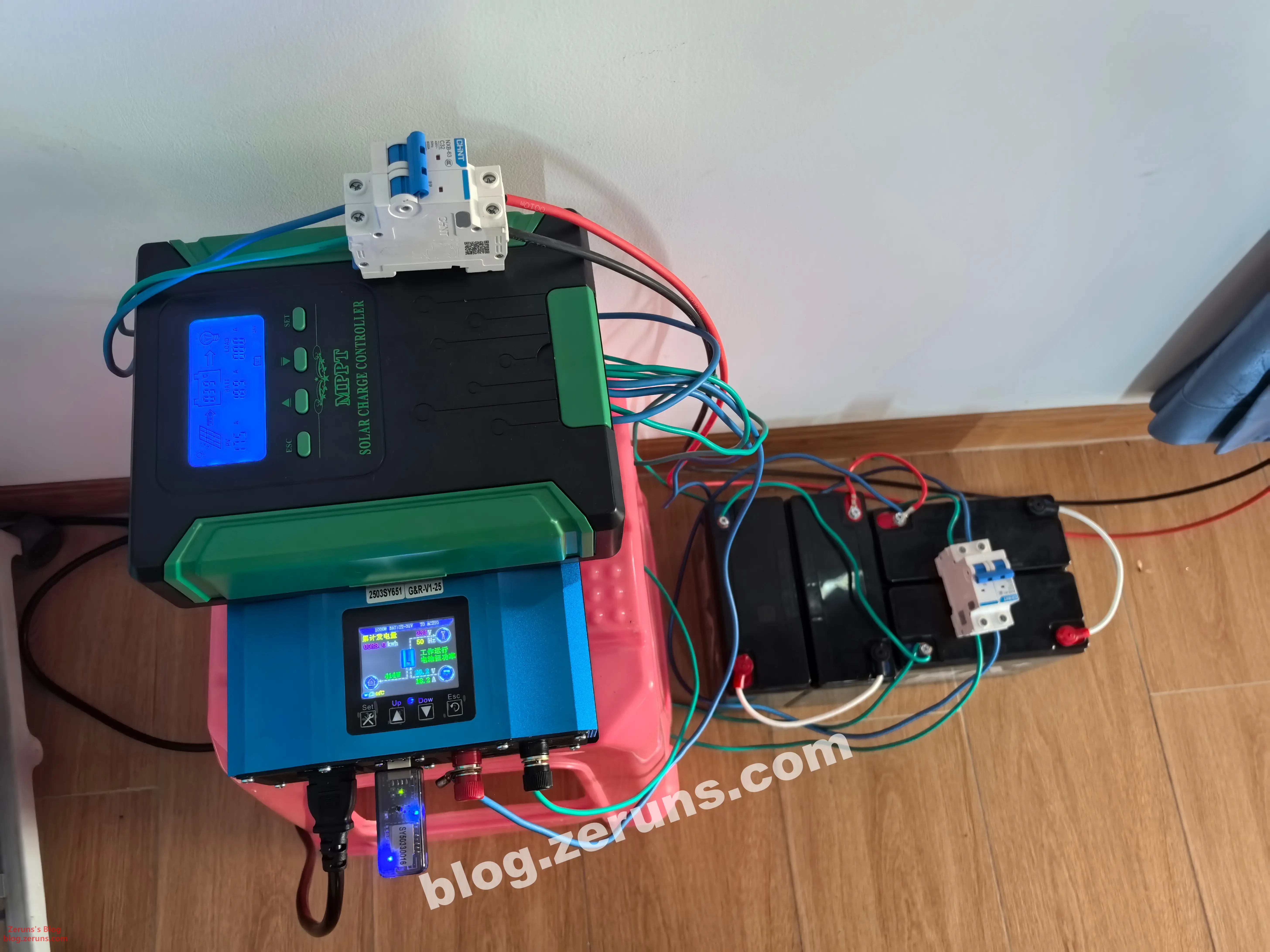
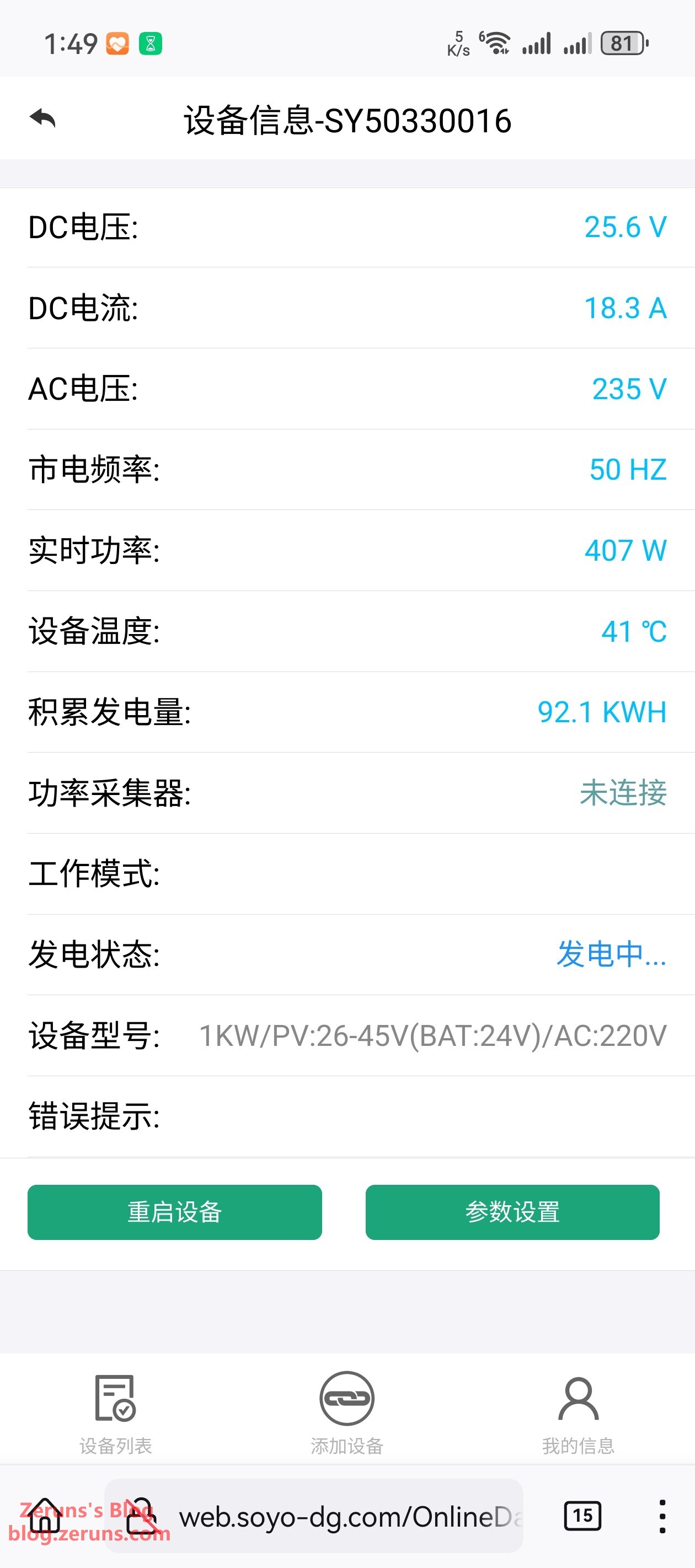
2块350瓦的单晶硅光伏板 + 1块350瓦的多晶硅光伏板,3块板并联,接 MPPT太阳能充电控制器 和 并网逆变器,接了4块12V20AH的铅酸电池做蓄能(2并2串),并网逆变器设置固定输出400瓦(家里的网络机柜平常工作功率在400瓦左右,刚好可以抵消一下这部分用电量)。
没有做防逆流,因为如果要做防逆流就需要从天台拉线到1楼的电箱里,比较麻烦。
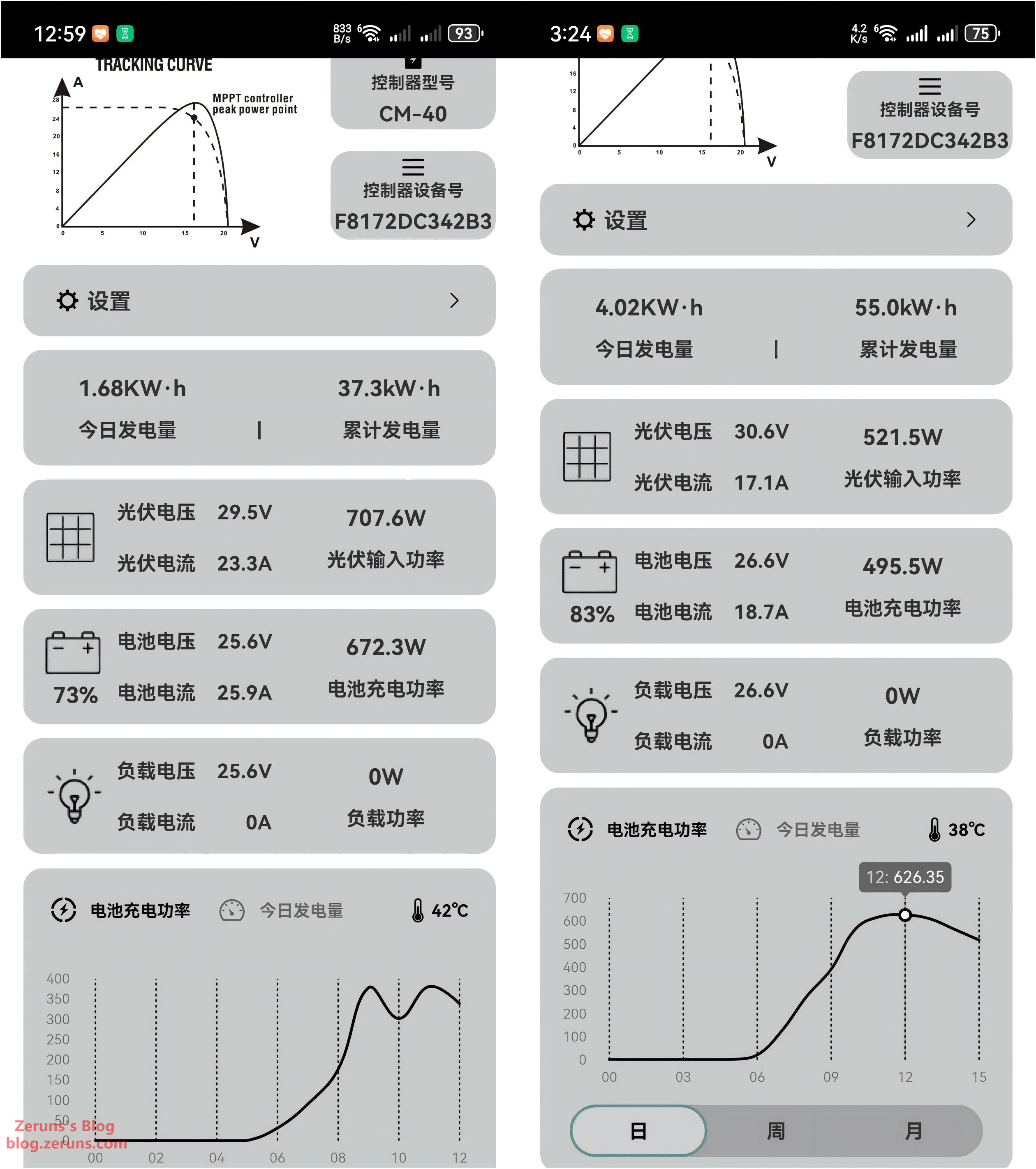
晴天时日发电量4度左右,多云/阴天时日发电量2度左右。
总成本大概两千多元,预计回本周期要3到4年。
- 我的家庭网络机房/机柜,家庭网络方案分享:https://blog.zeruns.com/archives/859.html
- Ultra7-265K 和 技嘉Z890M-AORUS-ELITE-WIFI7主板 简单开箱测评:https://blog.zeruns.com/archives/863.html
- 开源TypeC拓展坞,4个10Gbps的USBA口+2.5G网卡+读卡器:https://blog.zeruns.com/archives/868.html
设备购买地址:
- 单晶硅太阳能板:https://s.click.taobao.com/8wxoRdr
- MPPT太阳能充电控制器:https://s.click.taobao.com/h4nYnor
- 光伏逆变器:https://s.click.taobao.com/tvASnor
- 12V20AH铅酸电池:https://s.click.taobao.com/FBURnor
- 带MC4连接器光伏线缆:https://s.click.taobao.com/q0RYRdr
照片
3块太阳能板:
MPPT控制器和光伏逆变器:
MPPT控制器的APP截图如下,3块板并联的最高功率707瓦左右:
光伏逆变器的网页管理页面截图:
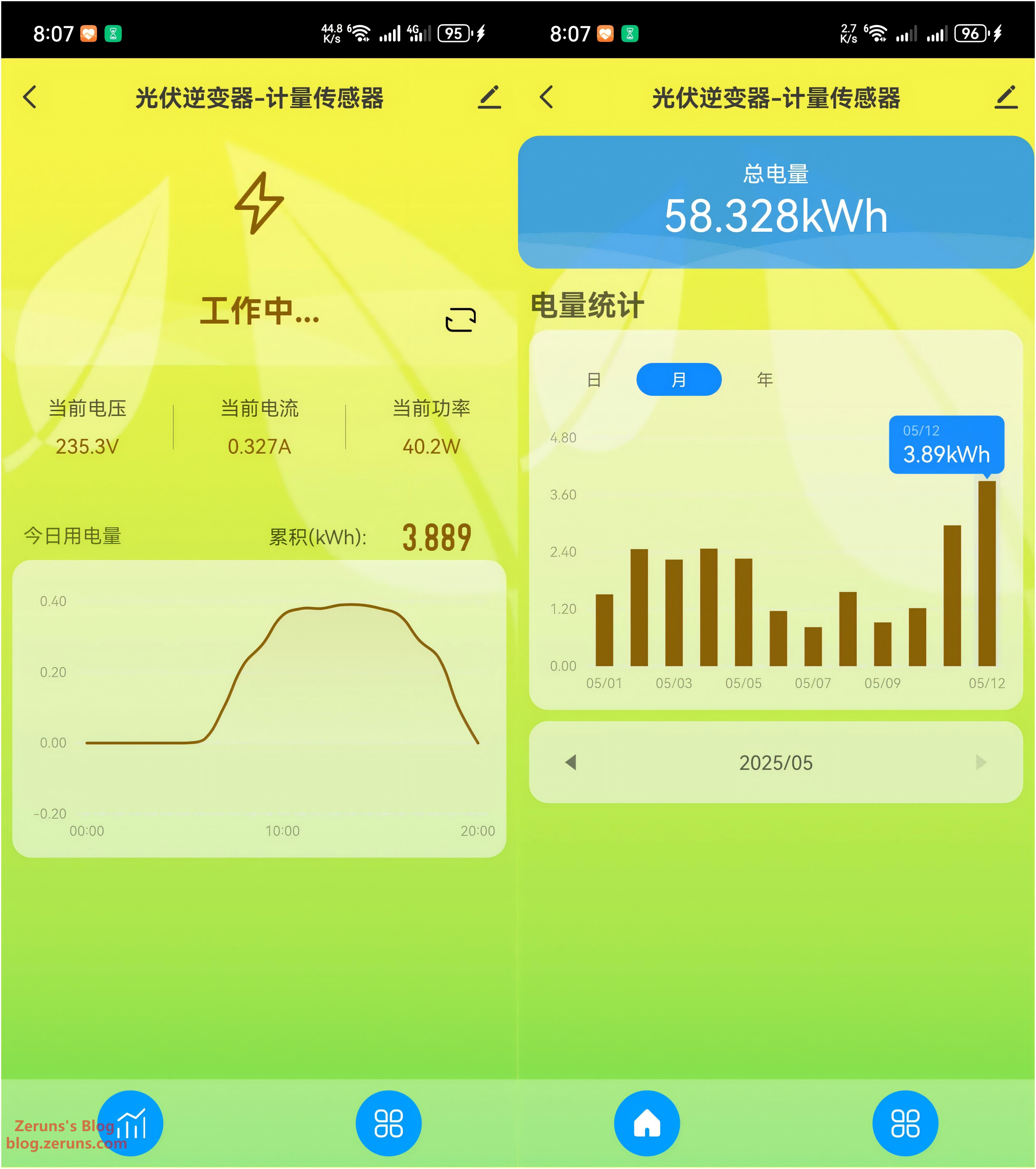
逆变器交流输出的电线上我自己额外接了个电流互感器,统计数据如下图:
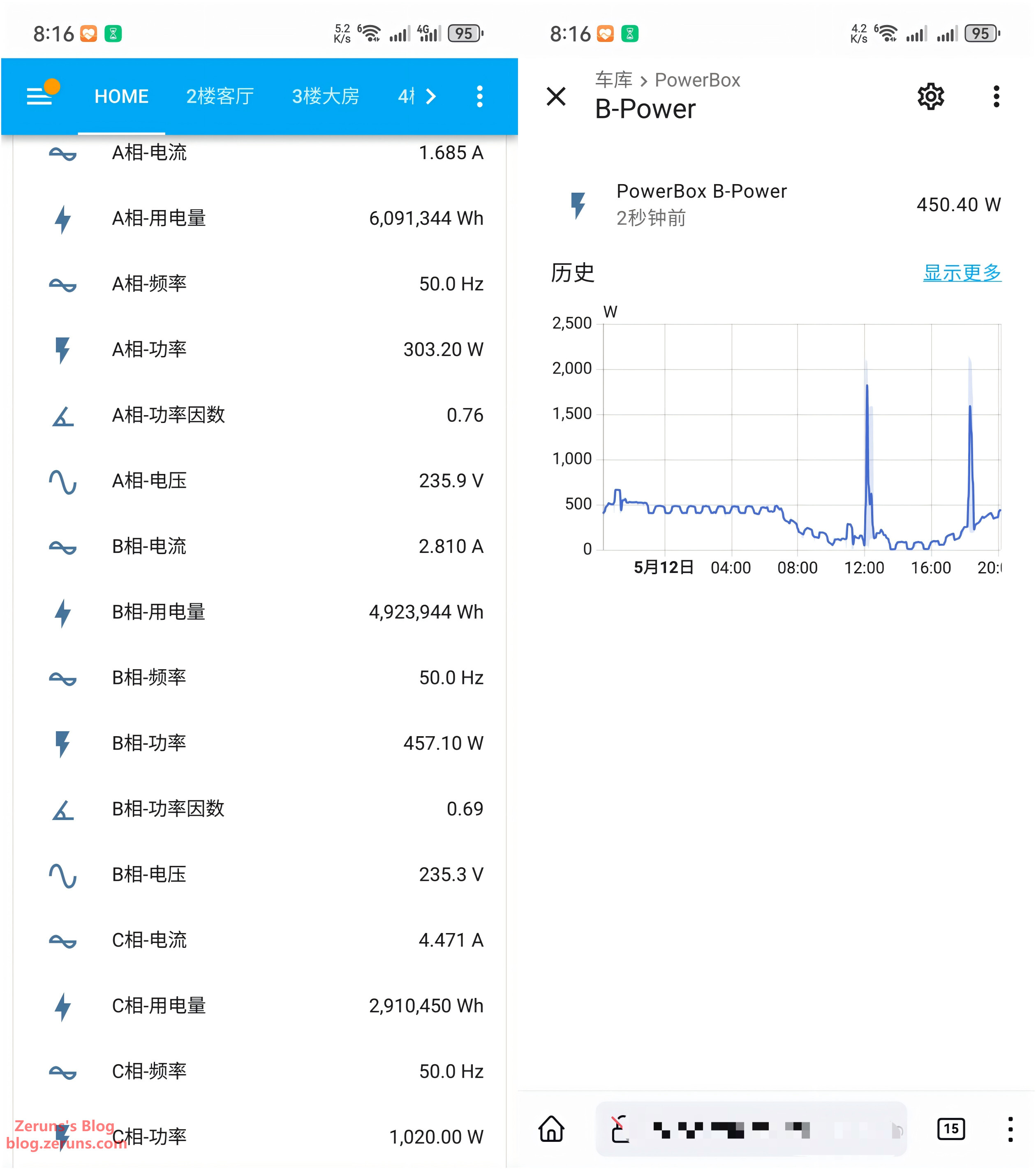
家里总用电功率的波形图,可以看到B相的用电功率在白天时明显下降:
- 做了个三相电量采集器开源出来,可以方便监测家里用电情况: https://blog.zeruns.com/archives/771.html
2025.6.9 补充更新,现在3块板都接了MPPT光伏优化器,并将连接方式从并联改成串联,现在晴天日发电量5度左右!
MPPT光伏优化器是安装在光伏组件端的电力电子设备,核心功能是通过最大功率点跟踪(MPPT)技术,让每个组件独立工作于最佳功率点。其作用主要包括:
- 提升系统发电量:解决组件遮挡、衰减差异等问题,避免组串内“短板效应”,较传统方案可提升5%-30%发电量。
- 优化系统设计:支持组件差异化配置,灵活适配复杂安装环境(如屋顶朝向、倾角不一),降低设计限制。
- 增强系统可靠性:单点故障不影响其他组件,减少串联电路风险,延长系统寿命。
- 智能监控与维护:实时监测单个组件状态,快速定位故障,简化运维。
适用于分布式光伏系统、老旧电站改造等场景,通过分布式优化替代传统集中式管理,提升光伏系统的效率与经济性。
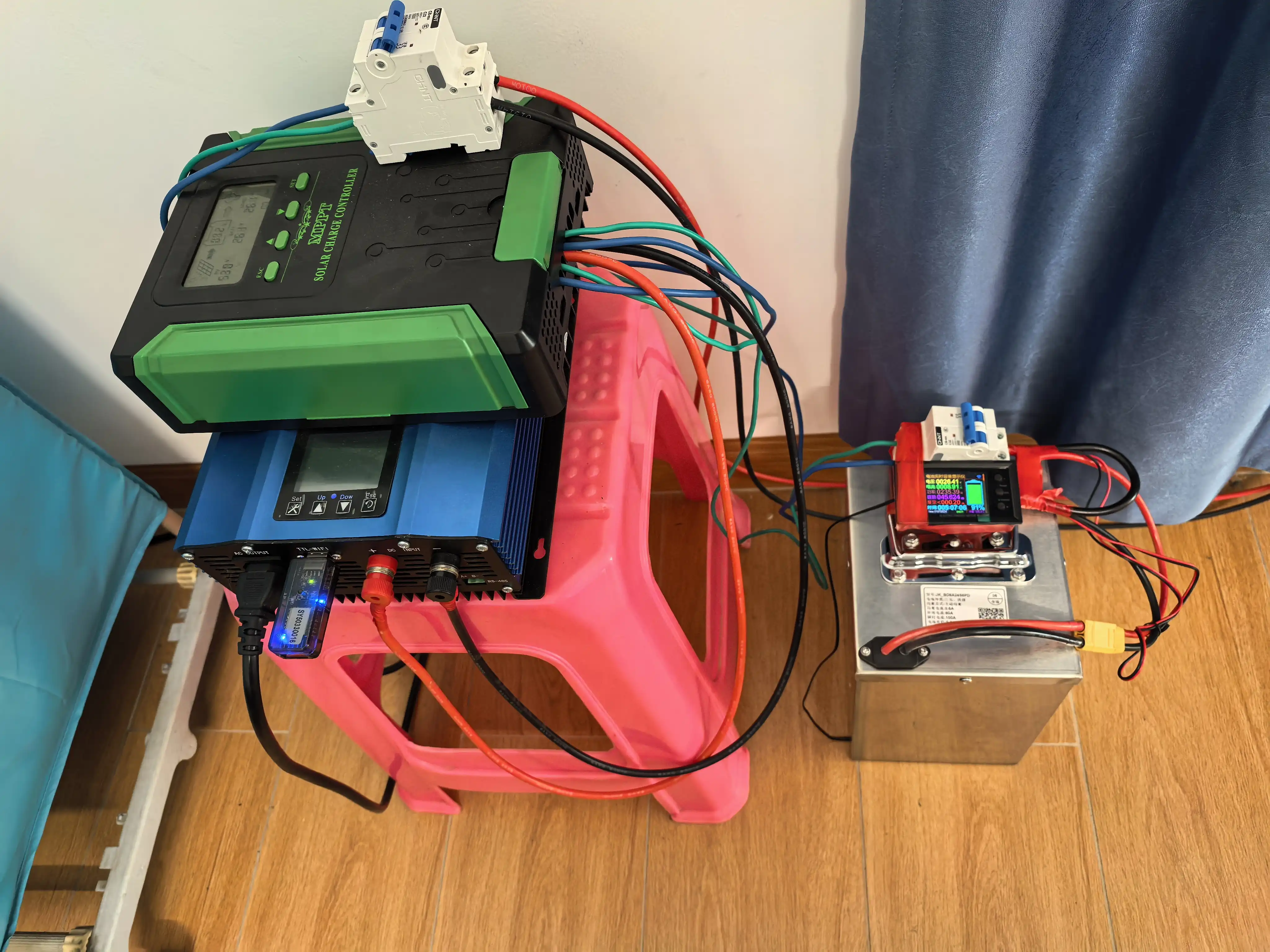
2025.11.3 补充更新,多加了一块350W的单晶硅光伏板串联进去,电池由铅酸电池换成磷酸铁锂(闲鱼上买的成品电池组,含保护板,700元1.2度电容量),原先的铅酸电池寿命以及大幅下降的,铅酸电池循环寿命太短了,还是得磷酸铁锂才行。
推荐阅读
- 高性价比和便宜的VPS/云服务器推荐: https://blog.zeruns.com/archives/383.html
- 我的世界开服教程:https://blog.zeruns.com/tag/mc/
- DeepSeek-R1私有化部署教程 Ollama+OpenWebUI :https://blog.zeruns.com/archives/853.html
- Flarum论坛网站搭建教程,零基础搭建论坛社区网站,Flarum主题和插件安装教程:https://blog.zeruns.com/archives/866.html
- 爱快 IK-Q3000 WiFi6无线路由器 简单开箱评测和拆解:https://blog.zeruns.com/archives/860.html
- 雨云 RCA云应用(基于K8s) 搭建PHP网站的教程:https://blog.zeruns.com/archives/869.html
English Version of the Article: https://blog.zeruns.top/archives/55.html