RIGOL DHO914S 12-bit Digital Oscilloscope – Unboxing and Brief Review
I found my old oscilloscope inconvenient to use, so I decided to upgrade. I chose RIGOL’s DHO914S, mainly because of its portability, PD (Power Delivery) charging support, Bode plot functionality, and 12-bit vertical resolution. If you don’t need the features I mentioned above, I’d recommend considering the Siglent SDS804X instead (apparently its bandwidth can even be unlocked via software), which offers better cost-performance.
Hantek DSO2D15 Desktop Oscilloscope – Unboxing and Review: https://blog.zeruns.com/archives/652.html
Zhongchuang ET4410 Desktop LCR Meter – Unboxing and Review: https://blog.zeruns.com/archives/763.html
DHO914S Unboxing Video: https://www.bilibili.com/video/BV1Am411D7MH/
Electronics/Microcontroller Technical Discussion Group: 2169025065
DHO914S Features and Specifications
- Ultra-low inherent noise for cleaner signals; small signals are clearly visible
- Full series provides true 12-bit hardware high resolution
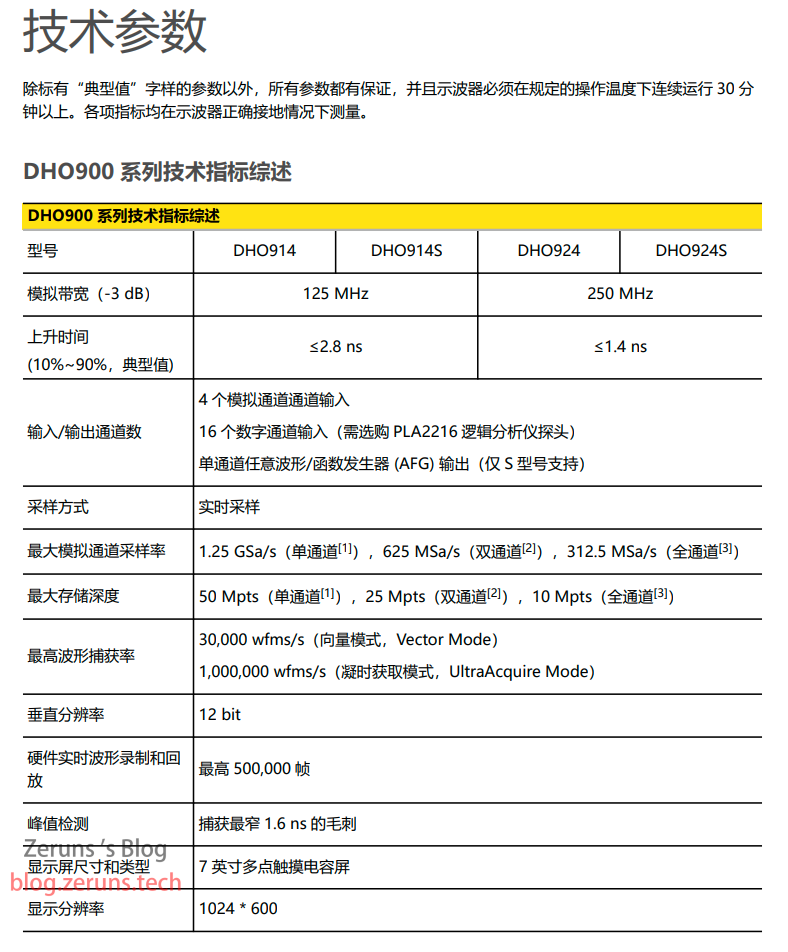
- Up to 250 MHz analog bandwidth (DHO914S has 125 MHz), with 4 analog channels
- Standard 16 digital channels (requires optional logic probe PLA2216)
- Maximum real-time sampling rate up to 1.25 GSa/s
- Maximum record length up to 50 Mpts
- Vertical sensitivity range from 200 μV/div to 10 V/div
- Equipped with “Ultra Acquire” mode, achieving up to 1,000,000 wfms/s waveform capture rate
- Supports 256-level grayscale digital phosphor display
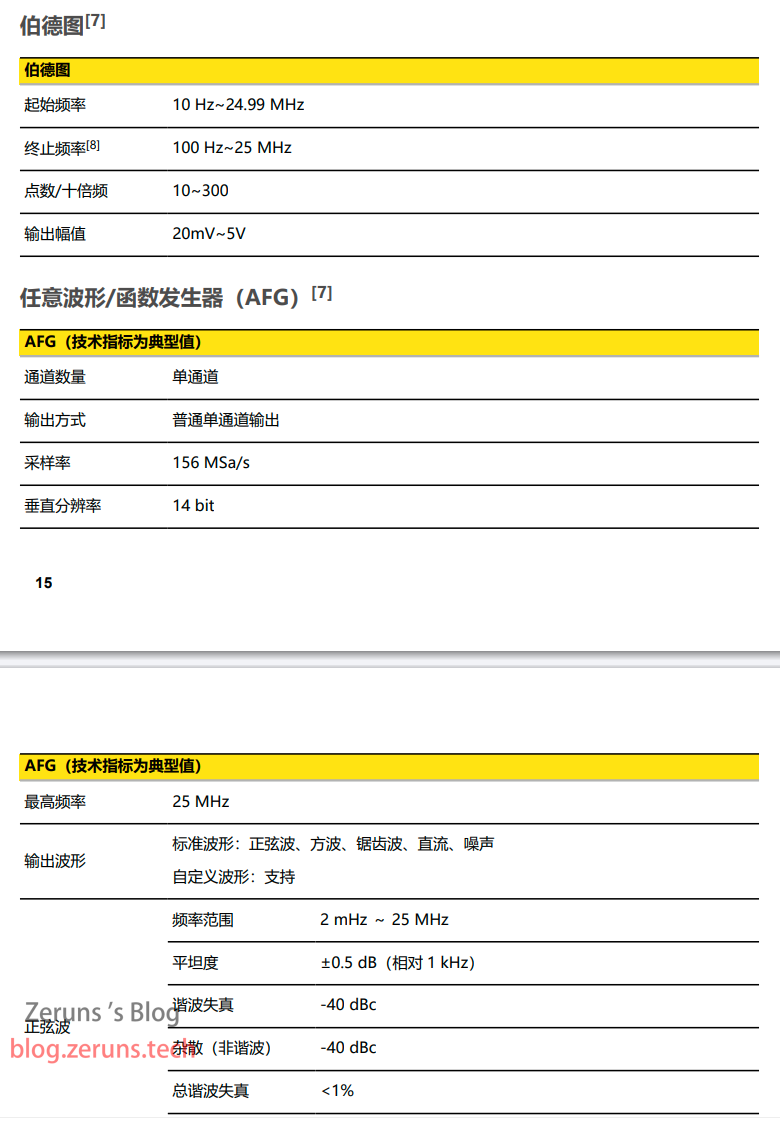
- Integrated functions include arbitrary/function generator, Bode plot analysis, histogram, and digital signal analysis
- Supports waveform search and navigation for quickly locating signal anomalies
- 7-inch 1024 × 600 HD touchscreen display
- Newly designed Flex Knob for more intuitive user interaction
- Standard USB Device & Host, LAN, and HDMI interfaces across all models
- Innovative and compact industrial design for convenient operation
- Supports online firmware updates
The DHO900 Series oscilloscopes are RIGOL’s newly launched high-performance, budget-friendly digital oscilloscopes. Despite their compact size, they offer excellent performance including a 1,000,000 wfms/s waveform capture rate (in Ultra Acquire Mode), 50 Mpts memory depth, 12-bit high resolution, and low noise.
The DHO900 supports 16 digital channels, enabling both analog and digital signal analysis in a single device—ideal for embedded design and testing applications. It also provides advanced features such as automatic serial and parallel bus analysis and Bode plot analysis at an entry-level price, meeting the daily needs of R&D, education, and scientific research.
Main Specifications:
Official DHO900 Series Website: https://url.zeruns.com/QbxEs
DHO900 Series Manuals (Datasheet, Programming Guide, User Manual, etc.): https://url.zeruns.com/xcqDq
Buy DHO914S on Taobao: https://s.click.taobao.com/UOtoayt
Buy DHO914S on JD.com: https://u.jd.com/jq7wRGl
Buy Siglent SDS804X: https://u.jd.com/jq7tV31
Siglent SDS804X oscilloscope combined with the SAG1021I arbitrary waveform generator option can also achieve Bode plot functionality: https://u.jd.com/jQ7QMPA
Unboxing
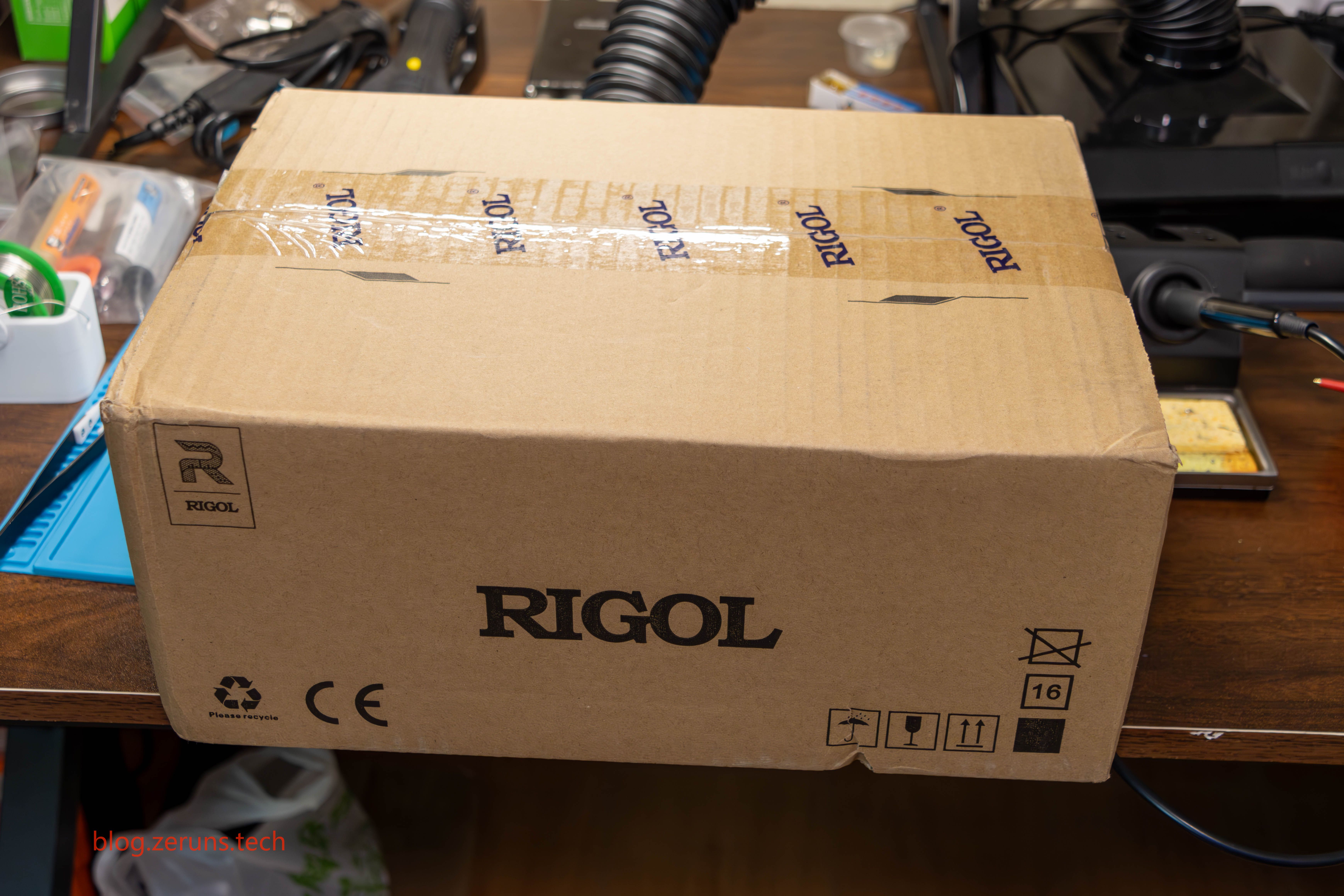
Front view of the box:
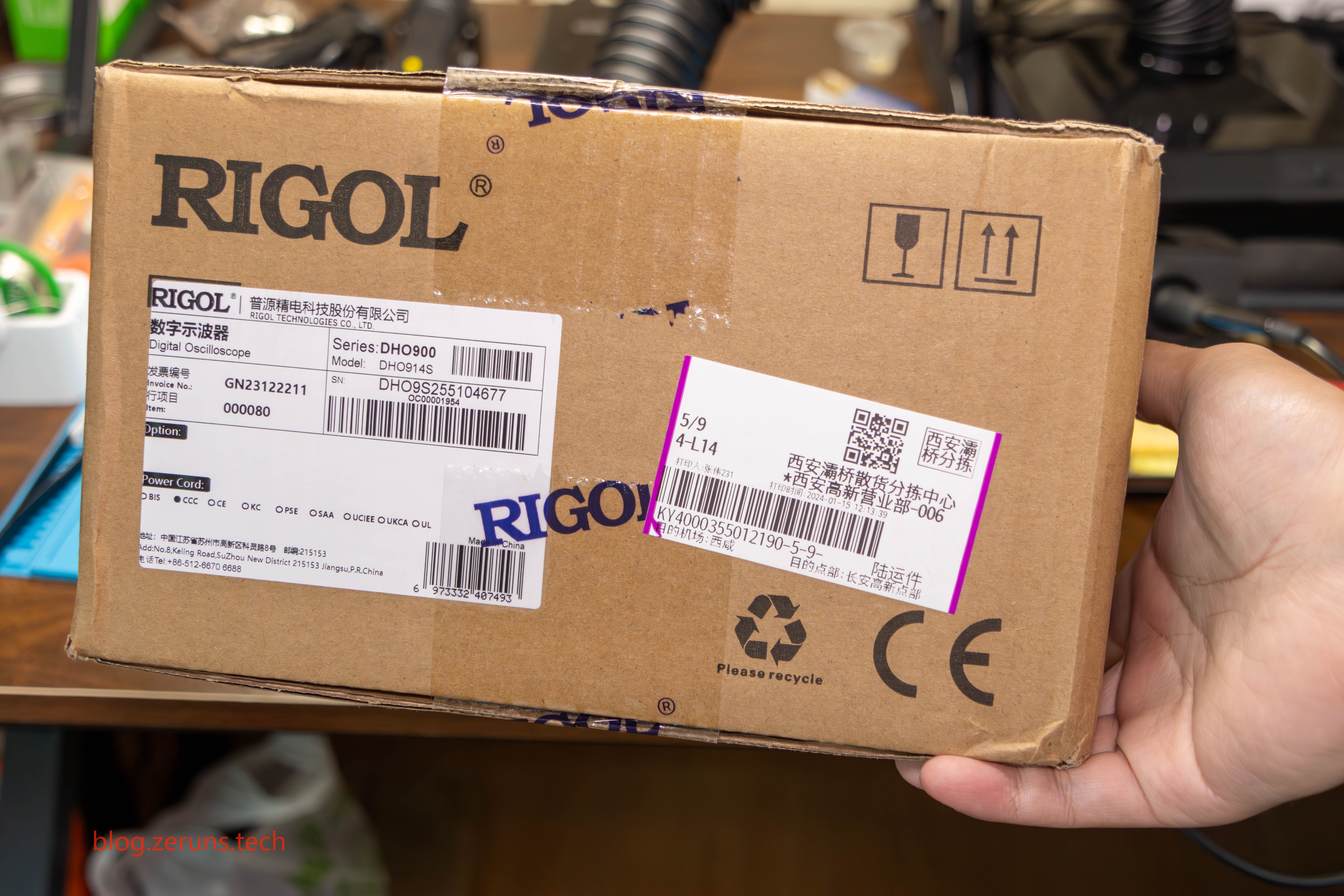
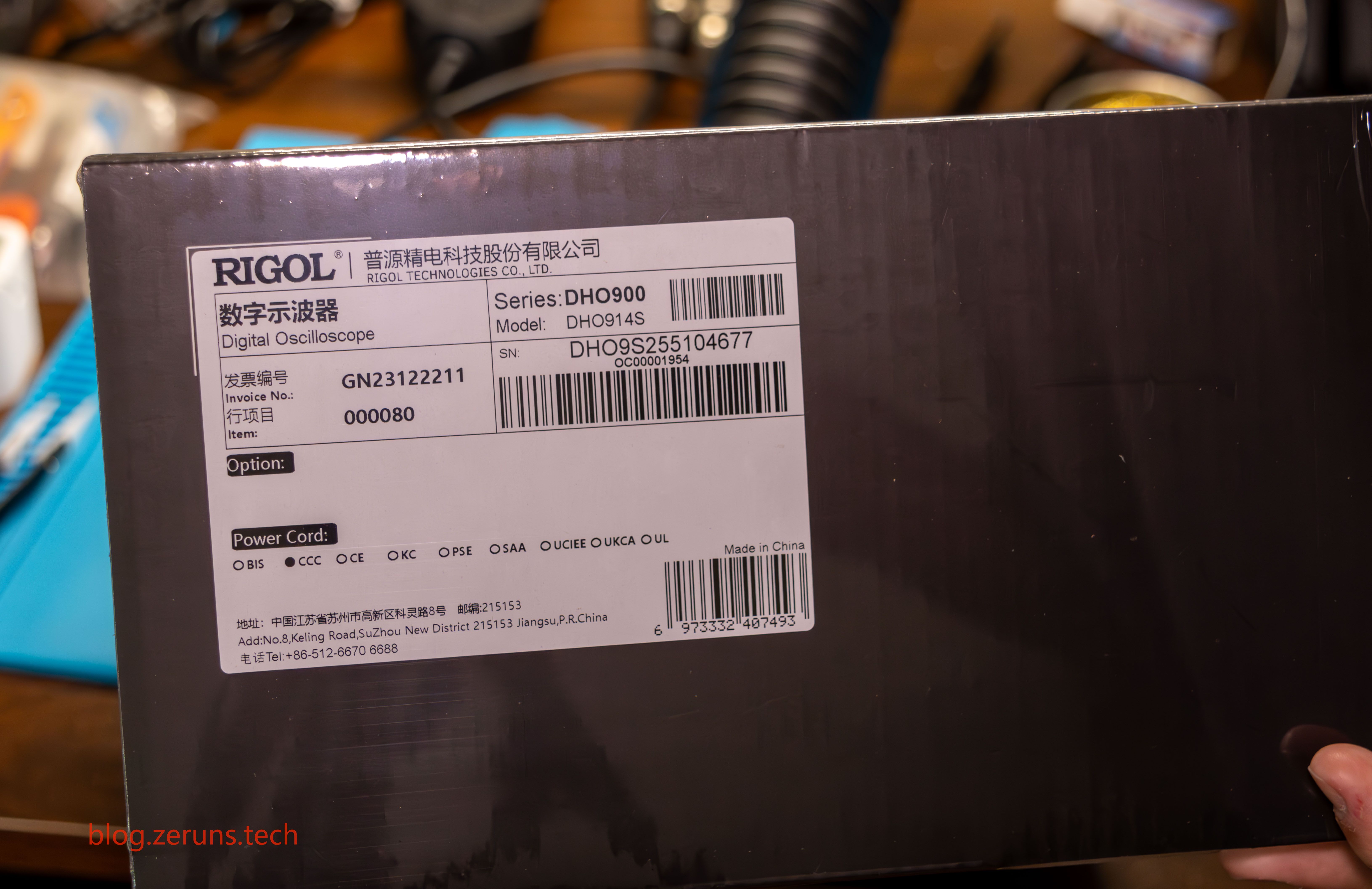
Label on the side of the box, showing product information and SN code:
There is another inner box inside:
Label on the side of the inner box:
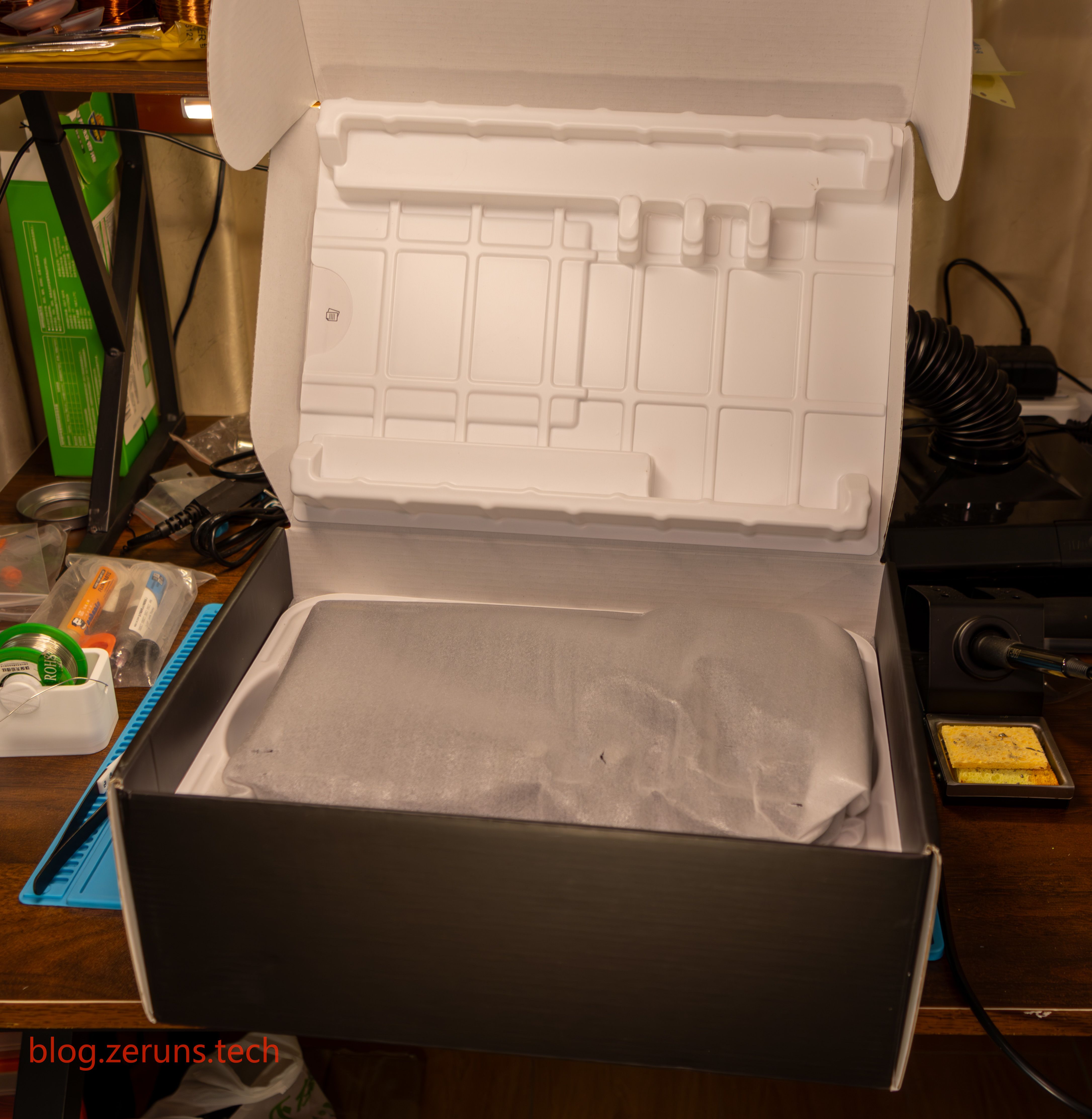
Opening the box — the manual, warranty card, and other documents are tucked into the lid:
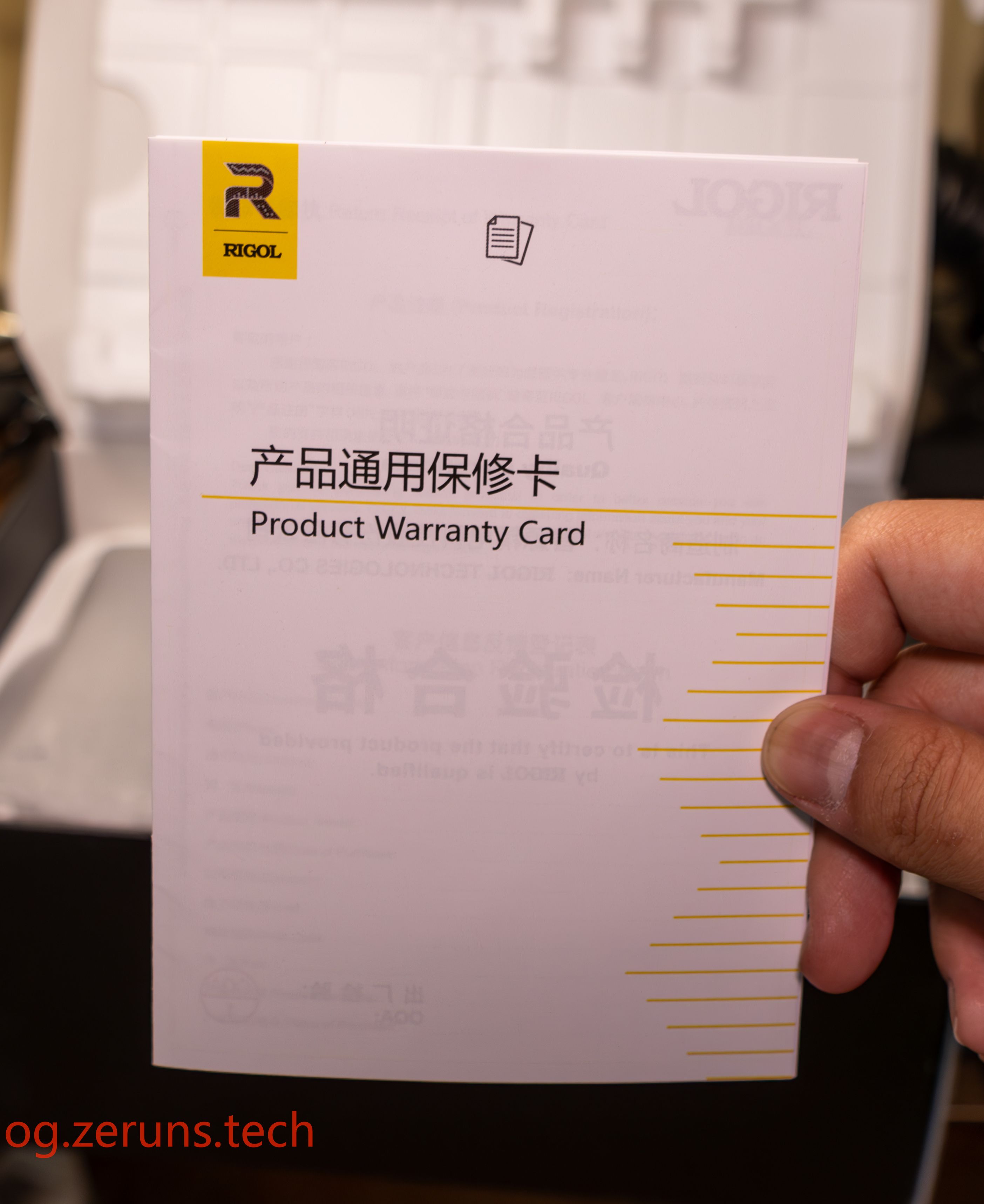
Warranty Card
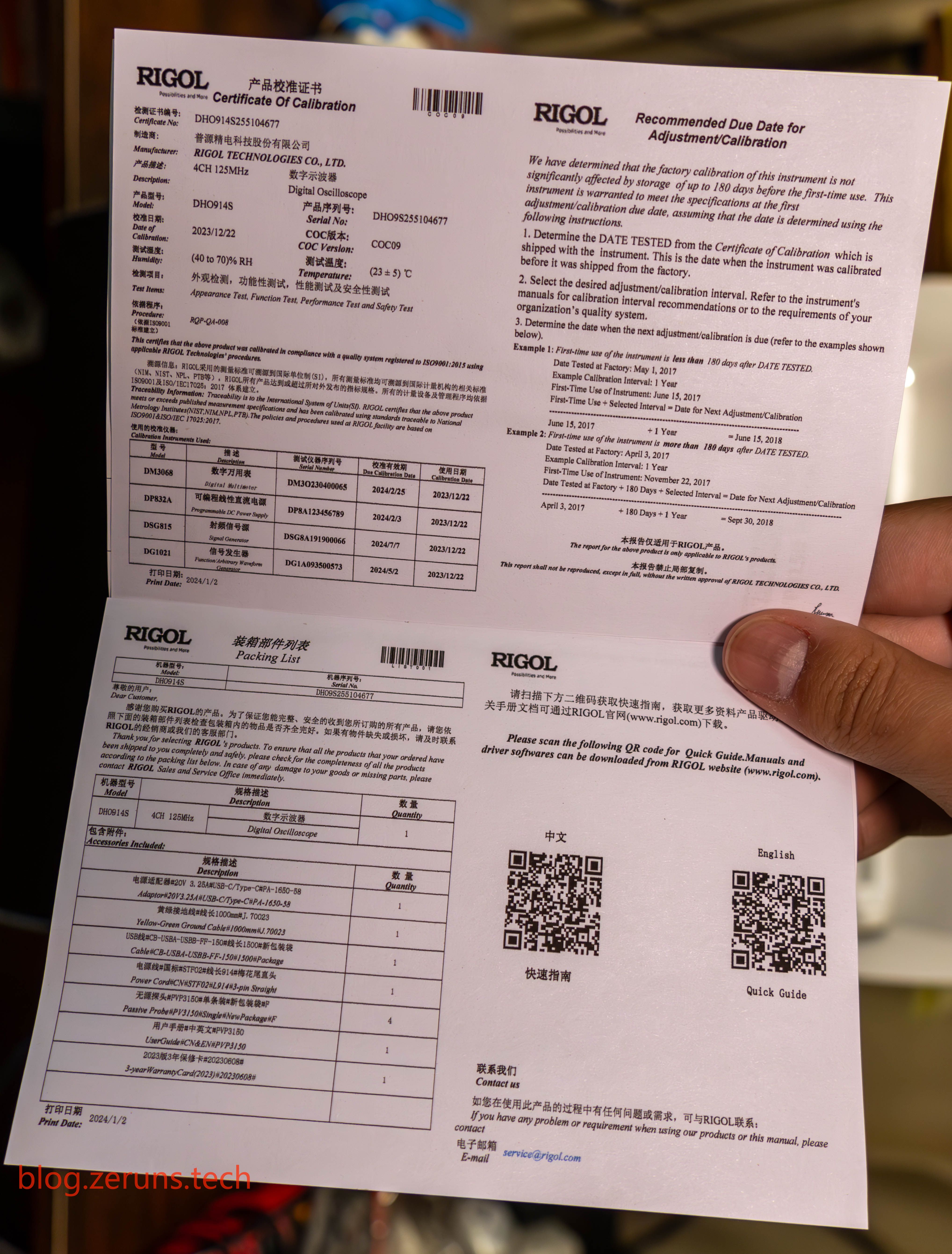
Product Calibration Certificate
Front view of the oscilloscope, showing the power button, USB port, digital channels for the logic analyzer, BNC connectors for four channels, various function buttons, and adjustment knobs.
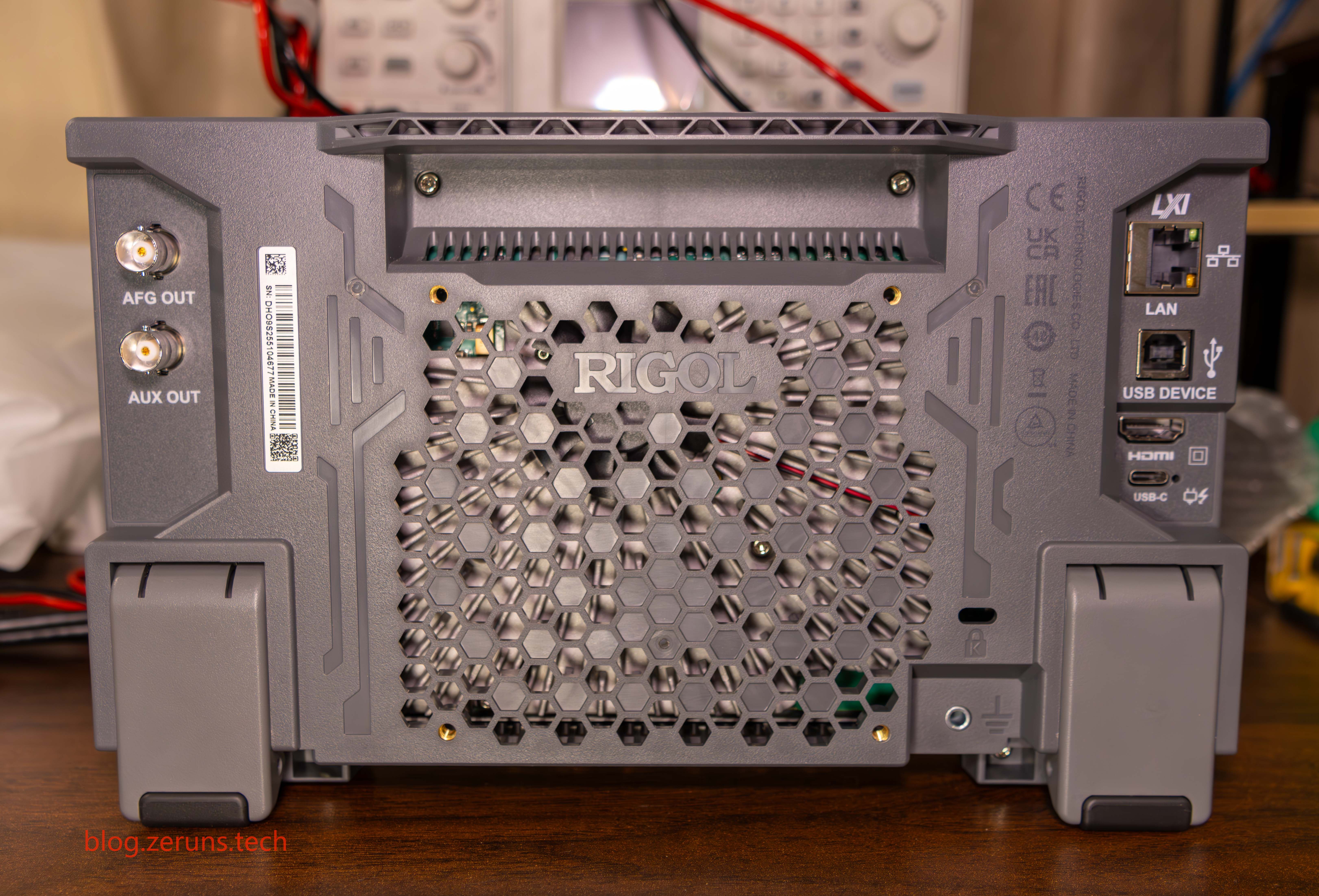
Back view of the oscilloscope, featuring output interfaces for the function generator and trigger signal, Ethernet port, USB port, HDMI port, Type-C power input, ground terminal, and VESA screw holes allowing it to be mounted on a monitor stand.
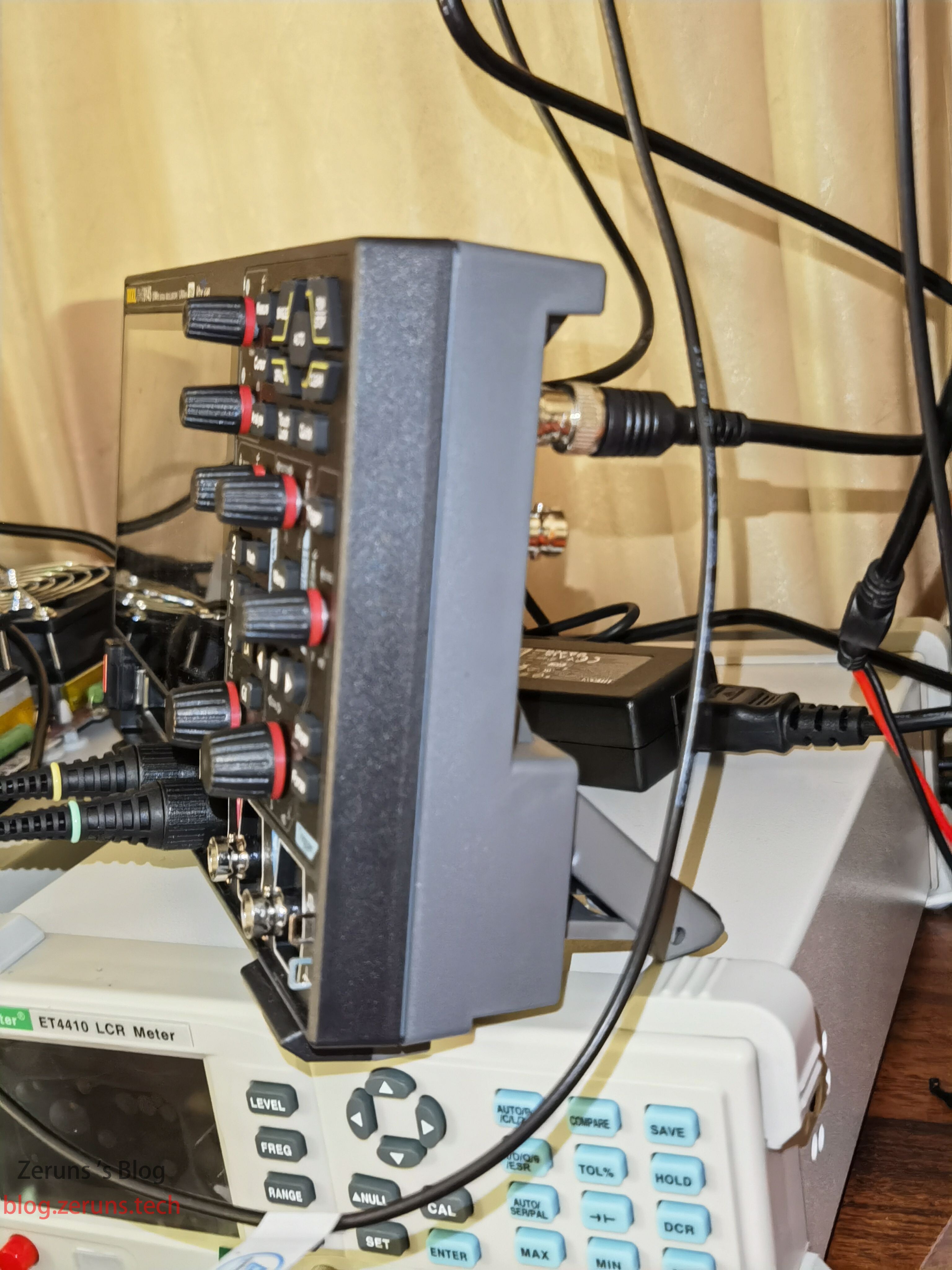
Side view of the oscilloscope
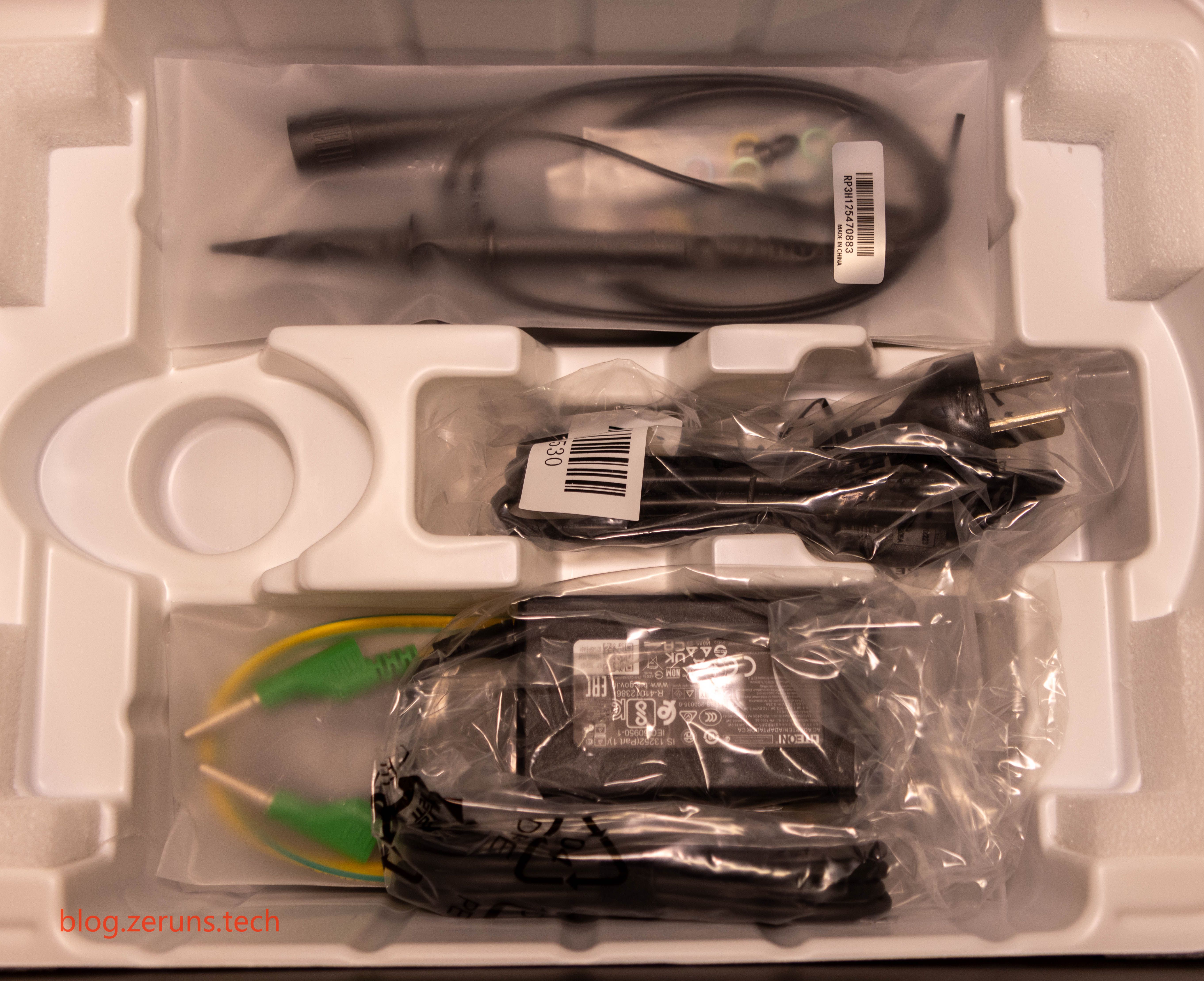
Accessories: four 150MHz probes (model PVP3150), power cable, power adapter, grounding wire, and data cable.
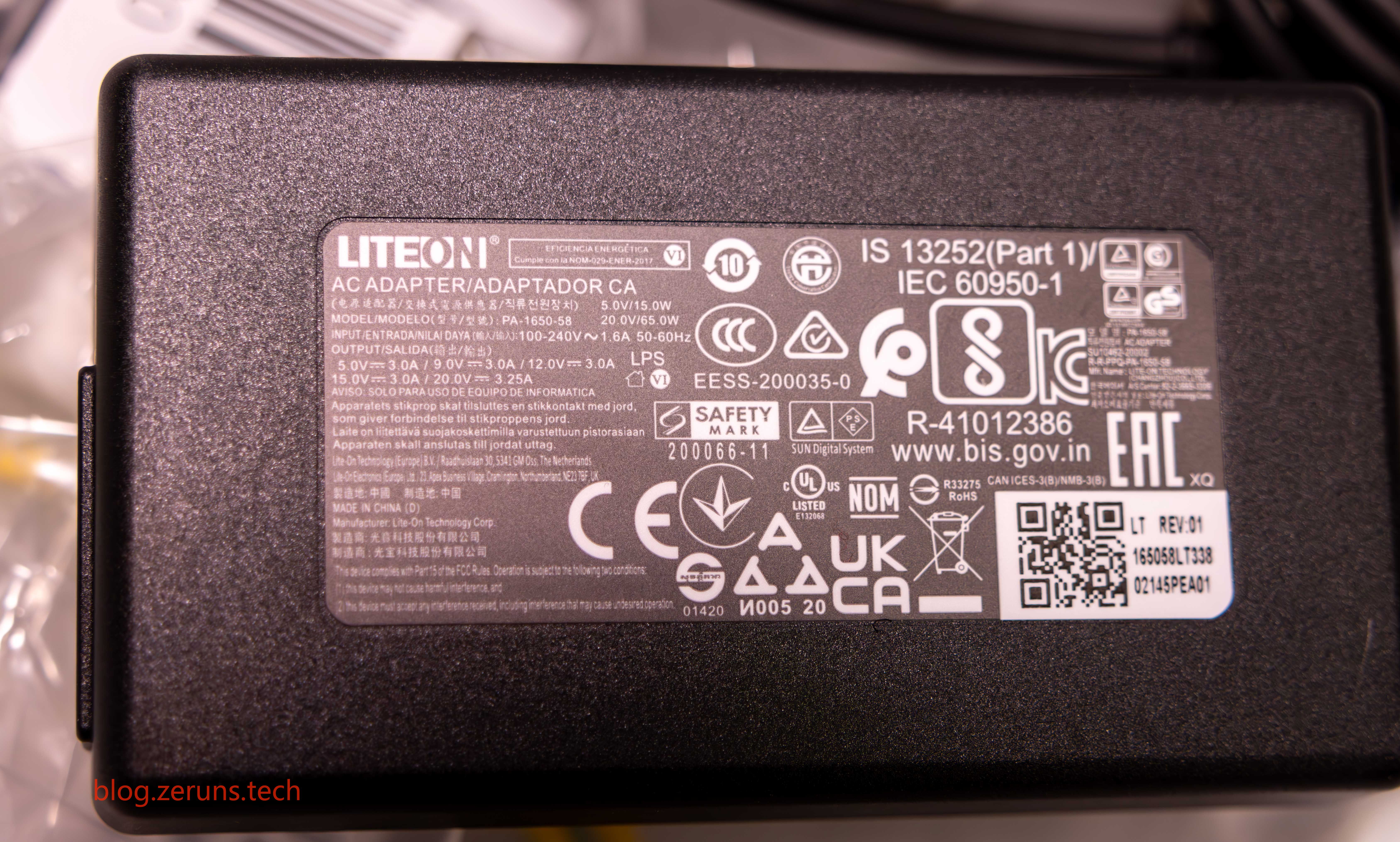
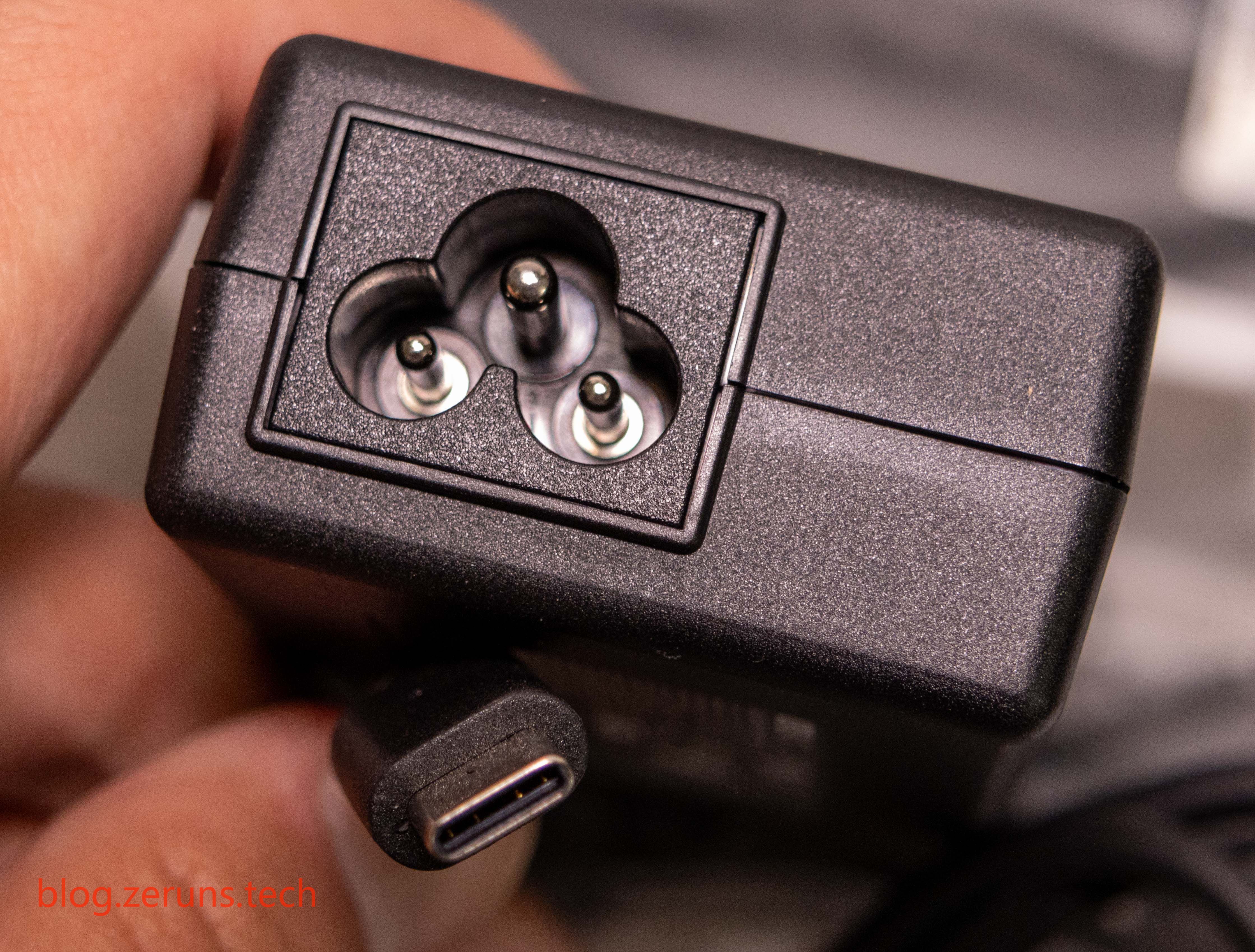
LITEON power adapter, model PA-1650-58. LITEON is a well-known brand in the power supply industry. The input uses a three-pin梅花 (梅花 =梅花-shaped connector), and the output is via a Type-C connector supporting the PD protocol with a maximum power of 65W. It can output DC 5V/3A, 9V/3A, 12V/3A, 15V/3A, and 20V/3.25A. Input voltage range is AC 100–240V.
I tested this power adapter and found that the metal shield of the Type-C connector and the negative output terminal are not connected to ground (i.e., they are isolated). Therefore, when using the original power adapter, the oscilloscope can safely measure AC mains without risk of short circuit.
Power Consumption Test
When connected to a PD-compatible charger, the oscilloscope’s trigger output voltage was measured at 15V, with a standby current of 14.99mA.
With all four channels enabled, signal generator turned on, and Math functions active, the oscilloscope drew an input current of 2.644A, consuming approximately 39 watts.
Feature Demonstration
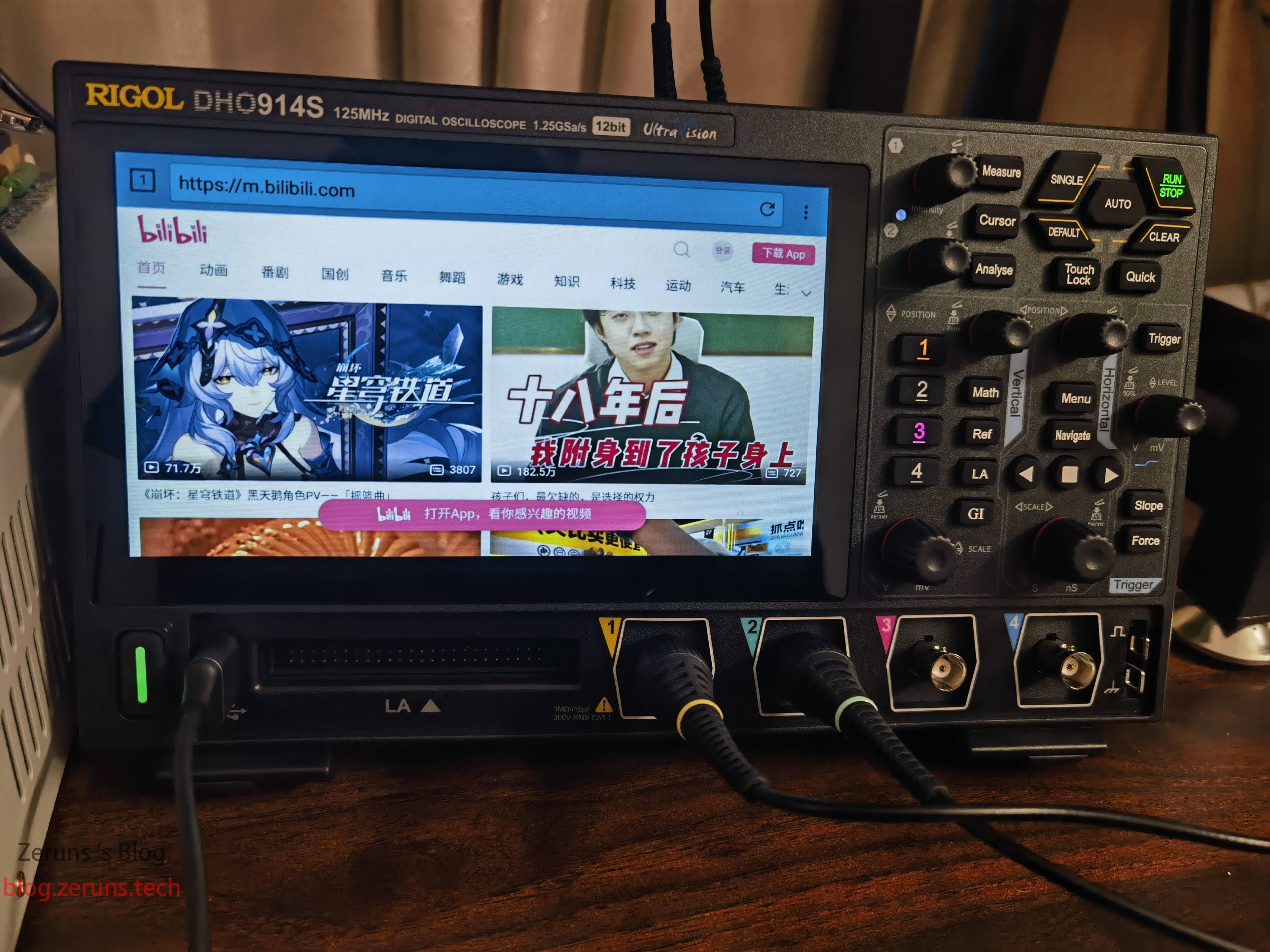
The oscilloscope runs Android 7.1.2 and is powered by an RK3399 processor.
Connect a keyboard to the front USB port, then press Win+N to open the dropdown menu. Click the settings icon to access the Android system settings.
Press Win+B to launch the built-in web browser.
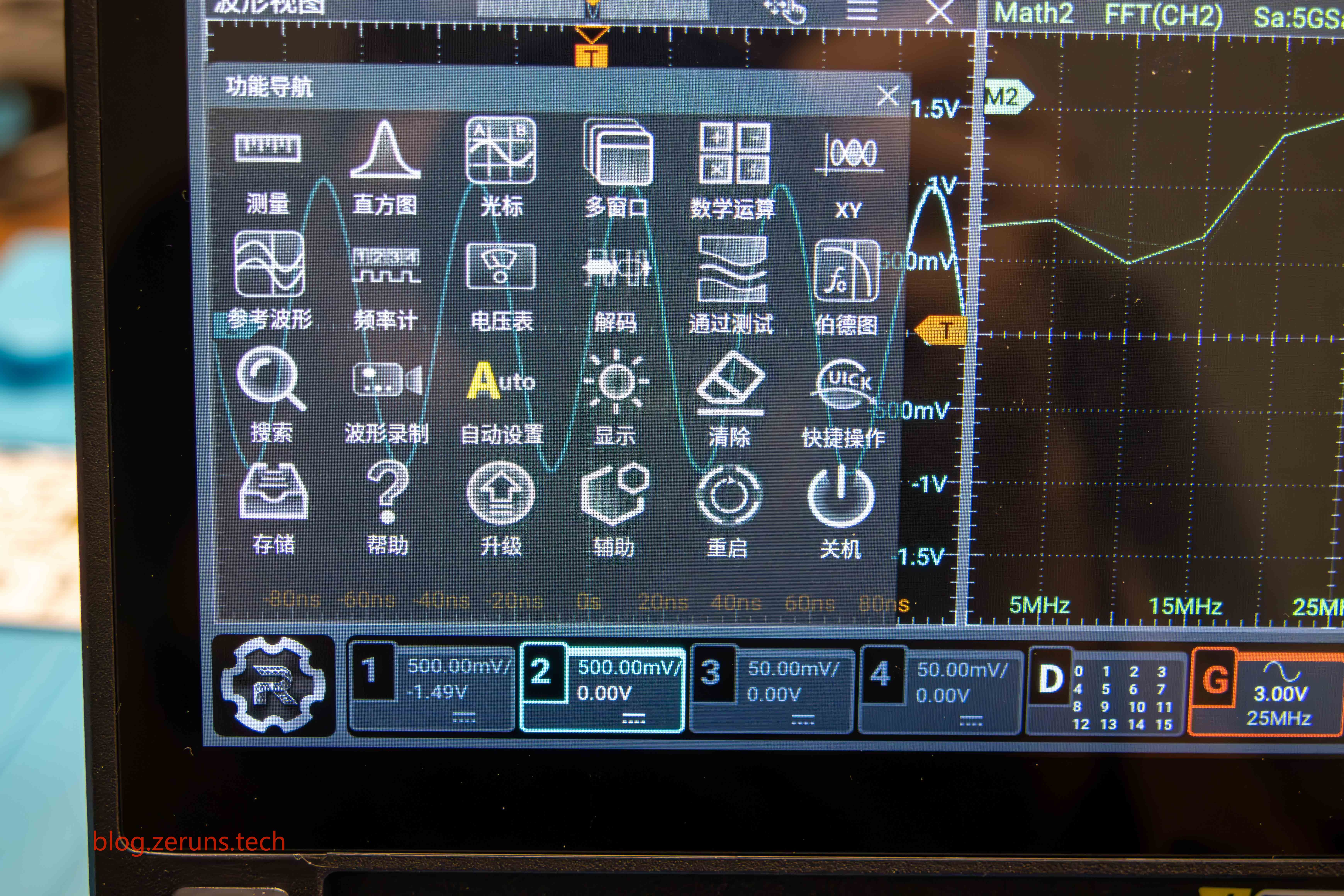
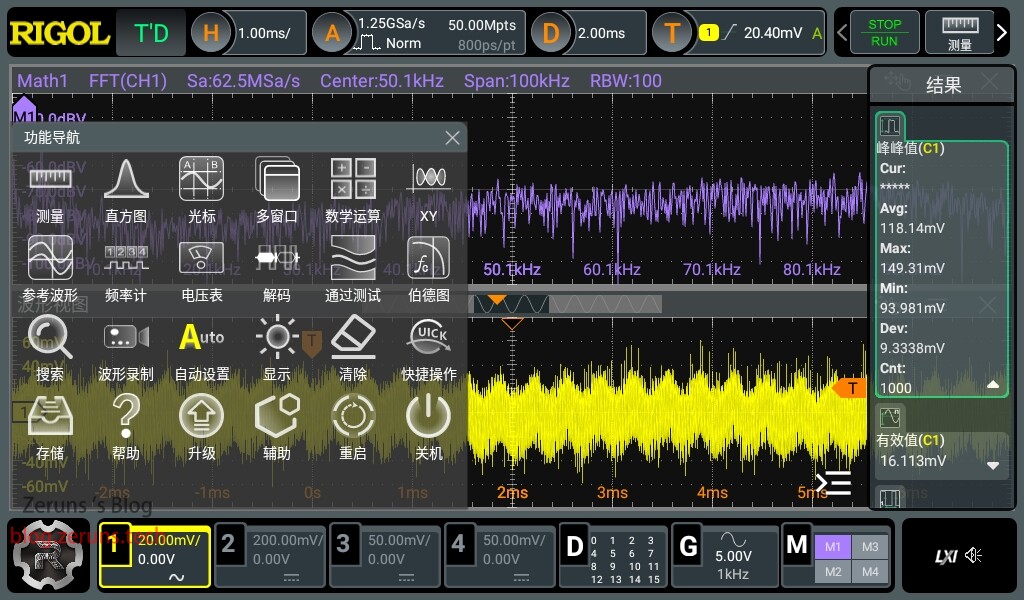
Function Menu
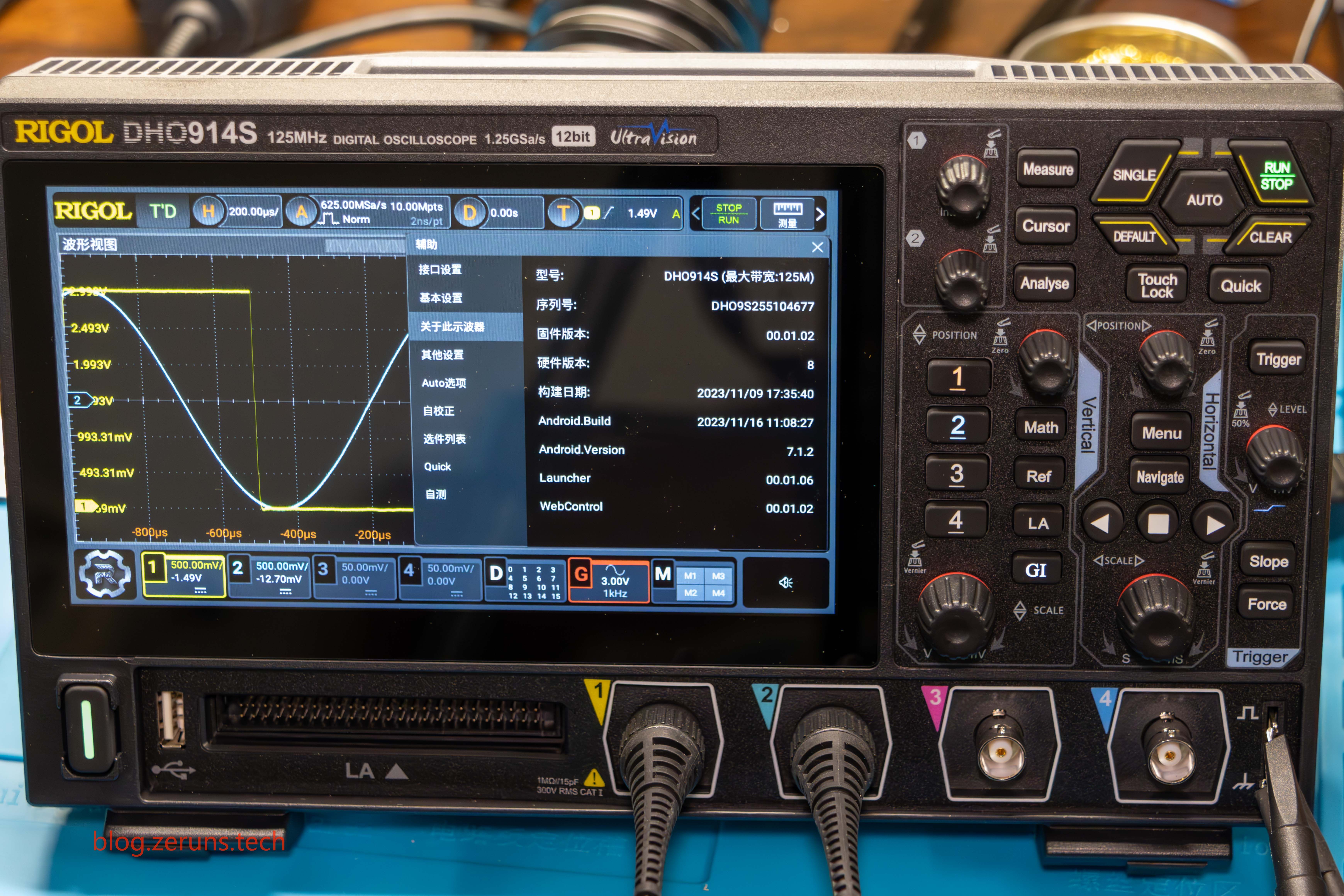
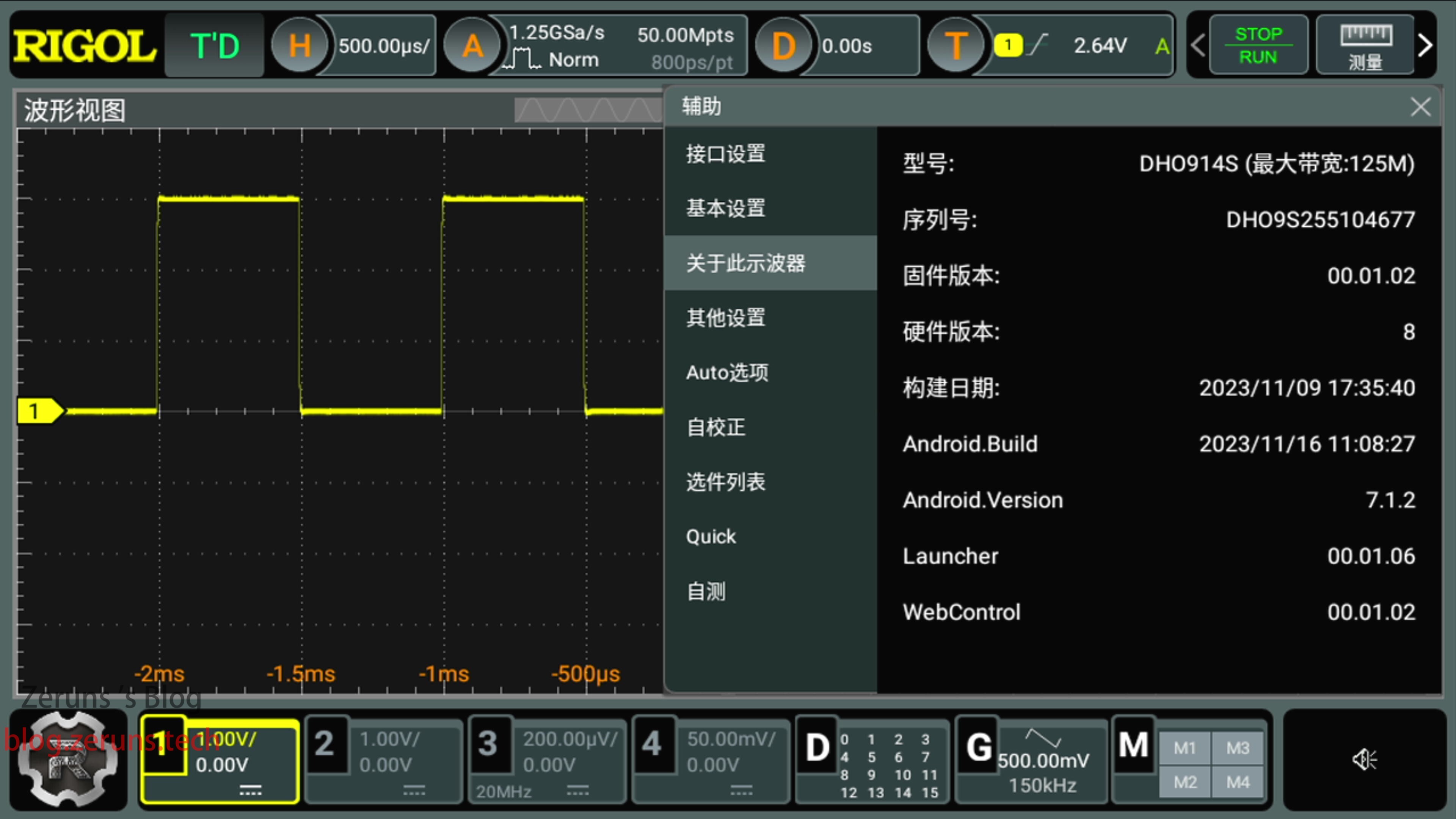
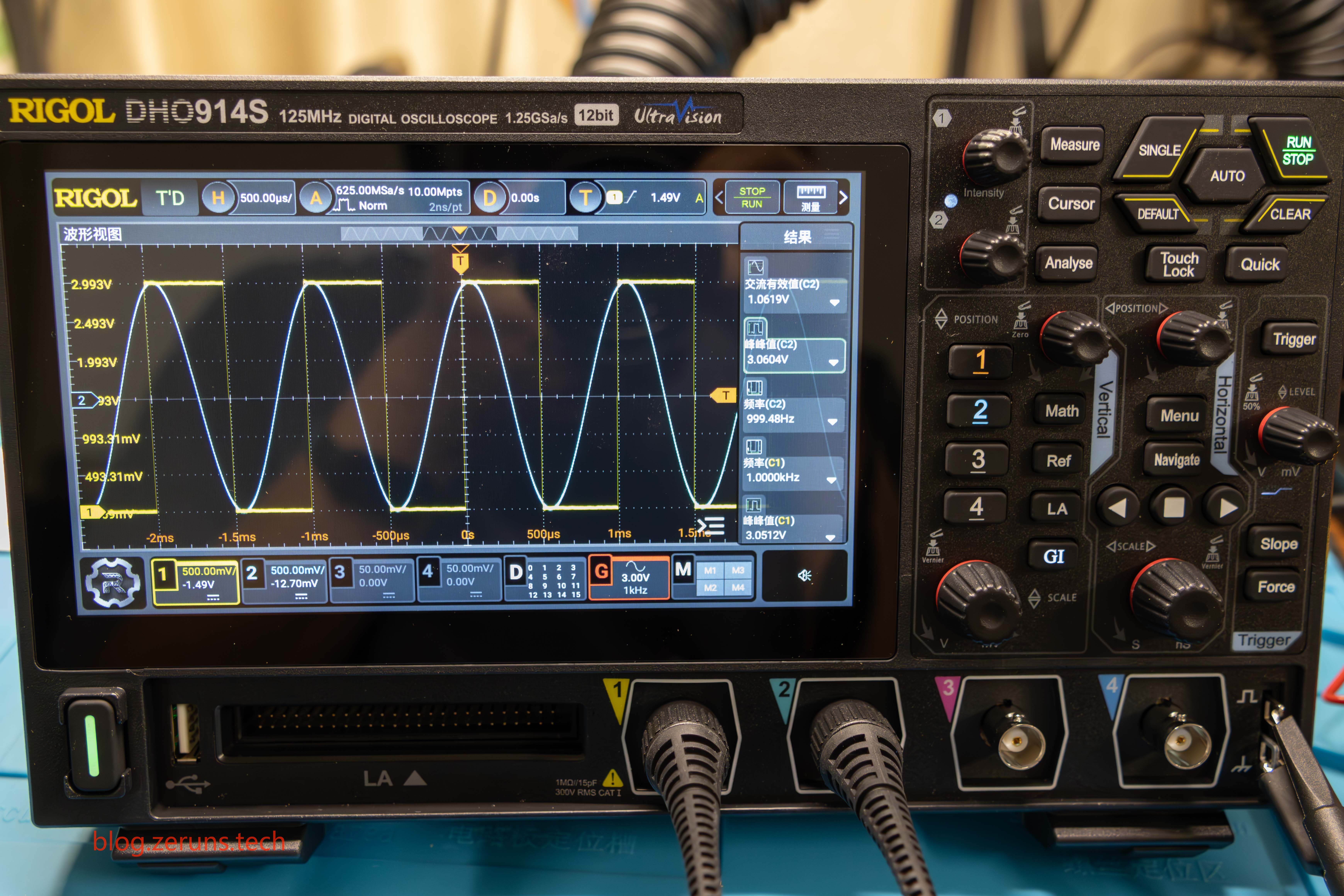
Testing the built-in 1kHz square wave output and setting the signal generator to output a 1kHz sine wave.
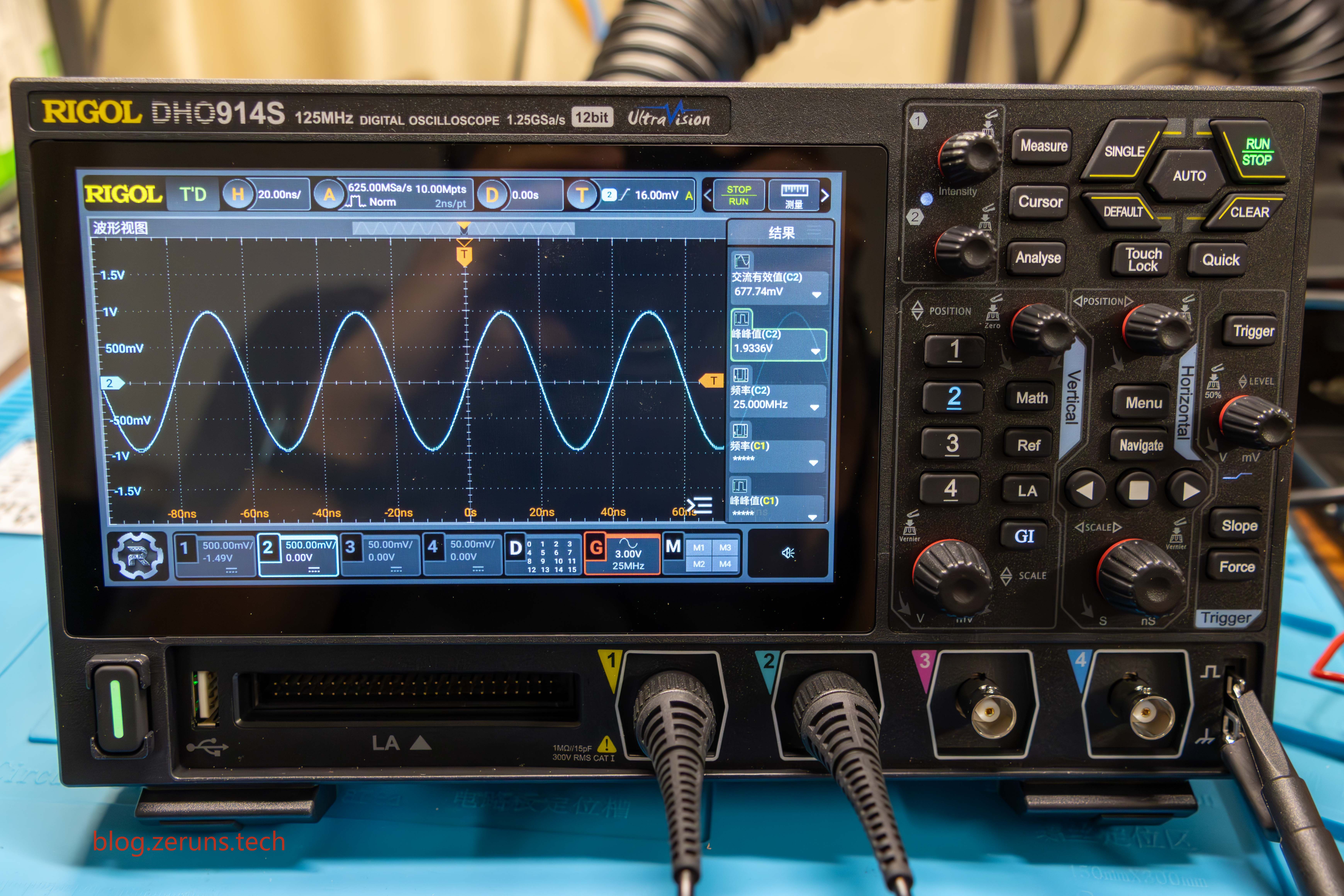
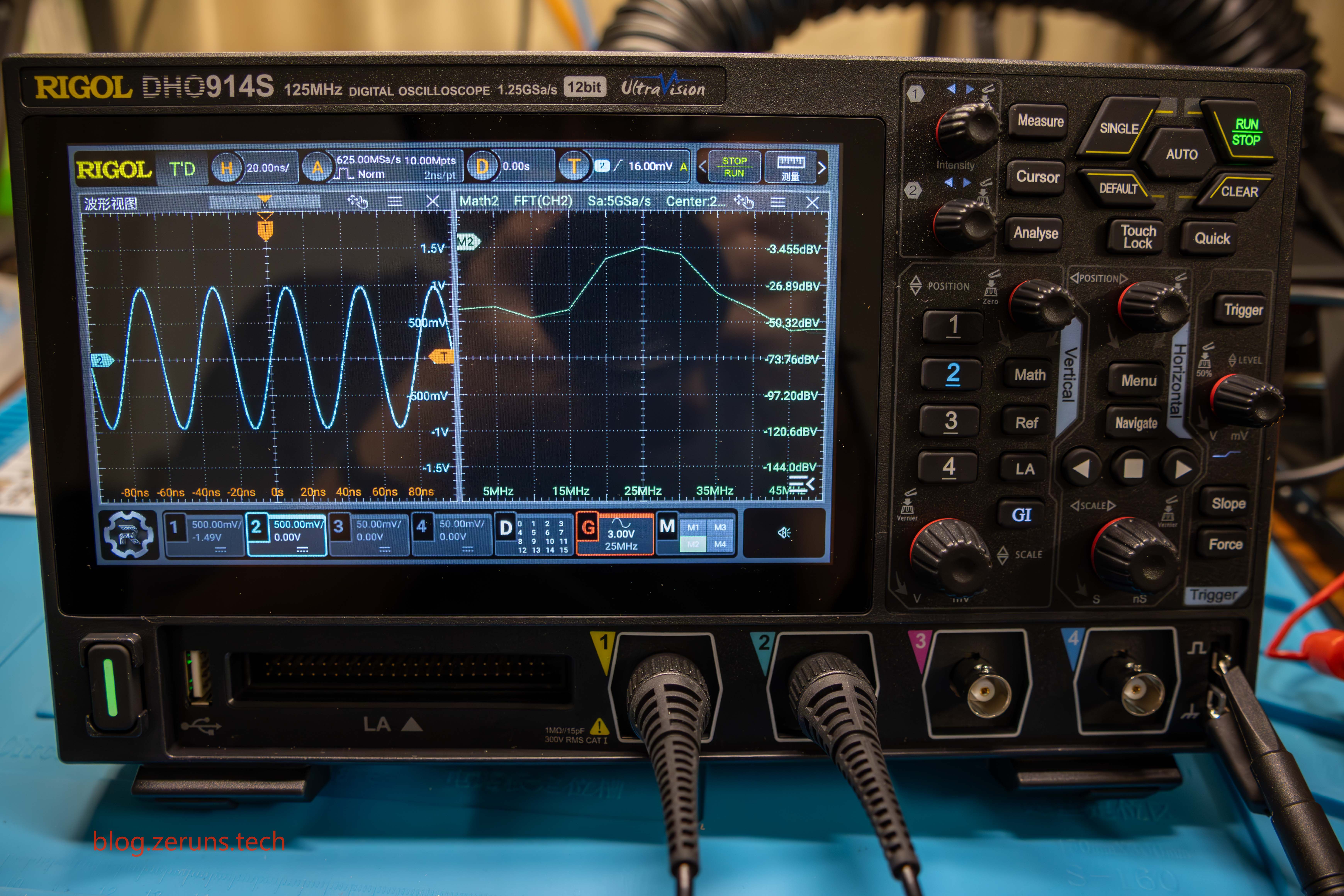
Signal generator set to output a 25MHz sine wave with 3V peak-to-peak amplitude, measured using Channel 2 of the oscilloscope.
FFT (Fast Fourier Transform) Function
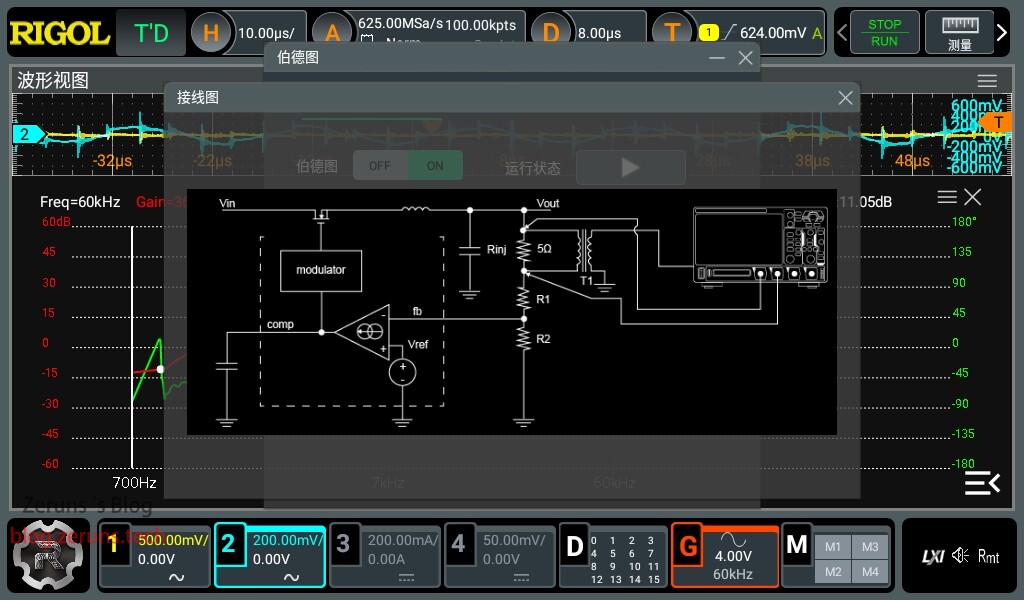
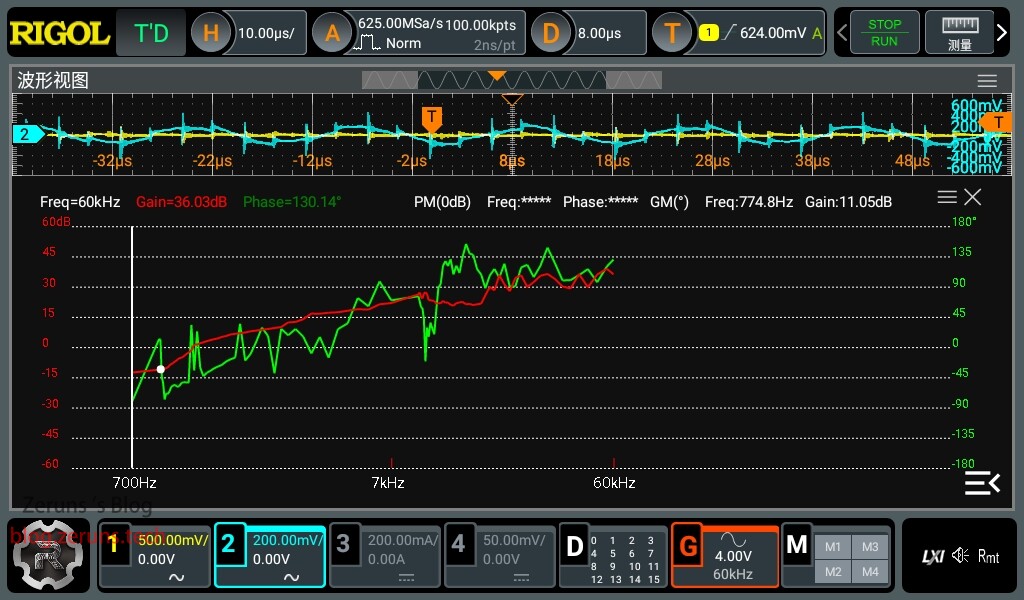
Bode Plot Function Test: A Bode plot is a graphical representation of a system’s frequency response. It consists of two plots—magnitude and phase—both plotted against the logarithm of frequency, hence also known as a logarithmic frequency plot.
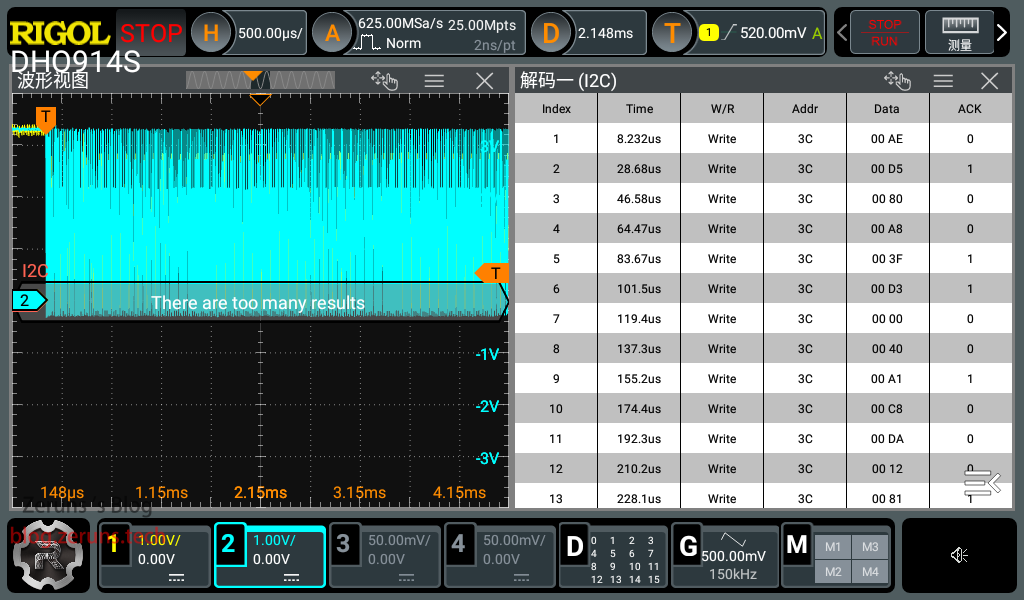
Decoding Function: Testing I2C communication decoding from a 0.96-inch OLED display.
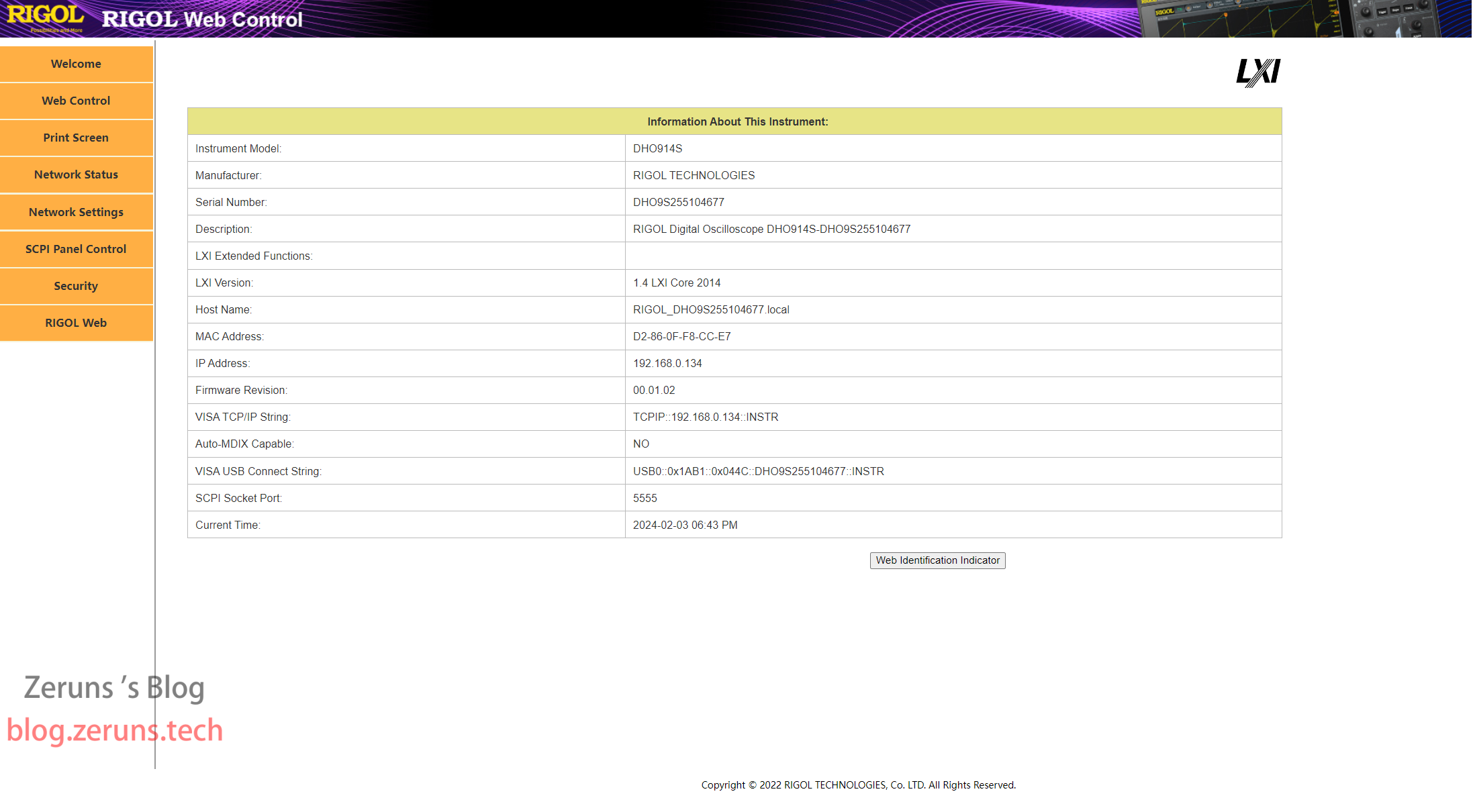
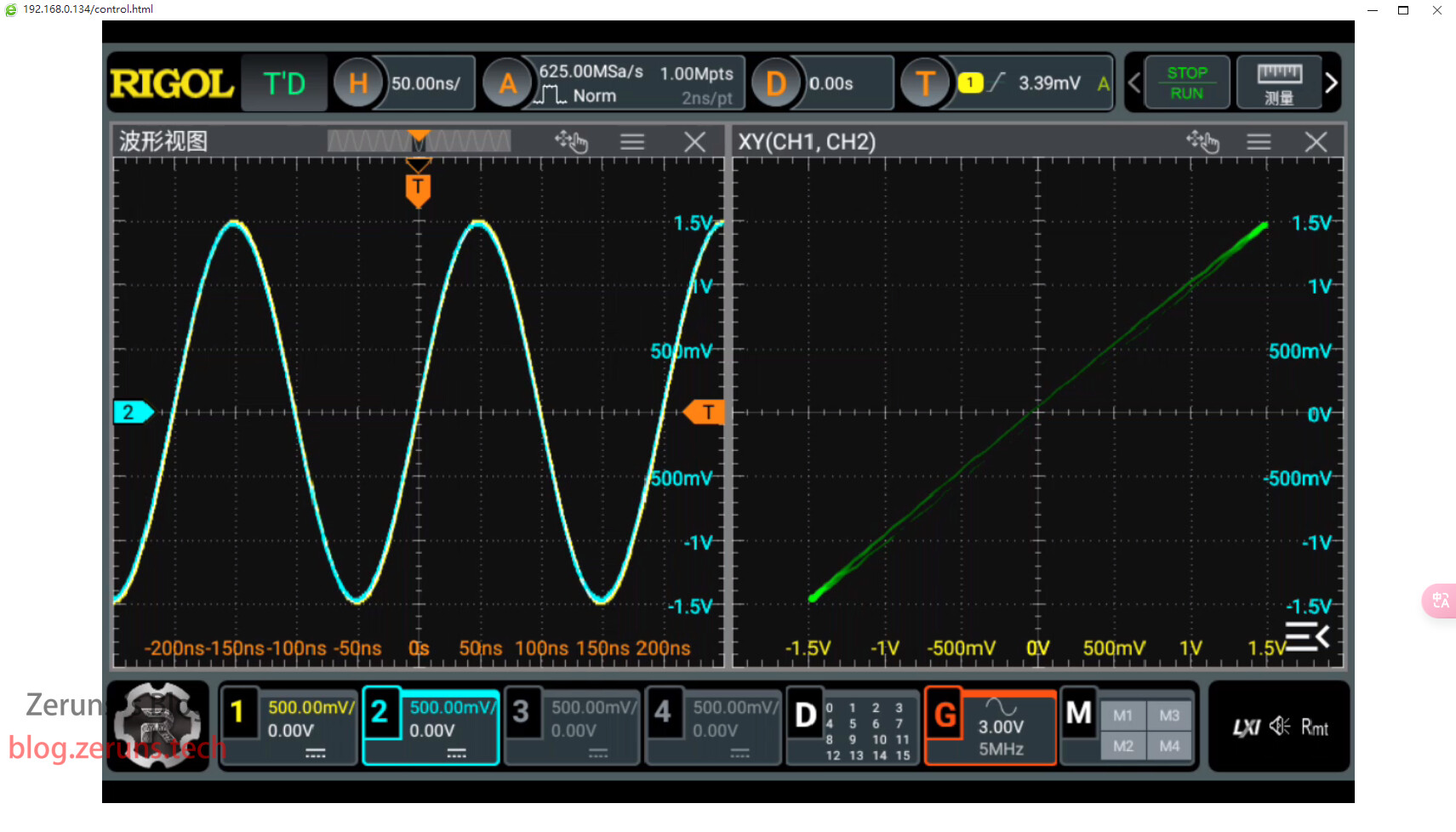
Connecting the oscilloscope to a network cable allows remote control via a web interface and enables screenshot capture.
Ripple Test of the Included Power Adapter
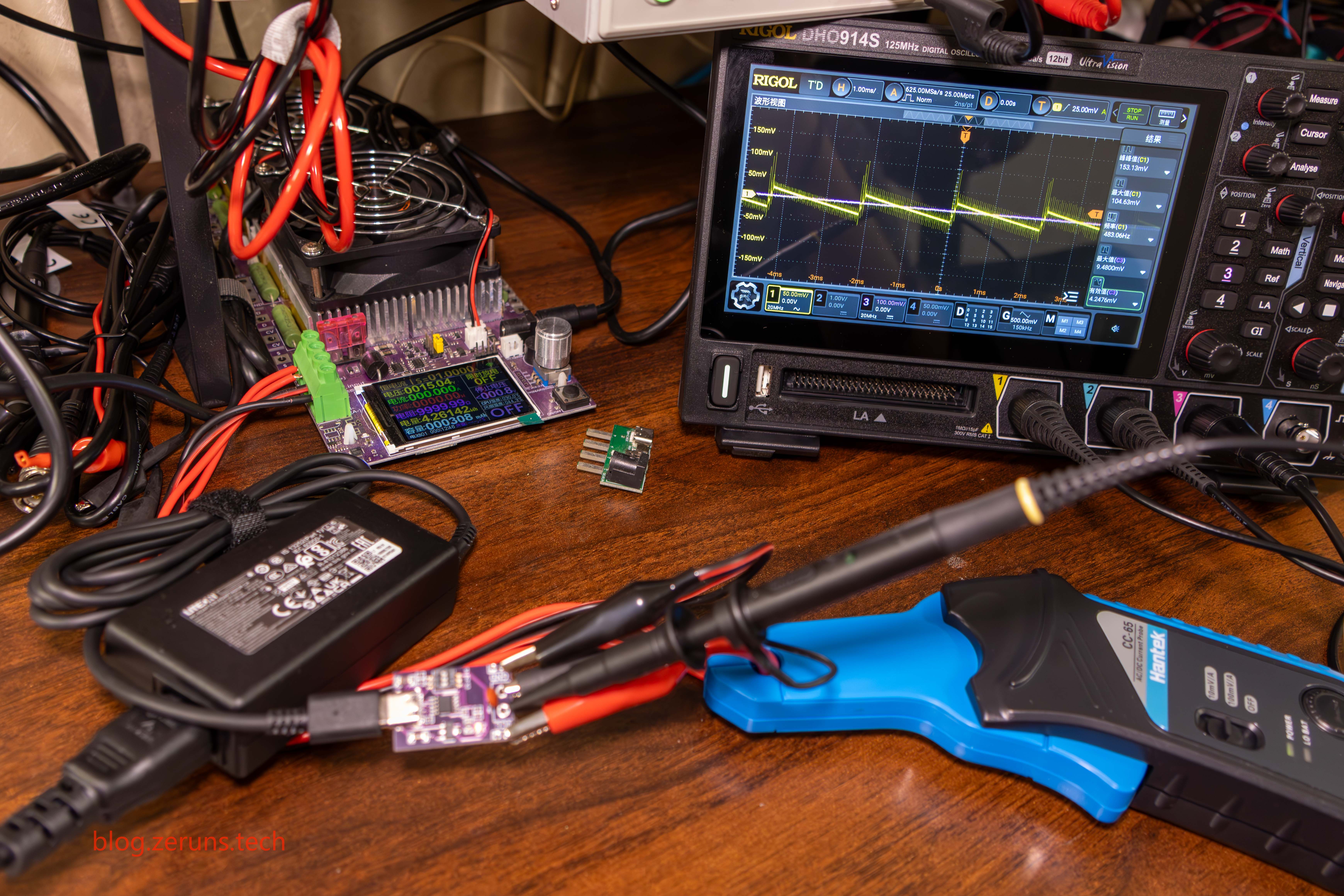
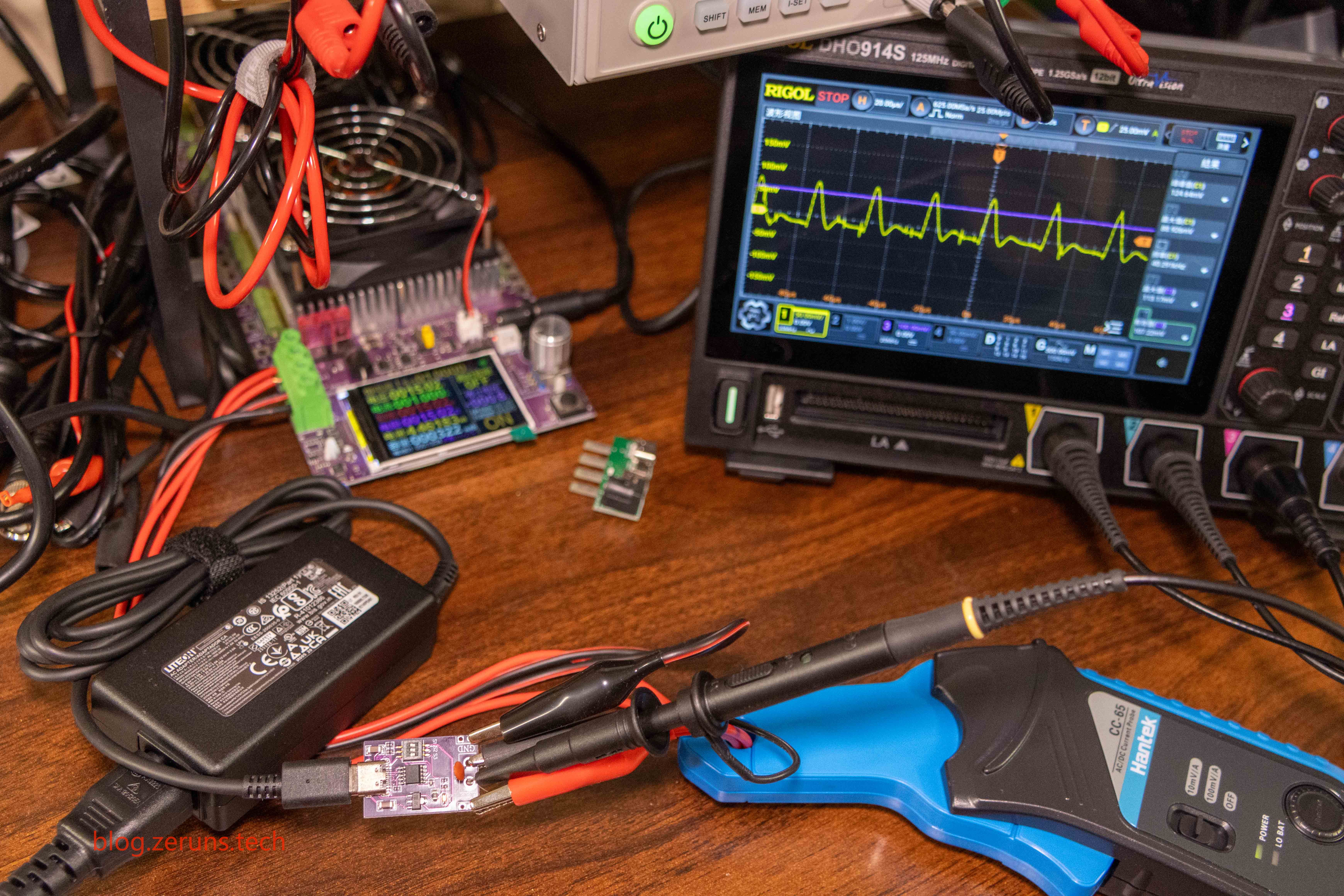
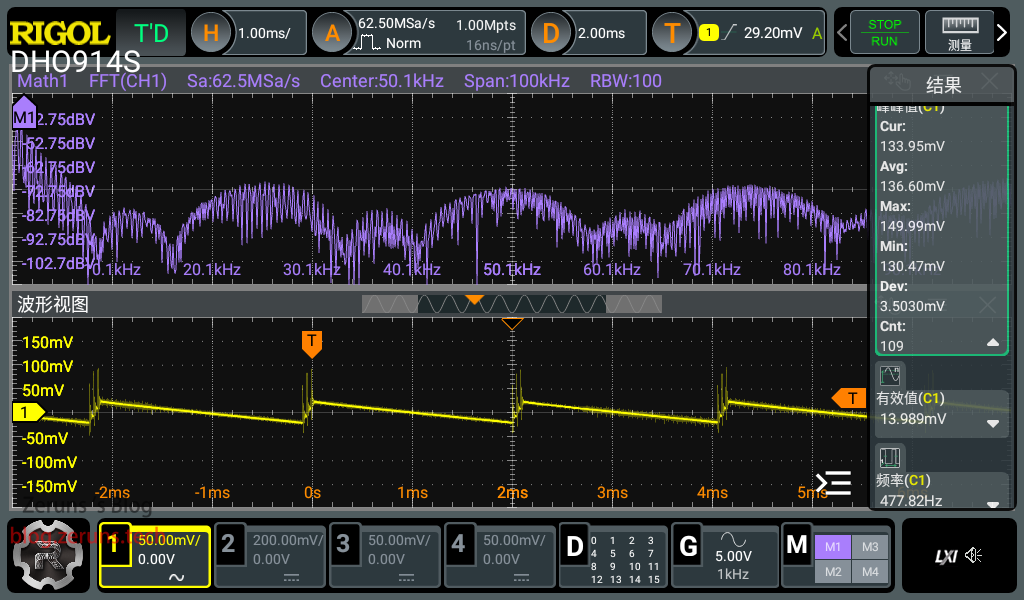
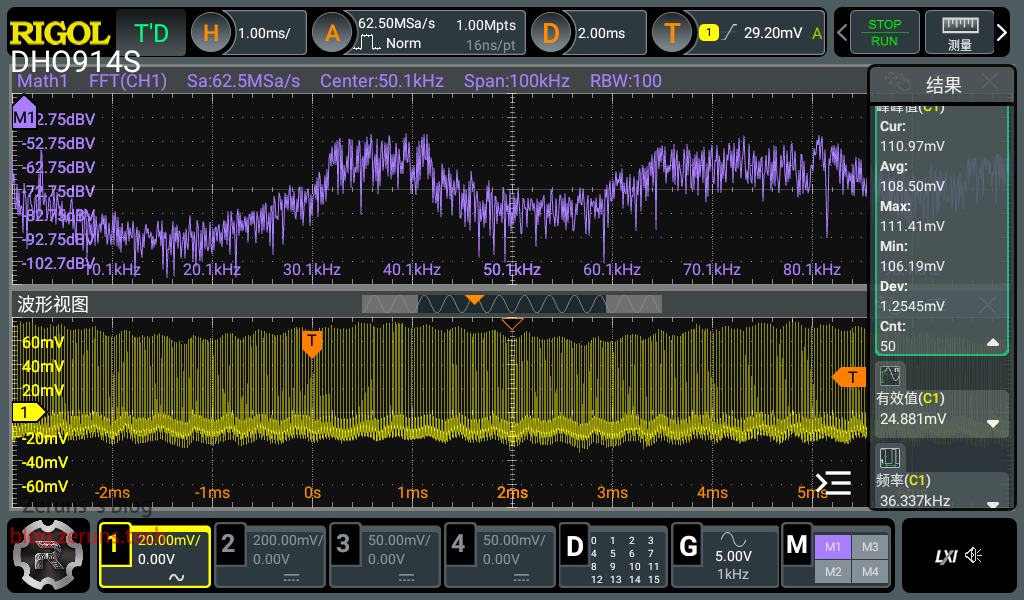
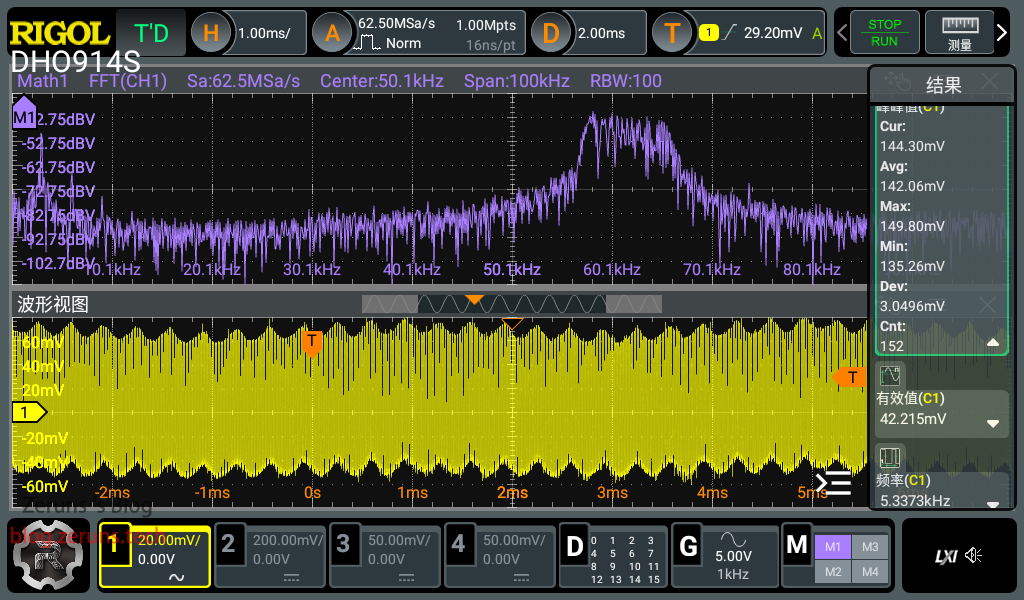
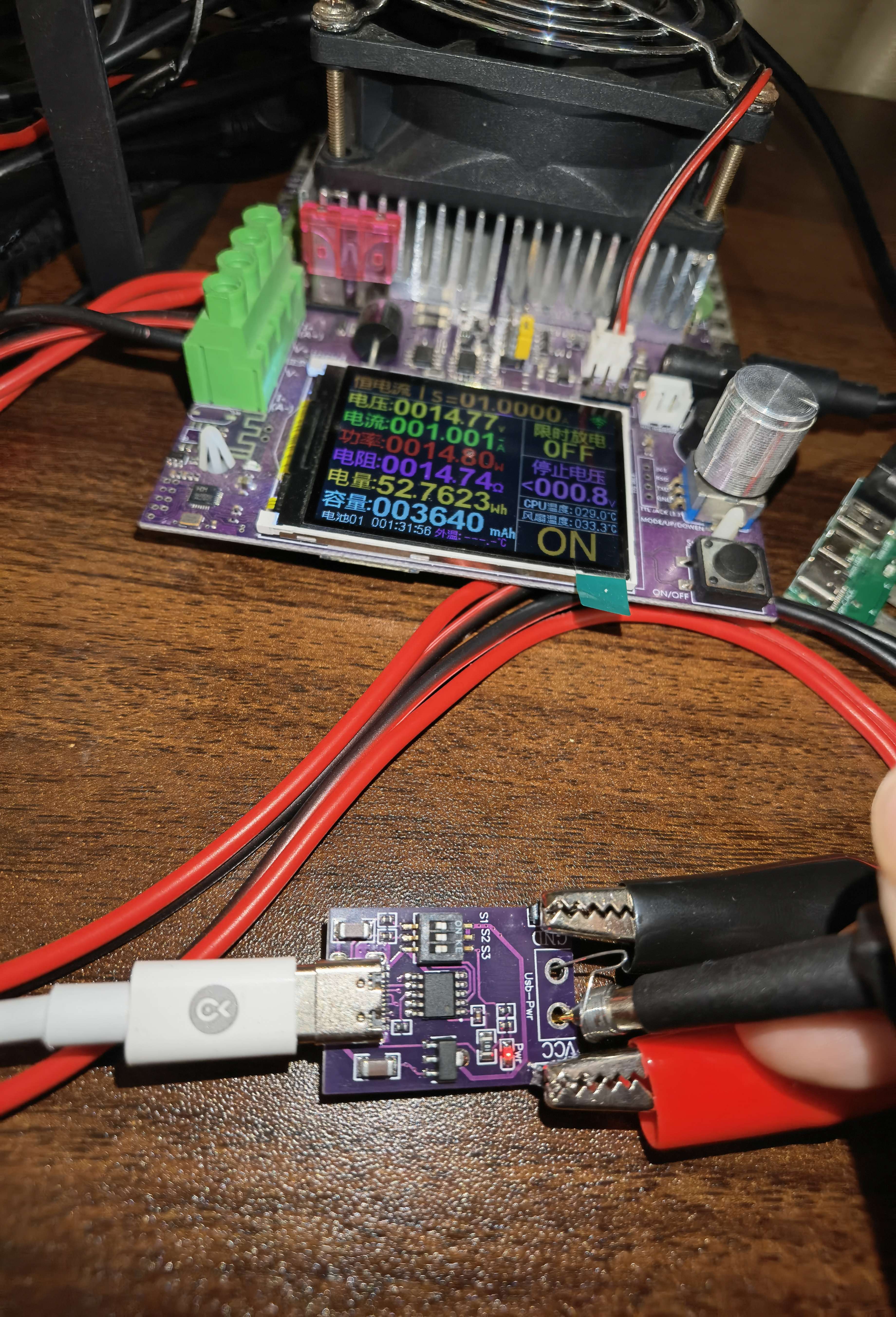
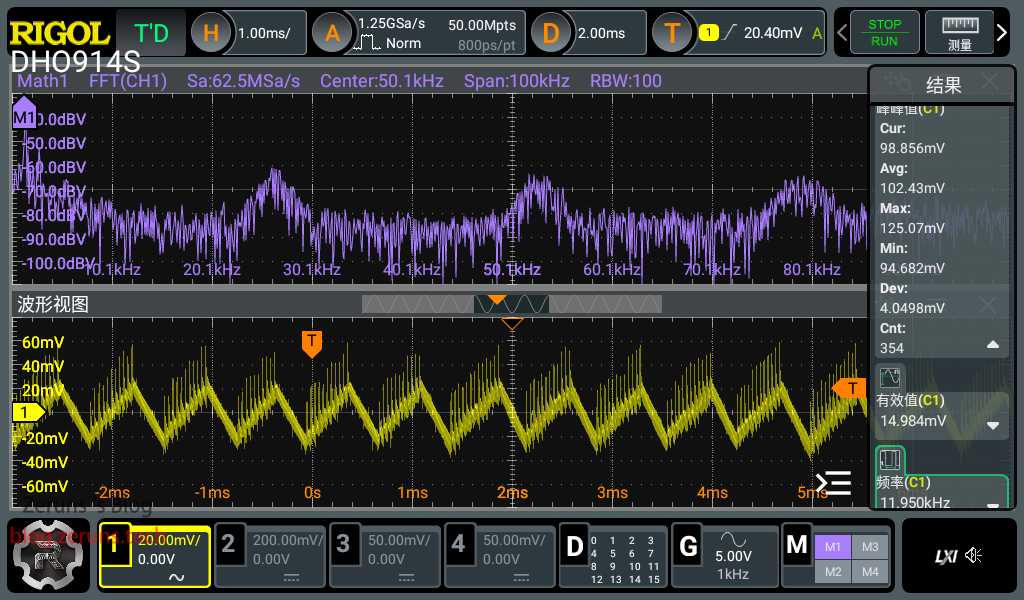
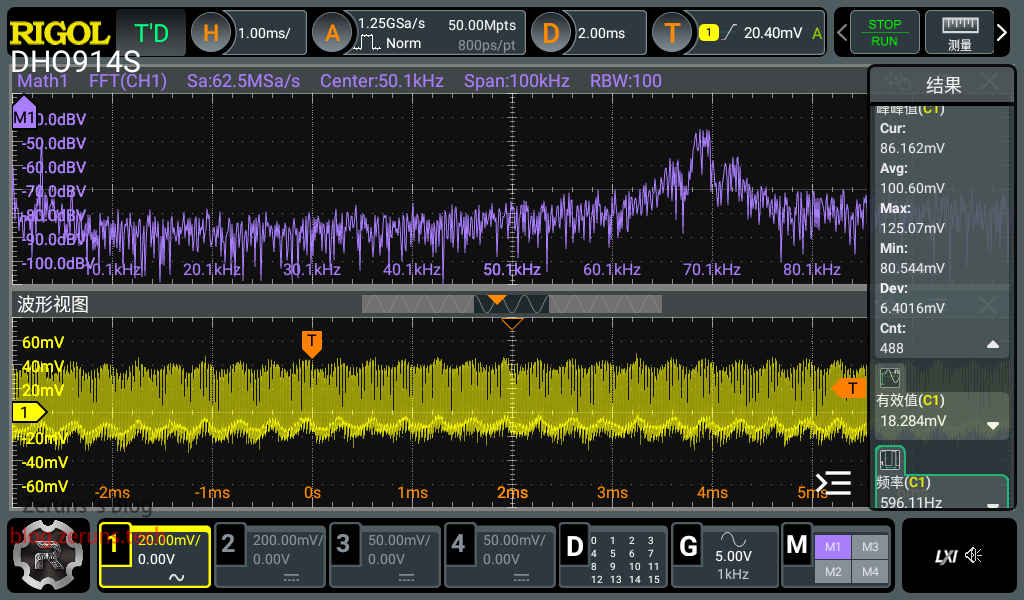
Tested the ripple performance of the included LITEON power adapter. Using a PD sink module, the adapter was set to output 15V. A 100nF ceramic capacitor was soldered to the test pad where the oscilloscope probe clips on. The testing method may not be highly professional.
At no load, the average peak-to-peak ripple is around 136mV.
Under a 1A load, the average peak-to-peak ripple is about 108mV.
Under a 3A load, the peak-to-peak ripple is approximately 142mV.
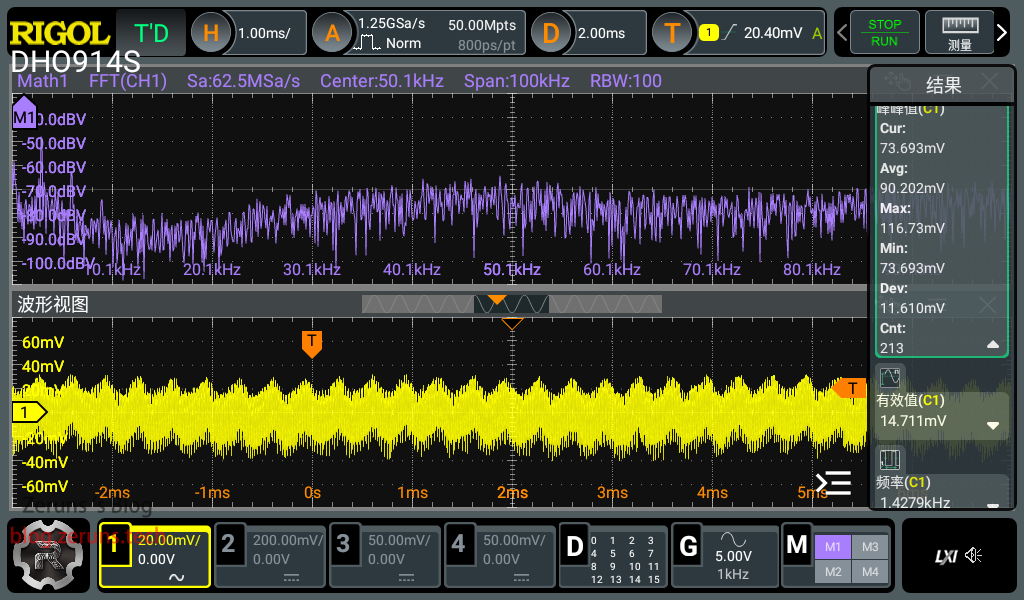
For comparison, tested ripple from a Baseus 65W GaN charger:
Using a PD sink module to set the charger to output 15V, a 100nF MLCC capacitor was soldered beneath the test pad used for probing.
At no load, the average peak-to-peak ripple is around 102mV.
Under a 1A load, the average peak-to-peak ripple is about 100mV.
Under a 3A load, the average peak-to-peak ripple is approximately 90mV.
Recommended Reading
- Affordable and High-Value VPS/Cloud Server Recommendations: https://blog.zeruns.com/archives/383.html
- Step-by-step guide to building a personal blog website using Typecho on a cloud server: https://blog.zeruns.com/archives/749.html
- Minecraft server setup tutorial: https://blog.zeruns.com/tag/mc/
- Palworld server setup guide: https://blog.zeruns.com/tag/PalWorld/
- Unboxing and review of the Ruide RD6012P CNC Adjustable Power Supply – 60V 12A Digital DC Power Supply: https://blog.zeruns.com/archives/740.html
- Bambu Lab A1 Combo 3D Printer – First Look and Unboxing Experience: https://blog.zeruns.com/archives/754.html