Kunpeng Infinite (NRadio) C2000 MAX 5G CPE Unboxing and Review.
I bought this 5G CPE to replace my broadband. My current rental broadband costs 100 yuan per month for 300 Mbps, which is a bit expensive. A few days ago, I purchased the ZTE F40 portable WiFi, but I found its performance insufficient, so I decided to try this model.
ZTE F40 5G Portable WiFi Unboxing and Review: https://blog.zeruns.com/archives/936.html
Introduction
Product Overview
The Kunpeng C2000MAX is a 5G-A full-band Mini CPE router / portable WiFi device launched by Kunpeng Infinite in January 2026. It features a compact design with a full aluminum body, emphasizing high performance and adaptability to multiple scenarios. It offers flexible internet connectivity options with an integrated eSIM and dual nano-SIM card slots, supports WiFi 7 (BE3600) and a 2.5G Ethernet port, and is compatible with the OpenWRT system.
Key Features: Supports 3CC carrier aggregation and the N79 frequency band.
Specifications Table
| Parameter Category | Parameter Item | Parameter Value |
|---|---|---|
| Cellular Parameters | Module Model | MT5700M-CN |
| Region | Domestic | |
| Module Platform | HiSilicon Balong | |
| 5G NR Frequency Bands | N1/N3/N5/N8/N28/N41/N78/N79 | |
| LTE Frequency Bands | B1/B3/B5/B8/B34/B38/B39/B40/B41 | |
| WCDMA Frequency Bands | B1/B8 | |
| Max Cellular Speed 5G | DL 4Gbps; UL 1.5Gbps | |
| Max Cellular Speed LTE | DL 900Mbps; UL 200Mbps | |
| Max Cellular Speed WCDMA | DL 42.2Mbps; UL 11.0Mbps | |
| Wi-Fi Parameters | Standards | Wi-Fi 7 2.4GHz: IEEE 802.11b/a/x/n/g 5GHz: IEEE 802.11be/a/x/n/ac |
| Wi-Fi Speed | BE3600 2.4GHz: 688Mbps 5GHz: 2882Mbps |
|
| Bandwidth | 2.4GHz: 20/40 MHz 5GHz: 20/40/80/160 MHz |
|
| Max Wi-Fi Clients | 256 | |
| Wi-Fi MIMO | 2.4GHz: 2T2R (2SS) 5GHz: 2T3R (2SS) |
|
| Environmental Parameters | Operating Temperature | 0 - 40°C |
| Storage Temperature | -40 - 70°C | |
| Operating Humidity | 10% - 90% non-condensing | |
| Physical Dimensions | Dimensions | 120 (L) x 120 (W) x 22 (H) mm |
| Color | White | |
| Weight | 222g | |
| LED Indicators | Power Indicator | Dual-color LED (green/red) |
| Signal Indicator | Tri-color LED (blue/green/red) | |
| Basic Hardware Parameters | Memory / Flash | 512MB / 32MB |
| Ports | 1x 2.5G WAN/LAN Port 1x Type-C Port supporting PD fast charging 1x Reset Button 1x Dual-band nano-SIM Slot 1x External TF Card Slot |
|
| WiFi Antennas | Built-in 5 Professional Wi-Fi Antennas Built-in 4 High-Gain 5G Antennas |
|
| Power Adapter | Supports PD Fast Charging Adapter | |
| Standby Power | 4.6W | |
| Typical Power | 8.6W | |
| Software Parameters | Operating System | NROS + OpenWrt OS |
| WiFi | Band Steering Wireless Client Isolation Radio Parameter Settings Wireless Whitelist/Blacklist SSID Hiding Guest Network |
|
| Network Functions | DHCP Network Diagnostics (Ping/Traceroute/Nslookup) Connectivity Check DMZ/UPnP Port Forwarding Firewall IPv6 Settings LAN Settings Access Control VPDN/PPTP/L2TP SIM Card Management Bandwidth Control/Traffic Shaping TTL |
|
| Cellular Functions | SIM Switching (Auto/Manual) Traffic Monitoring and Network Management Network Mode Settings Frequency Band Locking/Cell Locking Data Roaming/SMS/Custom APN Prevent Base Station Shutdown Traffic Peak Support Cellular Module Firmware Upgrade |
|
| System Functions | User Account Management Immediate/Scheduled Reboot Backup/Upgrade App Store Startup Settings/Cloud Management/Light Control |
|
| System Log | ||
| Product Certification | Product Certification | 3C, SRRC, CTA |
Purchase Links
- JD.com: https://u.jd.com/jgp447a
- Taobao: https://s.click.taobao.com/bQDKdPm
Unboxing
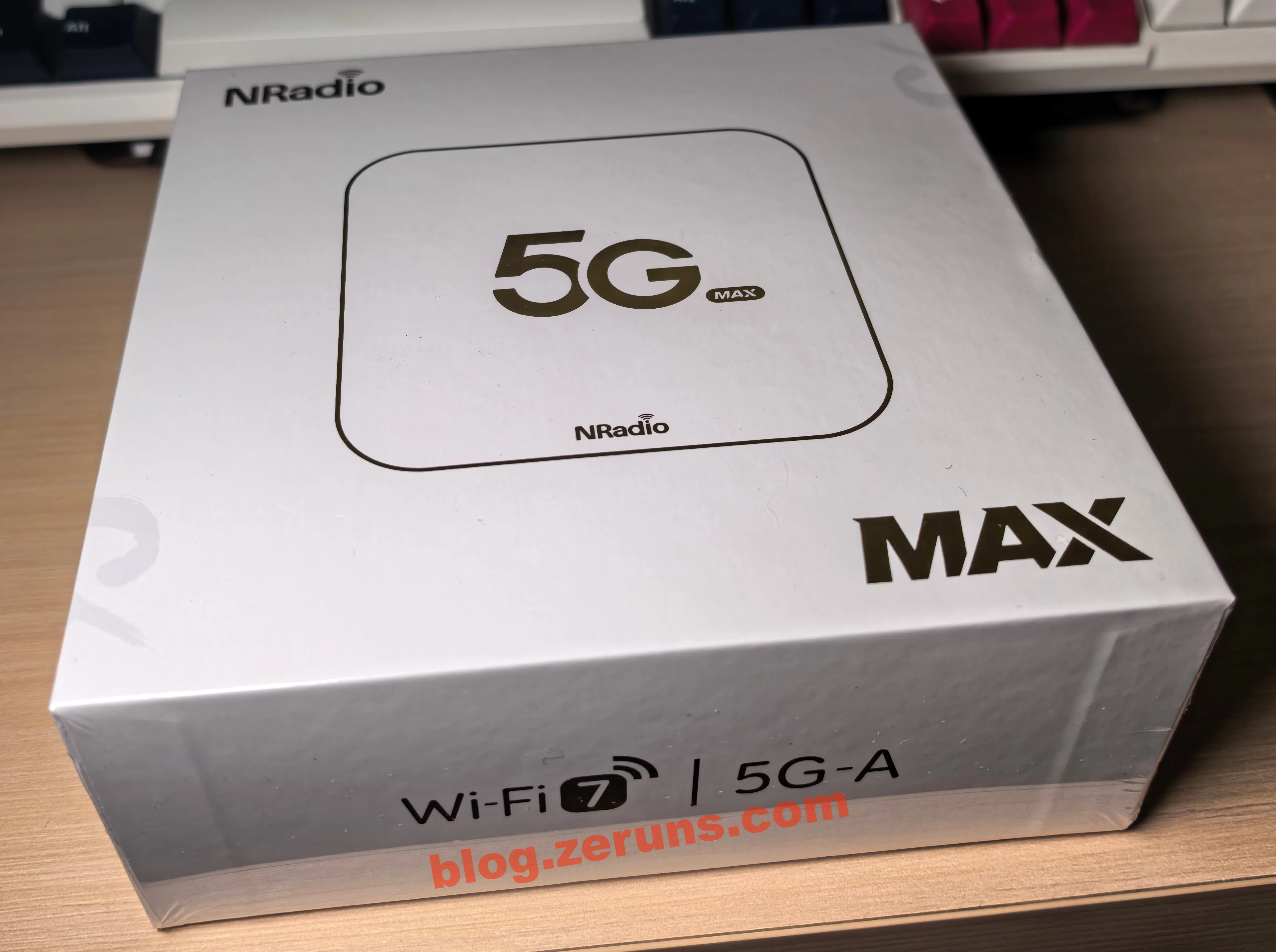
Front of the package
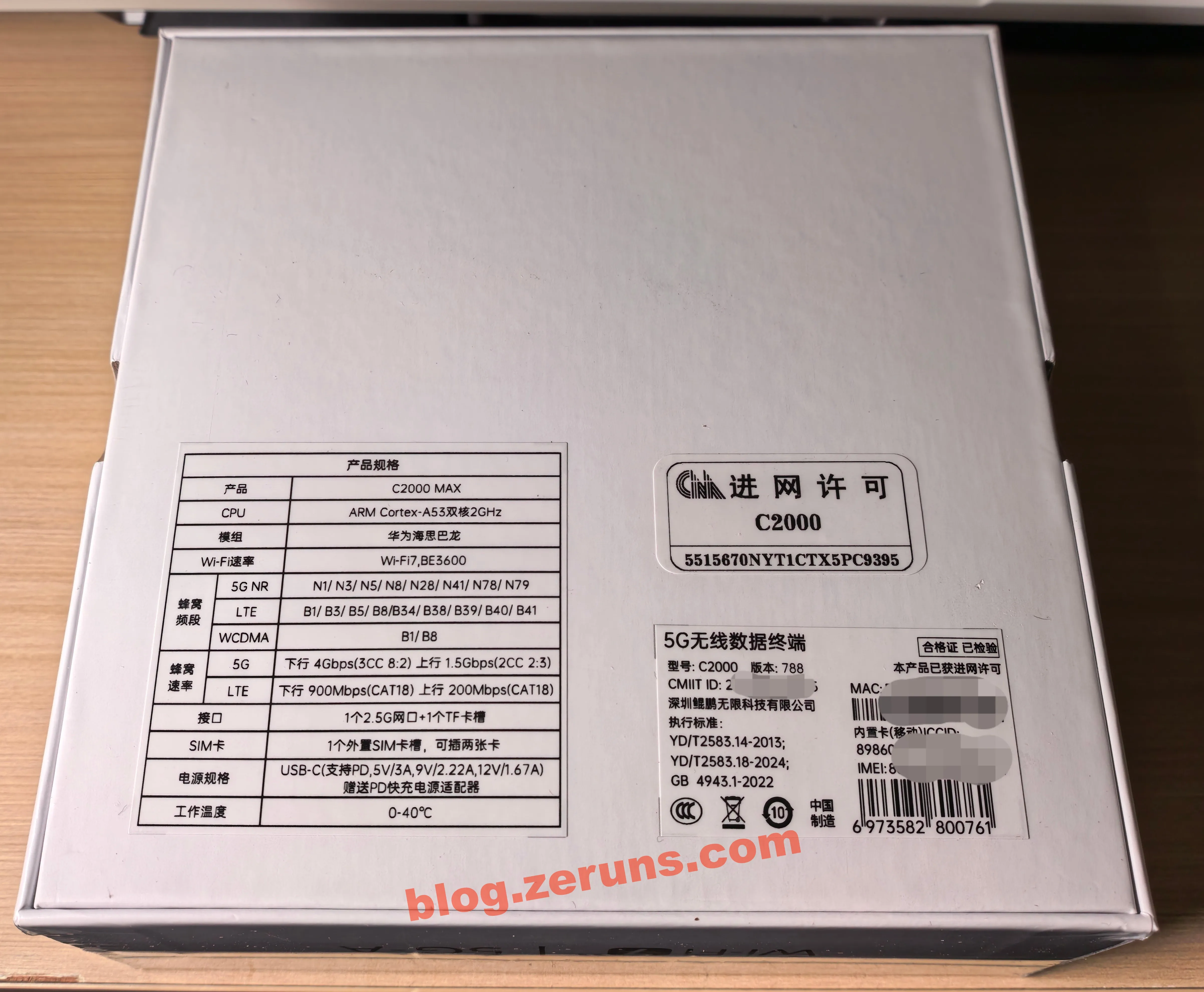
Bottom of the package, showing device specifications and network access license.
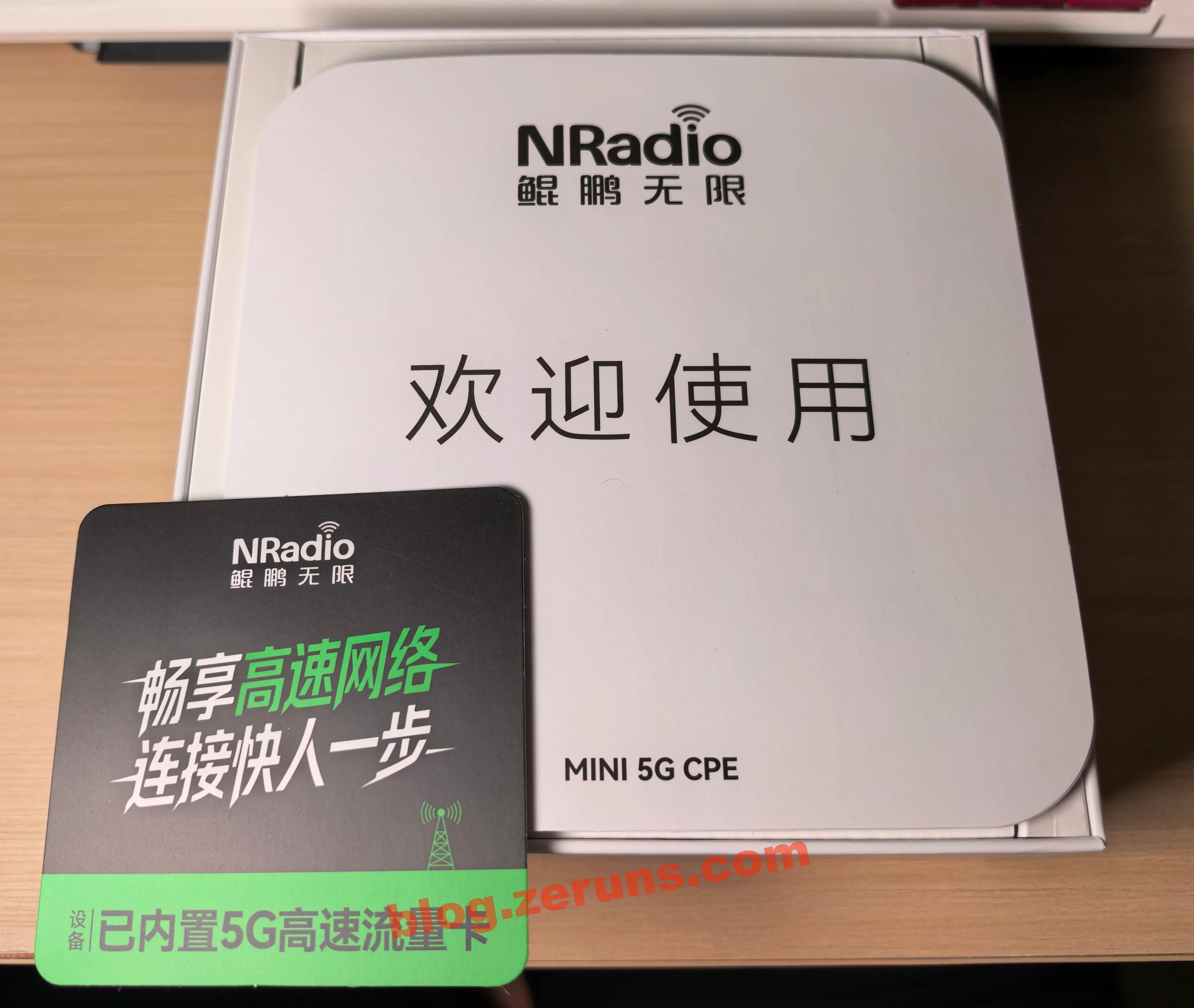
Opening the box reveals a user manual and a card indicating it includes a built-in 5G high-speed data SIM card.
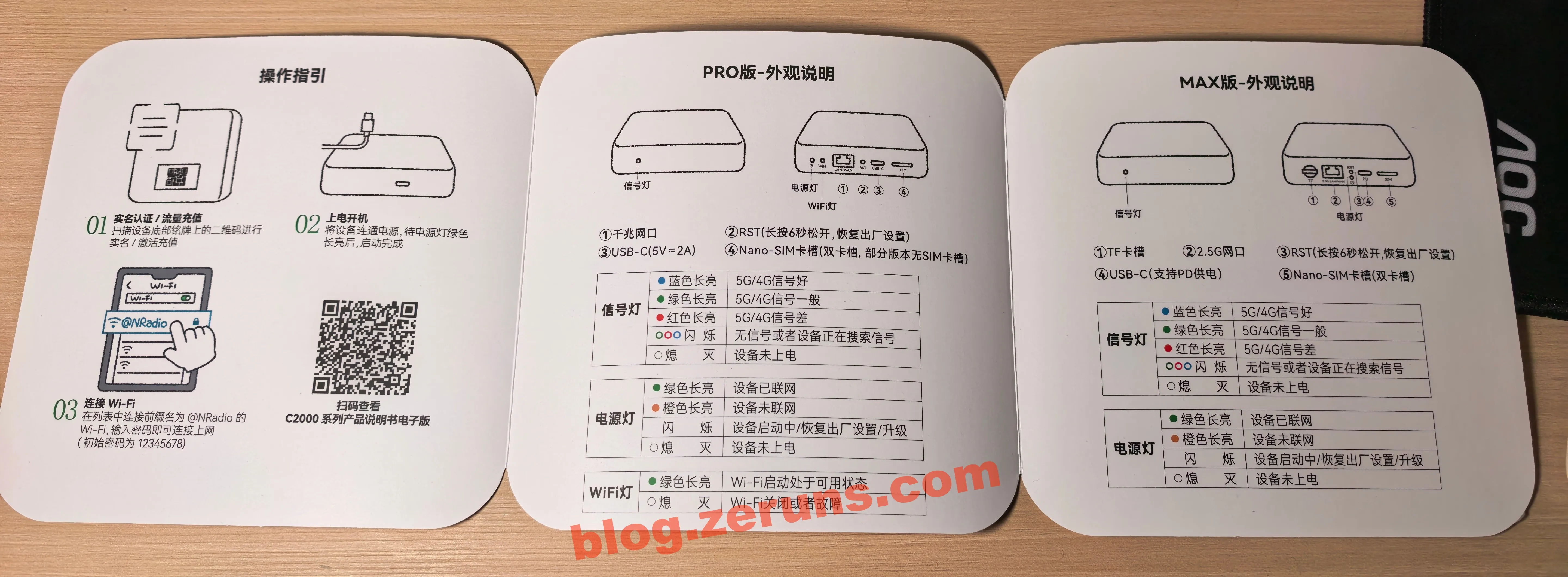
User manual
Removing the manual reveals the Kunpeng Wireless C2000MAX.
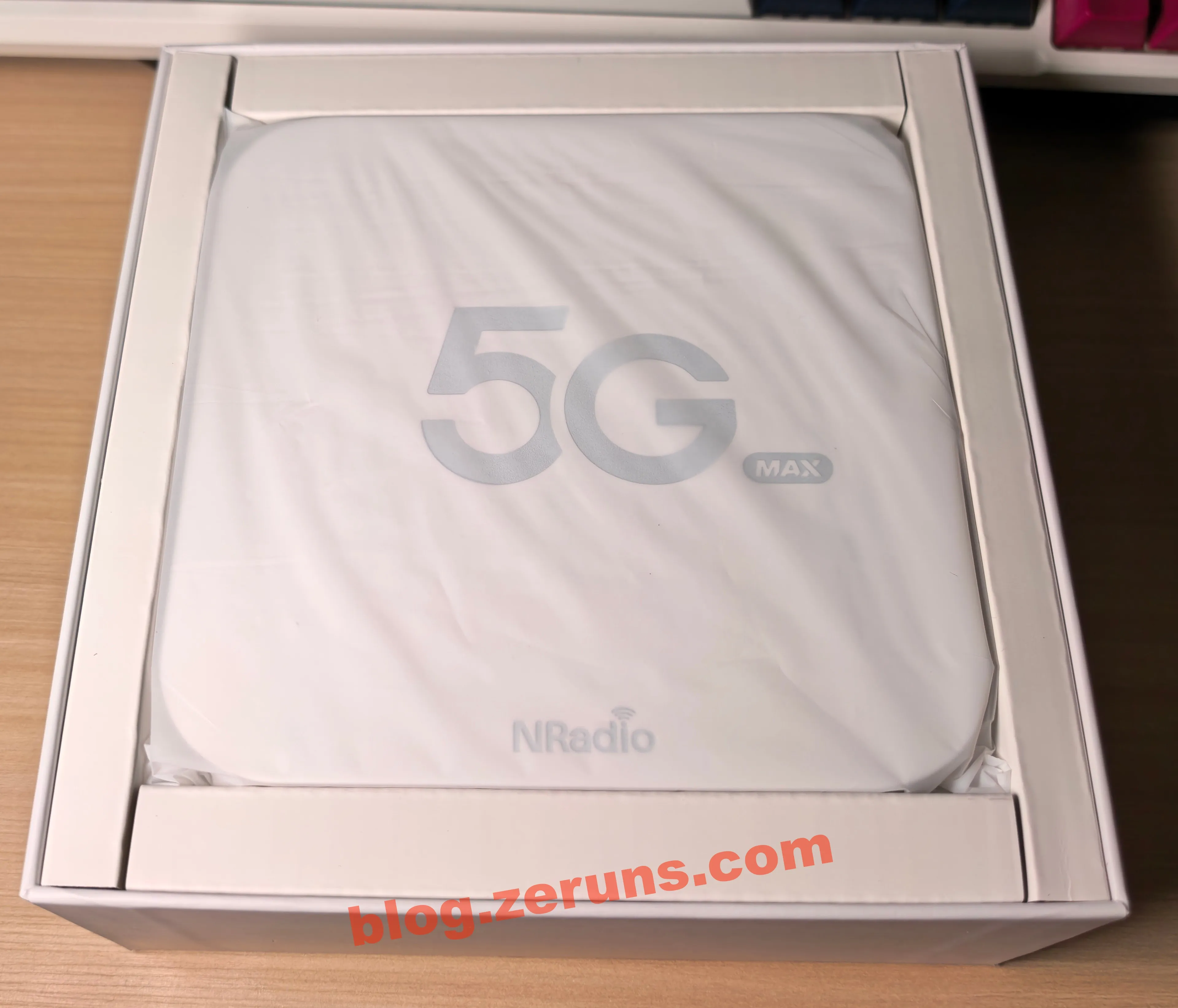
Below it are the power adapter and power cable.
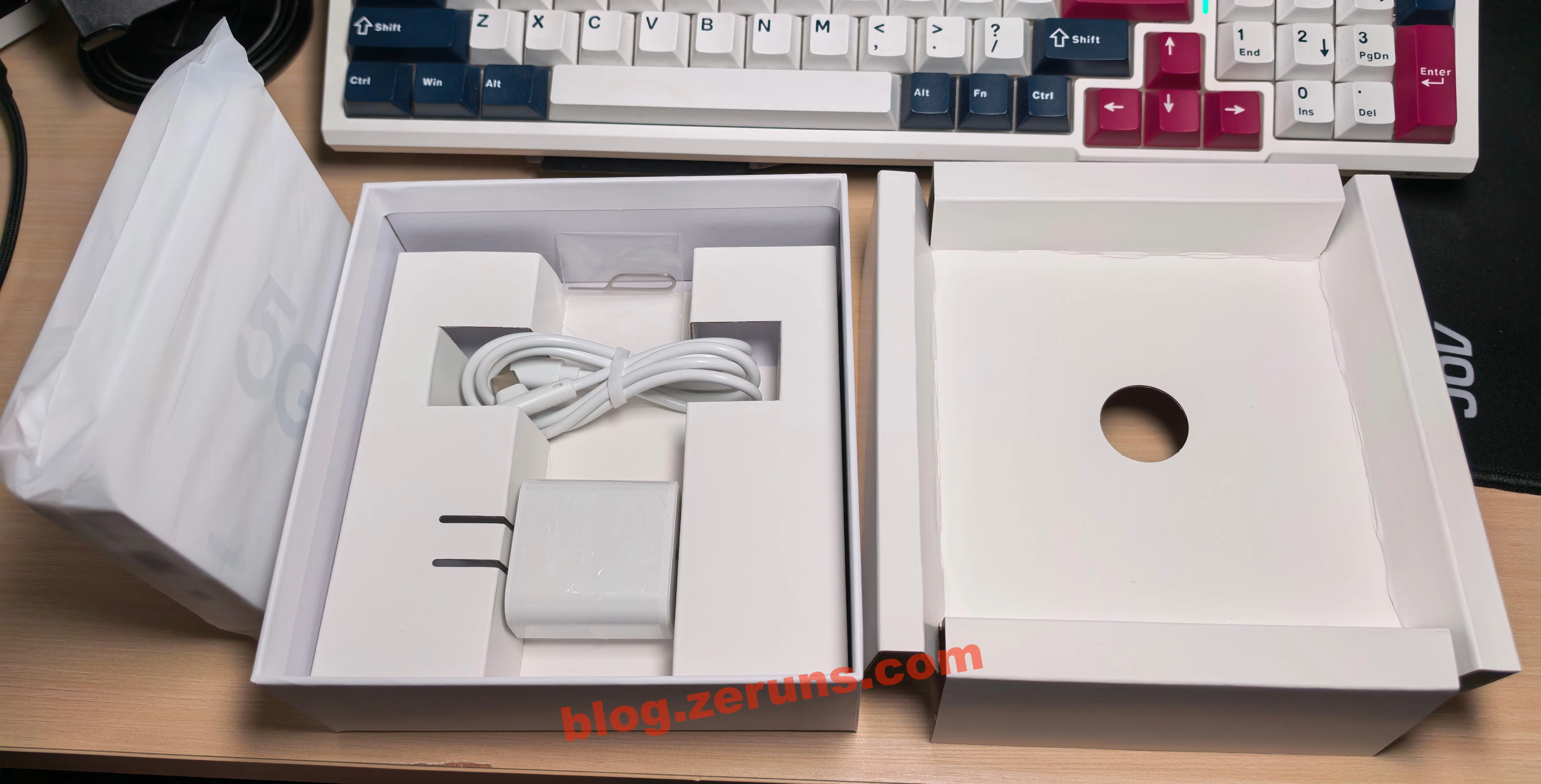
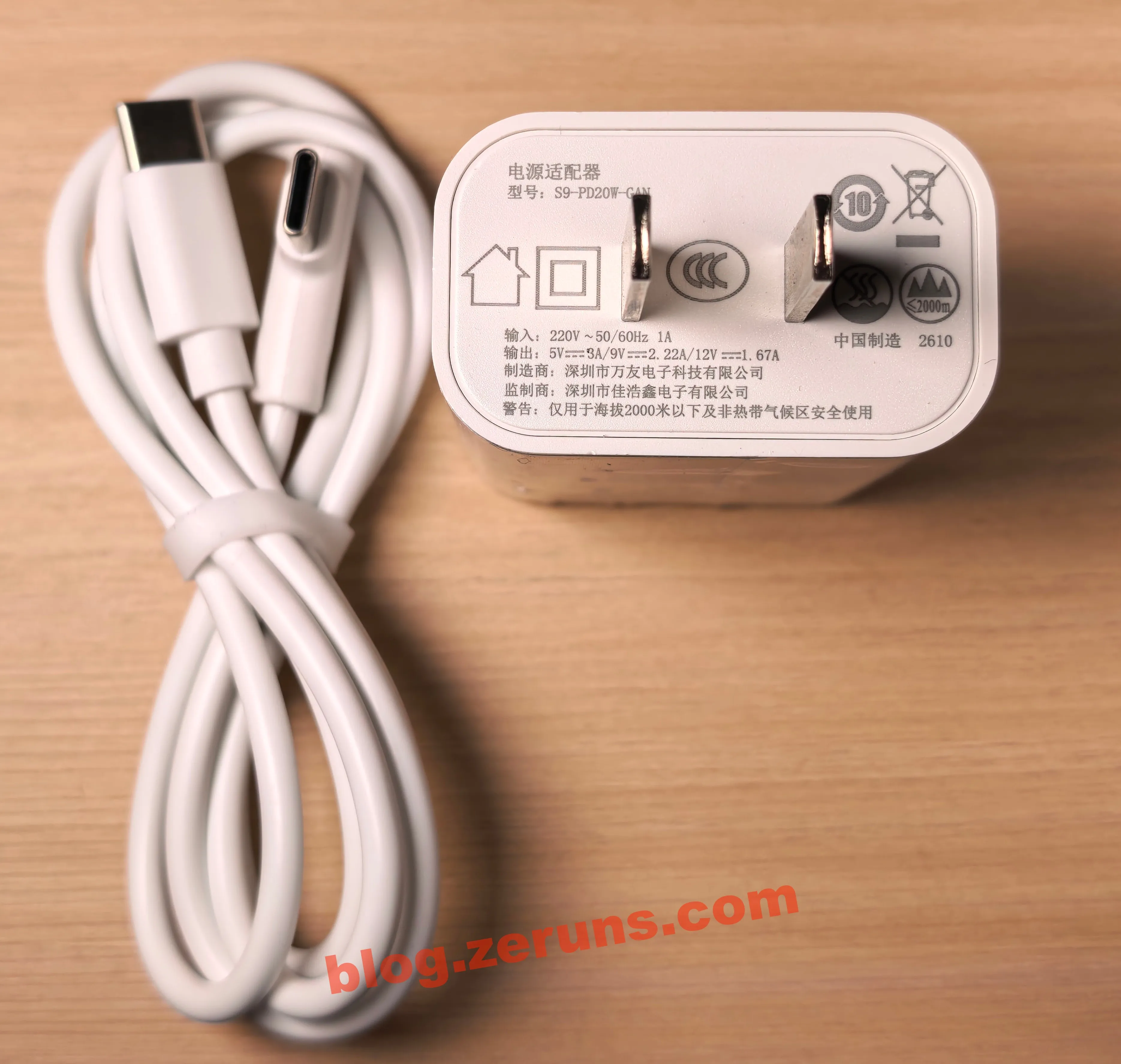
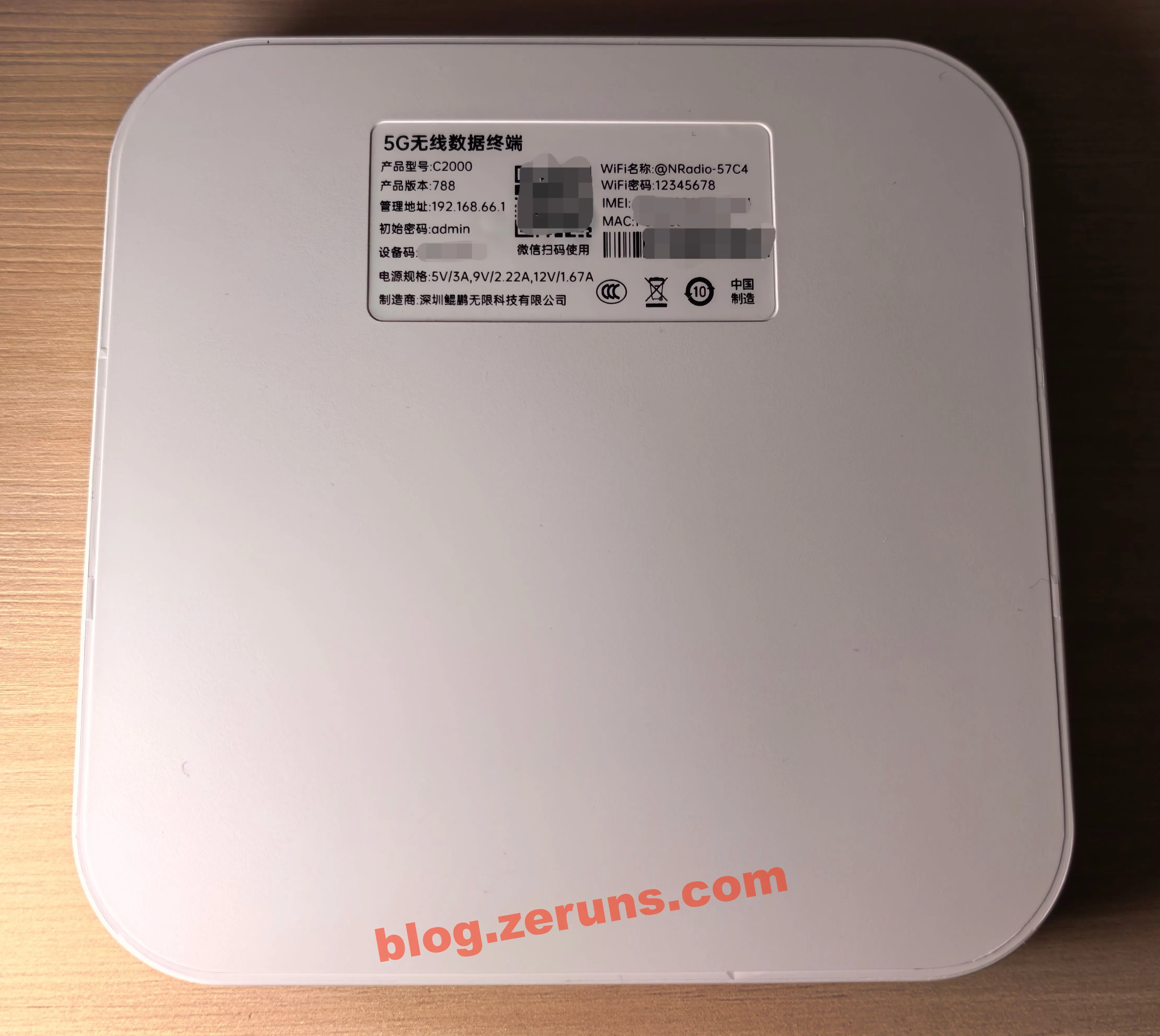
The power cable has dual Type-C male connectors, one of which is an angled connector. The power adapter model is S9-PD20W-GAN, manufactured by Shenzhen Wangyou Electronic Technology Co., Ltd., with supervision by Shenzhen Jiahaoxin Electronic Co., Ltd. Input: 220VAC, Output: 5V/3A, 9V/2.22A, 12V/1.67A. The model suggests it might be a GaN (Gallium Nitride) charger that supports the PD protocol with a maximum output power of 20 watts.
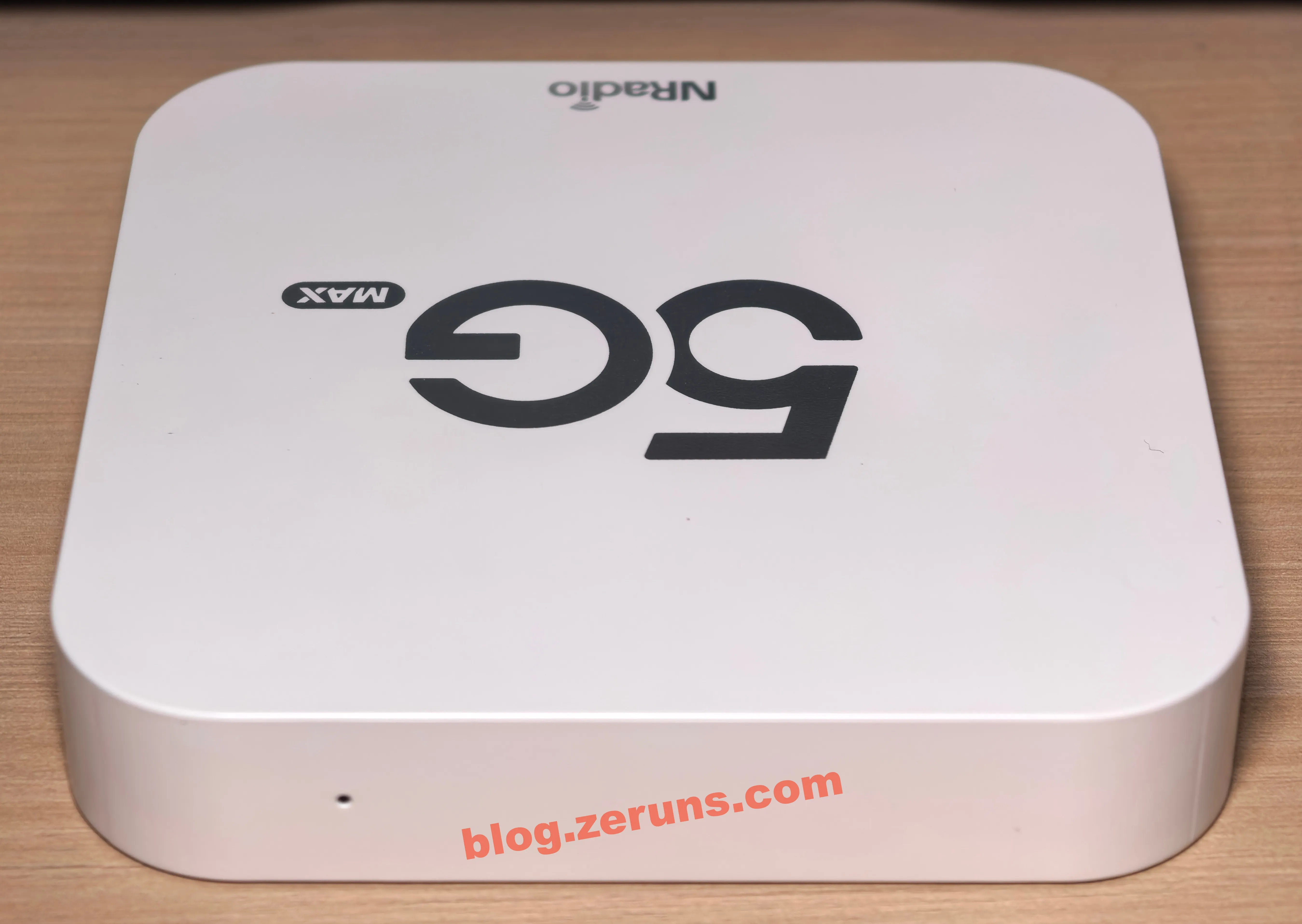
The front of the C2000MAX, featuring a signal status indicator light.
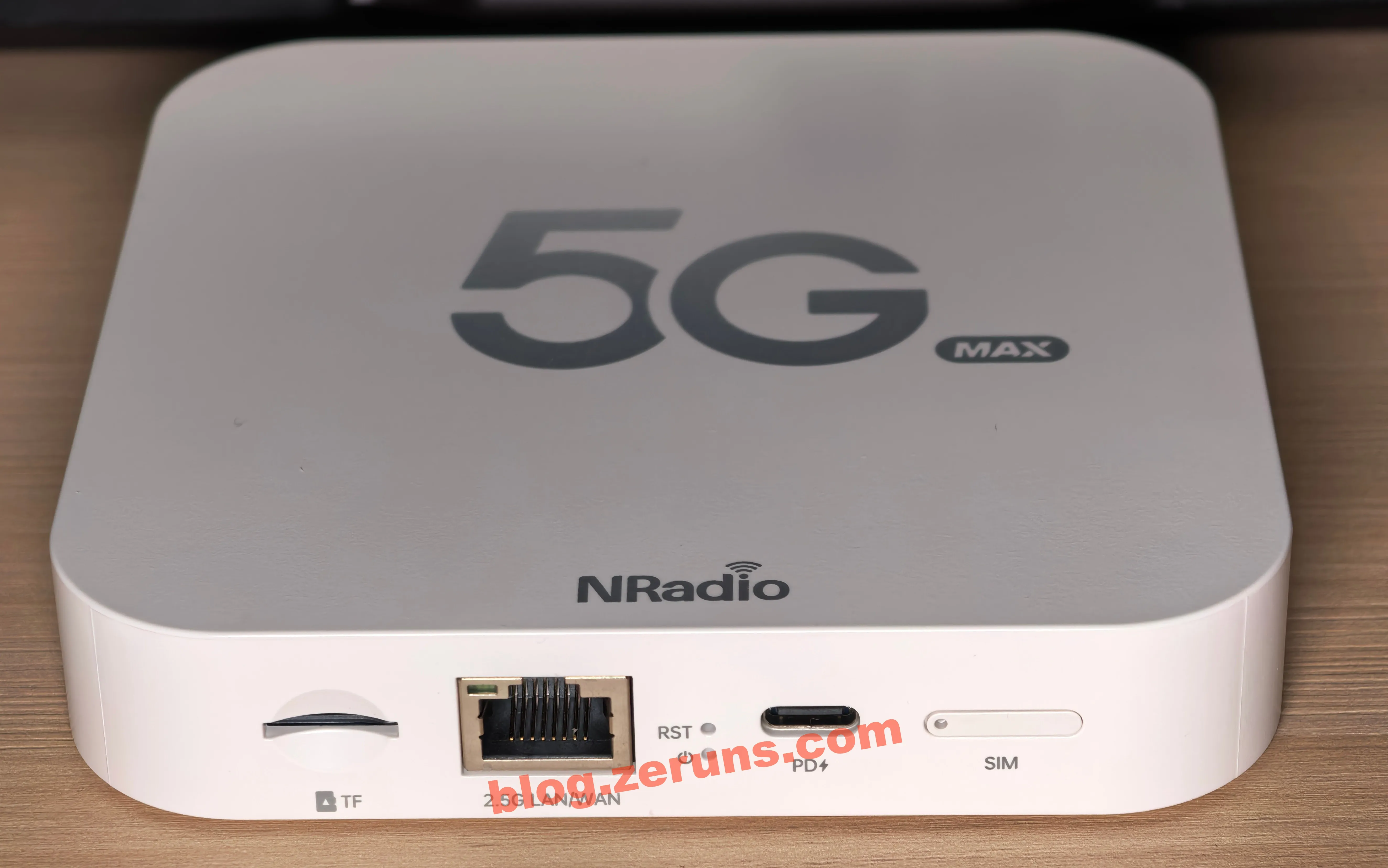
The back of the C2000MAX, from left to right: TF card slot, 2.5G Ethernet port, RST reset button, power indicator, USB-C power connector, dual nanoSIM card slots (similar to smartphone SIM cards, requiring a pin to eject the tray).
The bottom of the C2000MAX, with a label containing device information.
Review
Internet Speed Test
Location: A room in a science and technology park in Guangming District, Shenzhen
China Telecom 5G
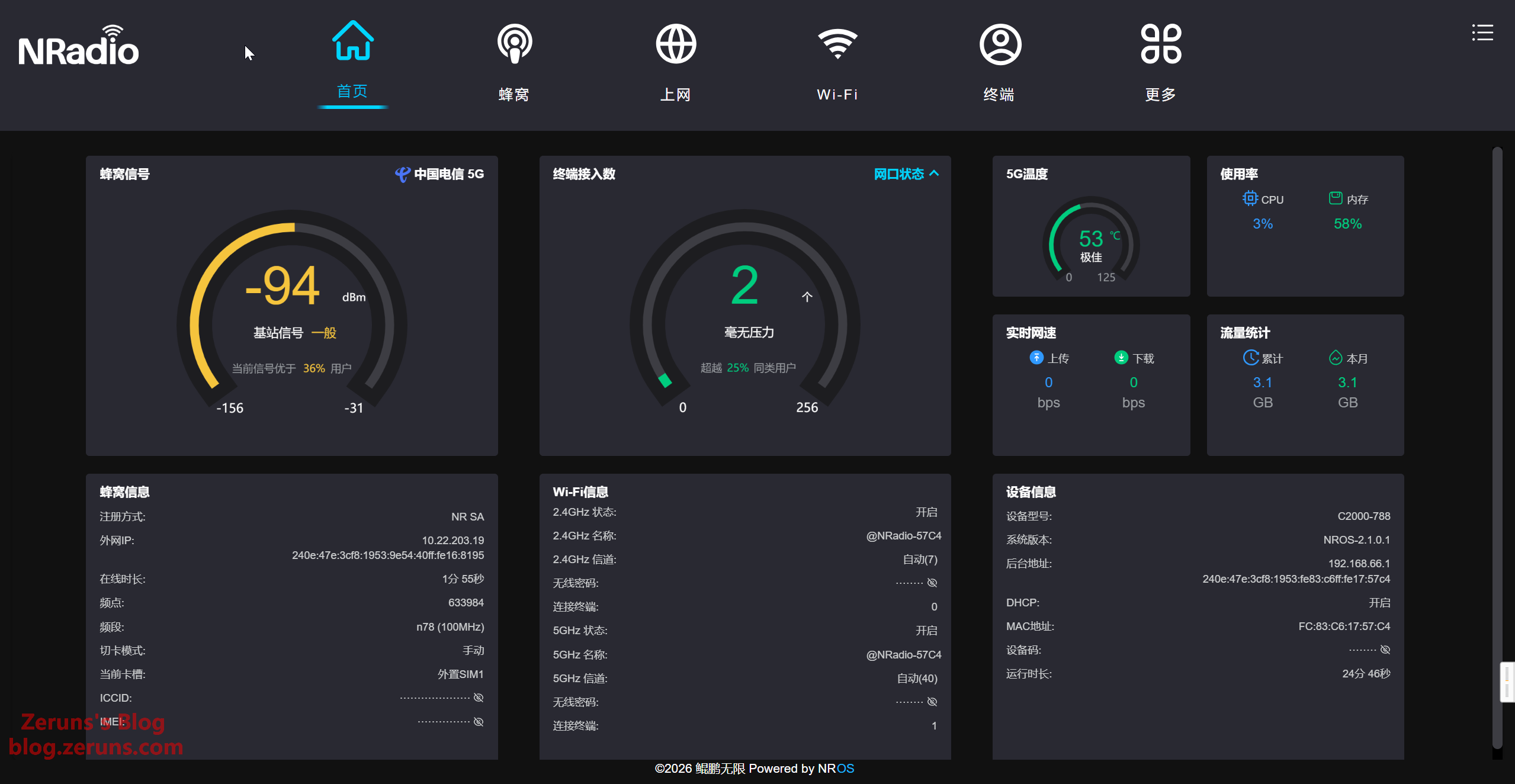
Network information shown below, signal strength -94dBm, band n78 (3.3GHz-3.8GHz), relatively weak signal strength with no 5GA or carrier aggregation triggered (occasionally appears, likely due to base station coverage issues).
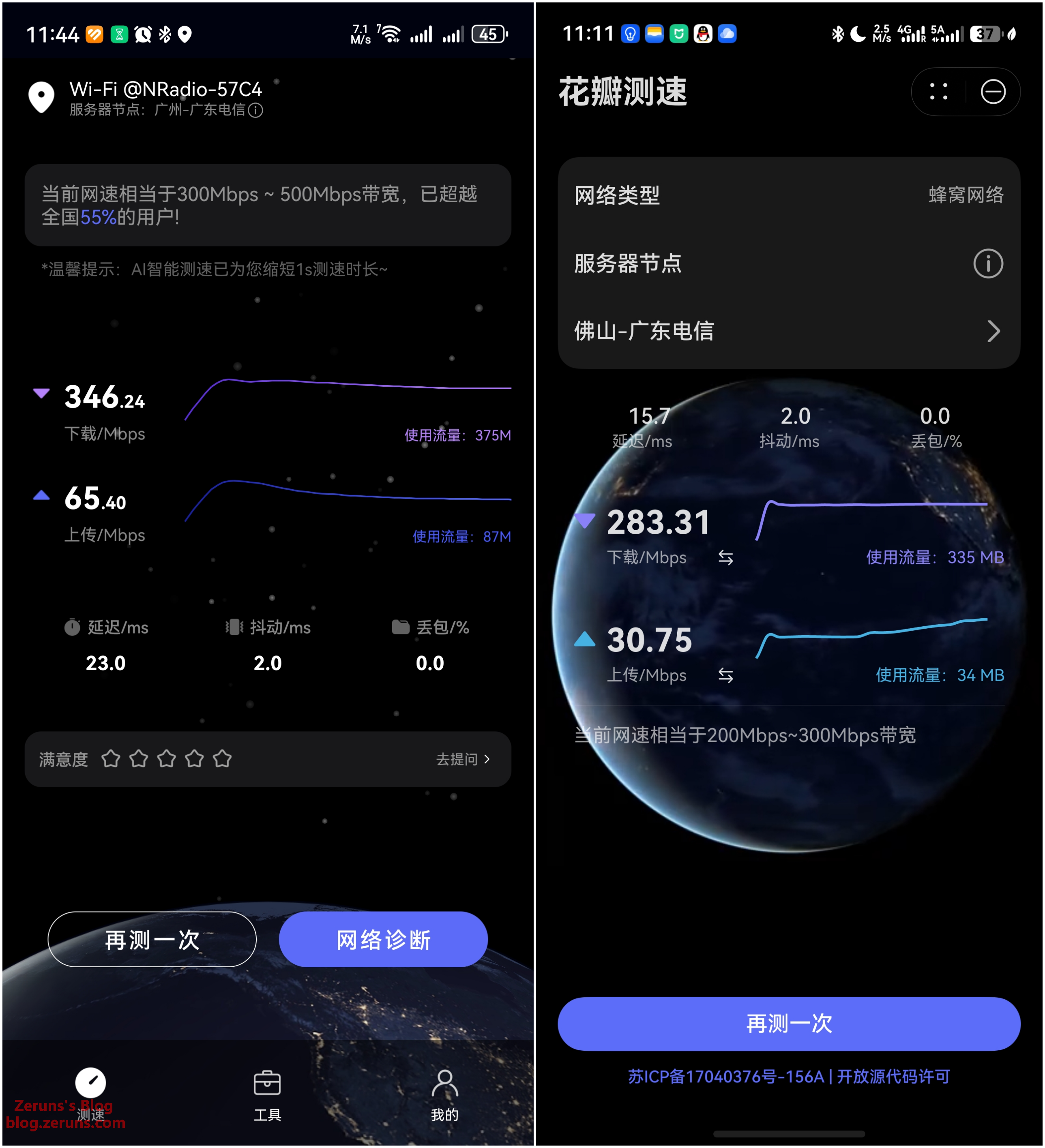
Left: C2000MAX, download speed 346.24Mbps, upload speed 65.4Mbps;
Right: Huawei Pura70 Pro+, download speed 283.31Mbps, upload speed 30.75Mbps.
China Mobile 5G
Network information shown below, signal strength -79dBm, band n41 (2.5GHz-2.7GHz), with decent signal strength.
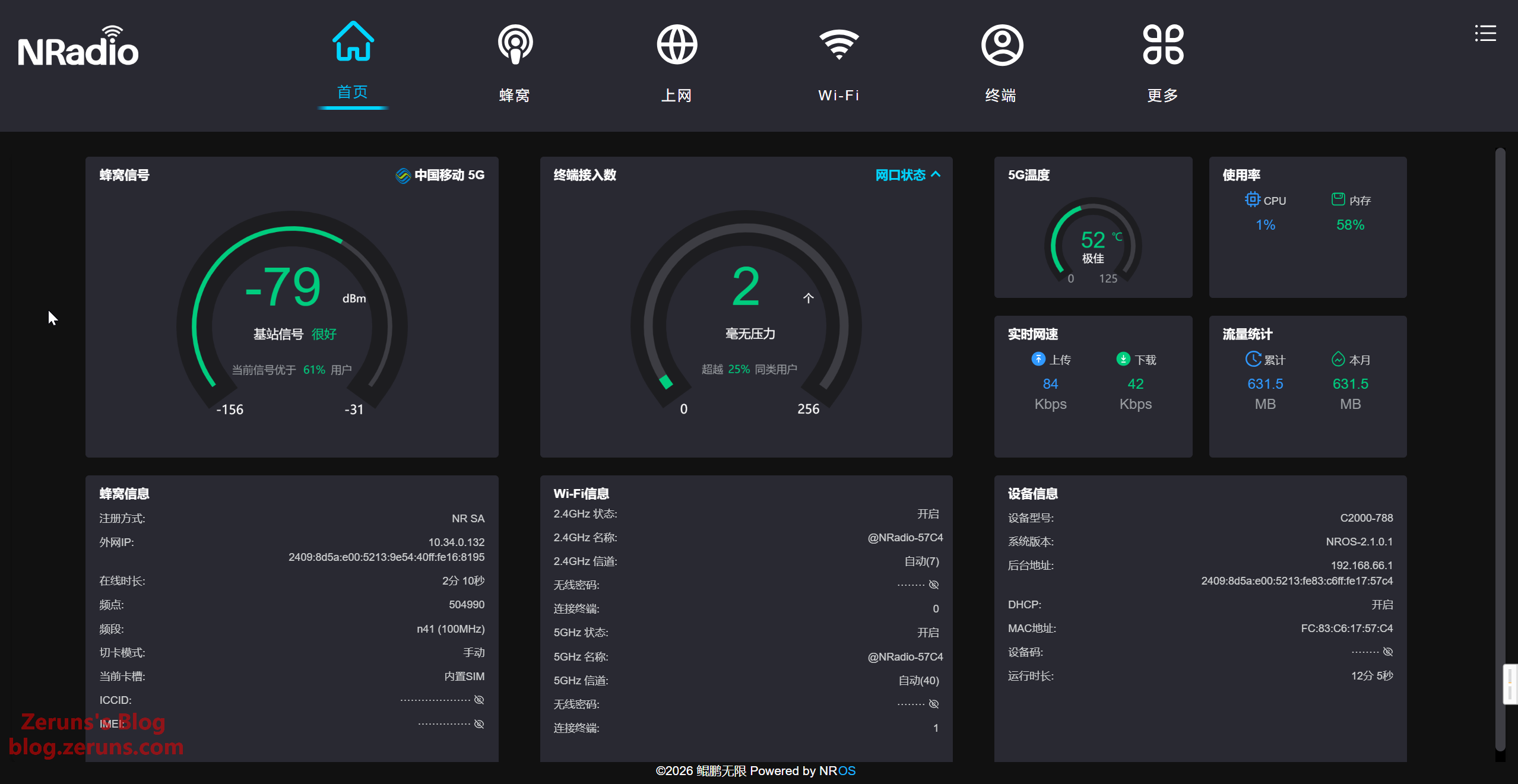
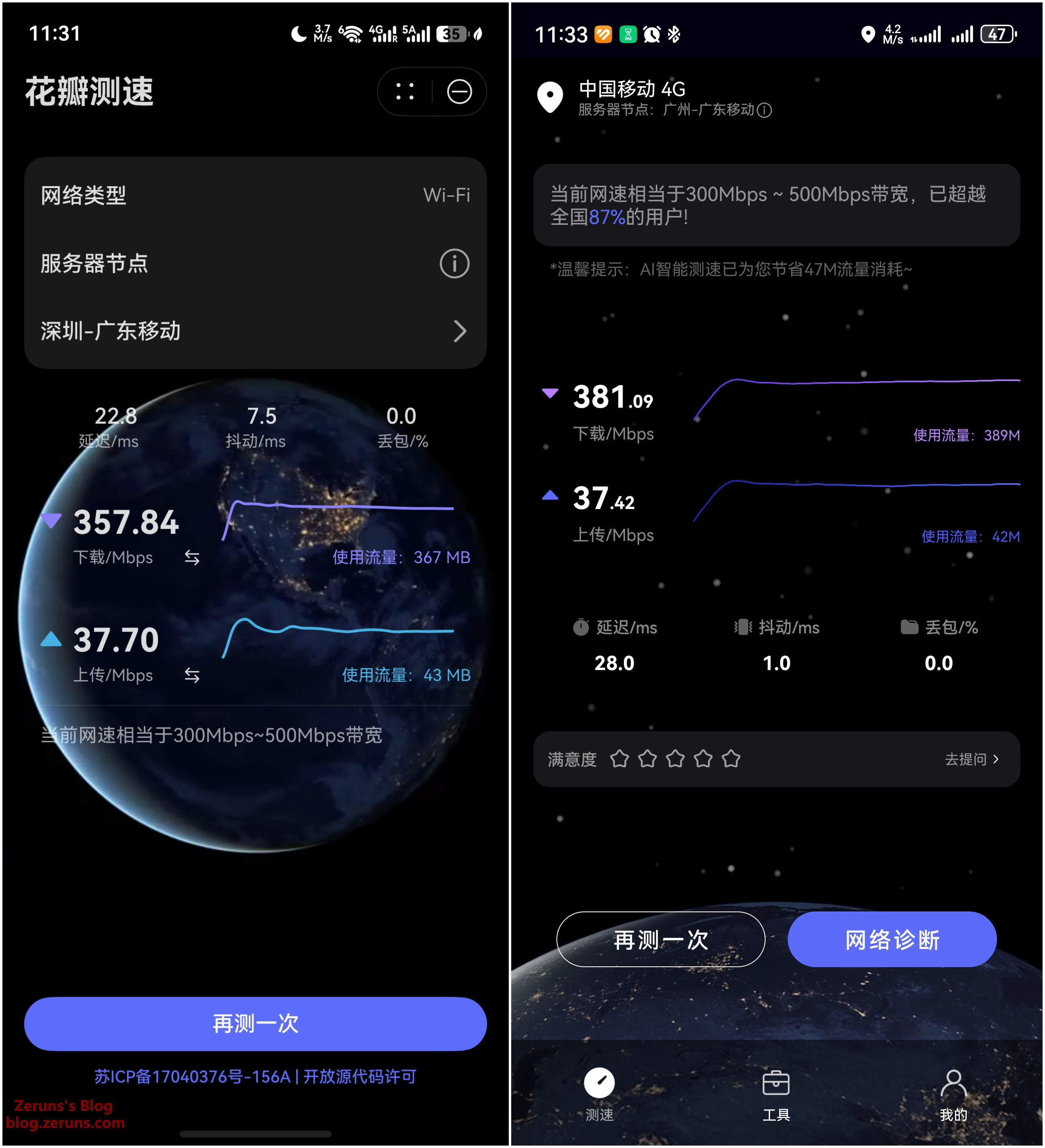
Left: C2000MAX, download speed 357.84Mbps, upload speed 37.7Mbps;
Right: Huawei Mate70 Pro+, download speed 381.09Mbps, upload speed 37.42Mbps.
Maximum WiFi Speed
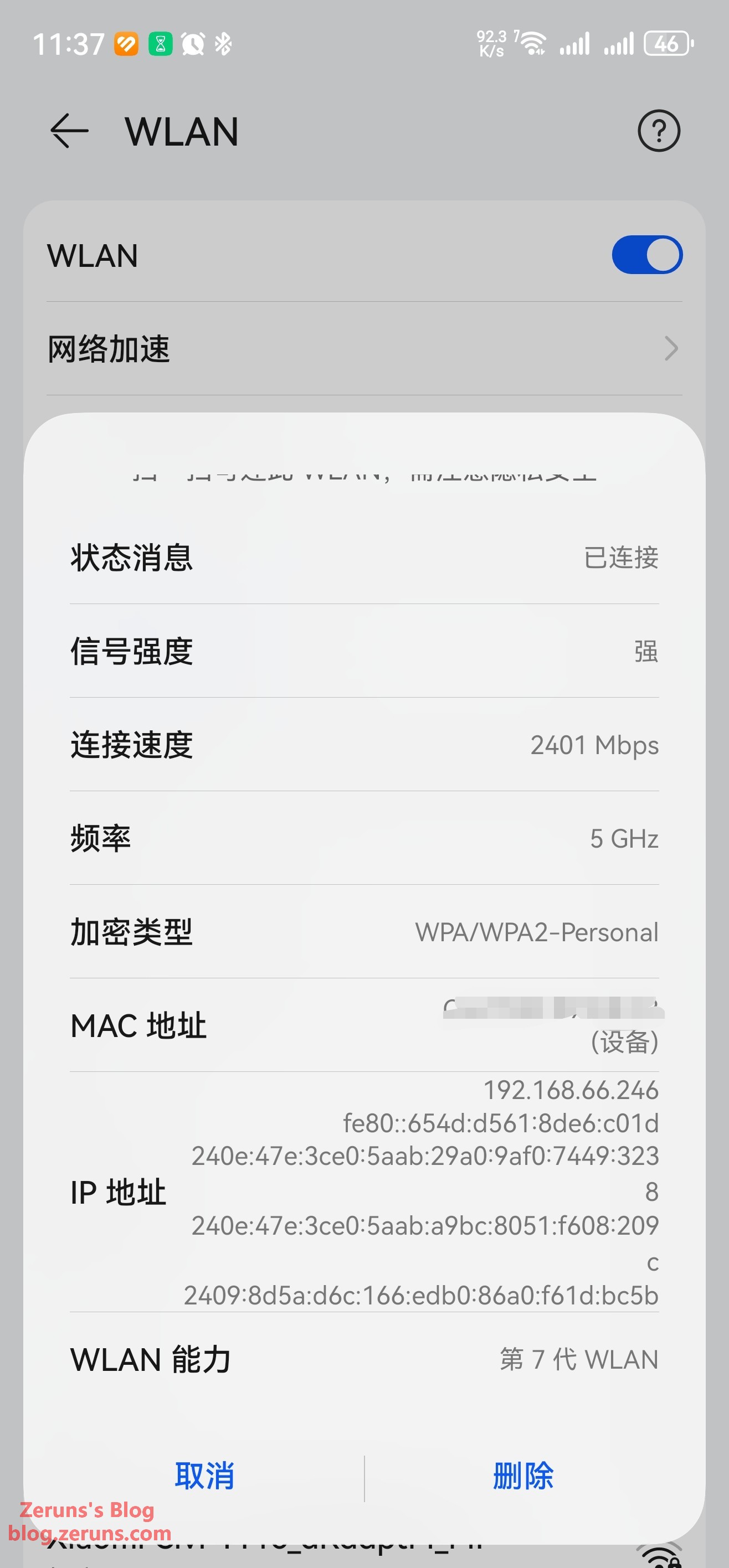
The maximum negotiated speed for the 5GHz WiFi band is approximately 2401Mbps.
Power Consumption Test
Applying 5V input voltage, the device fails to start properly, with current fluctuating within 0.2A. The USB-A port outputs 5V/2A.
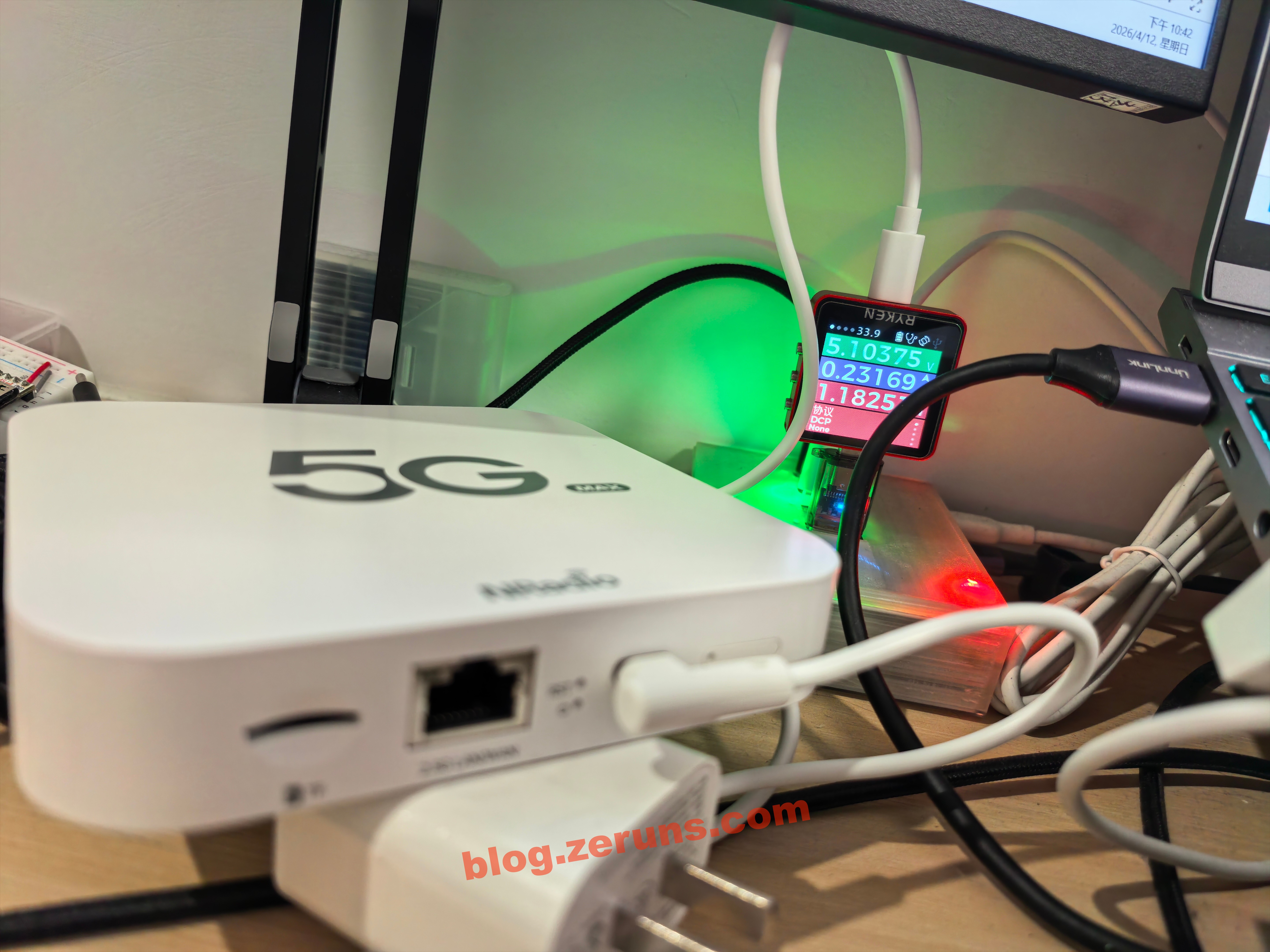
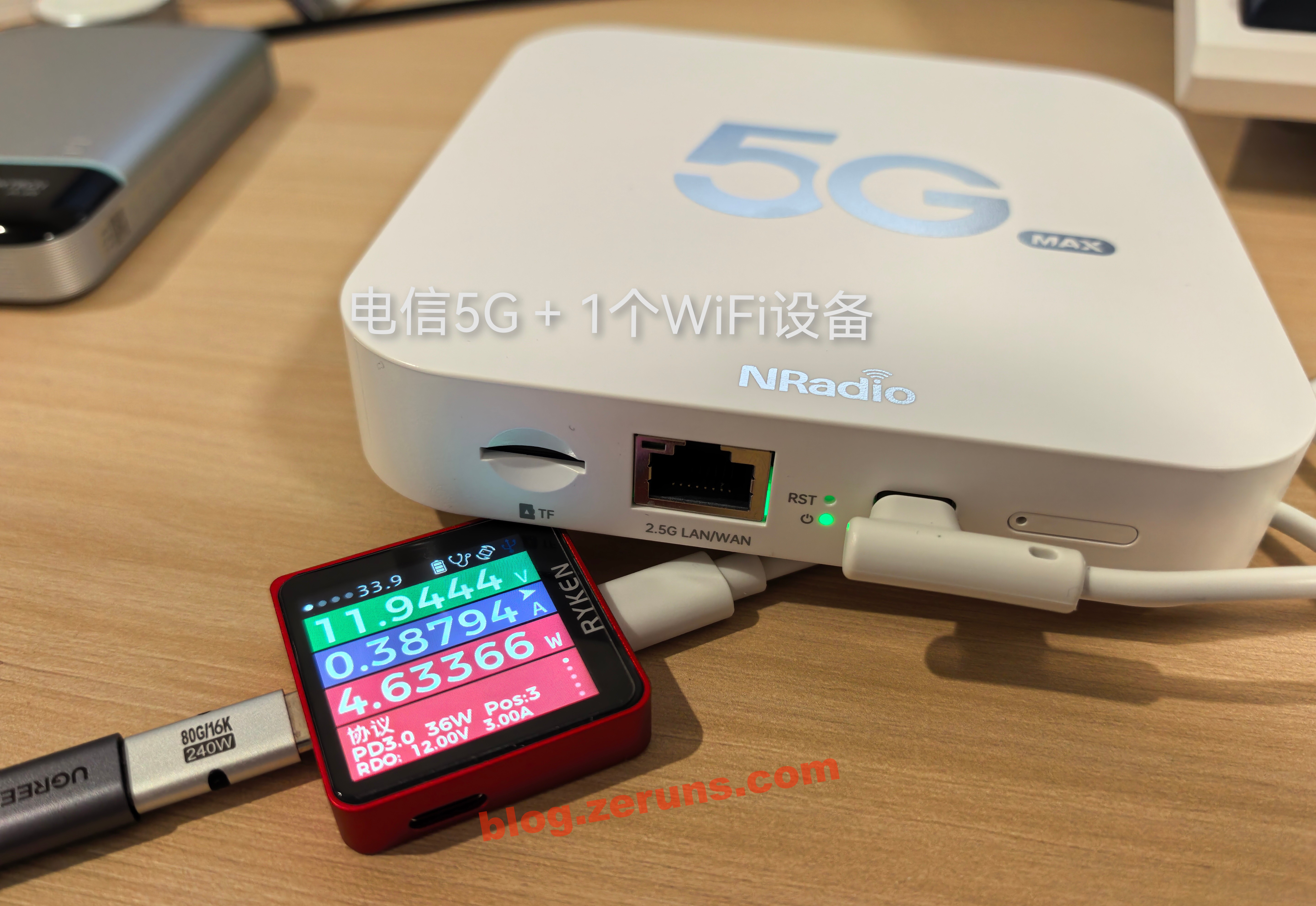
On China Telecom 5G, with one WiFi device connected but no data transfer, power consumption is around 4.6W.
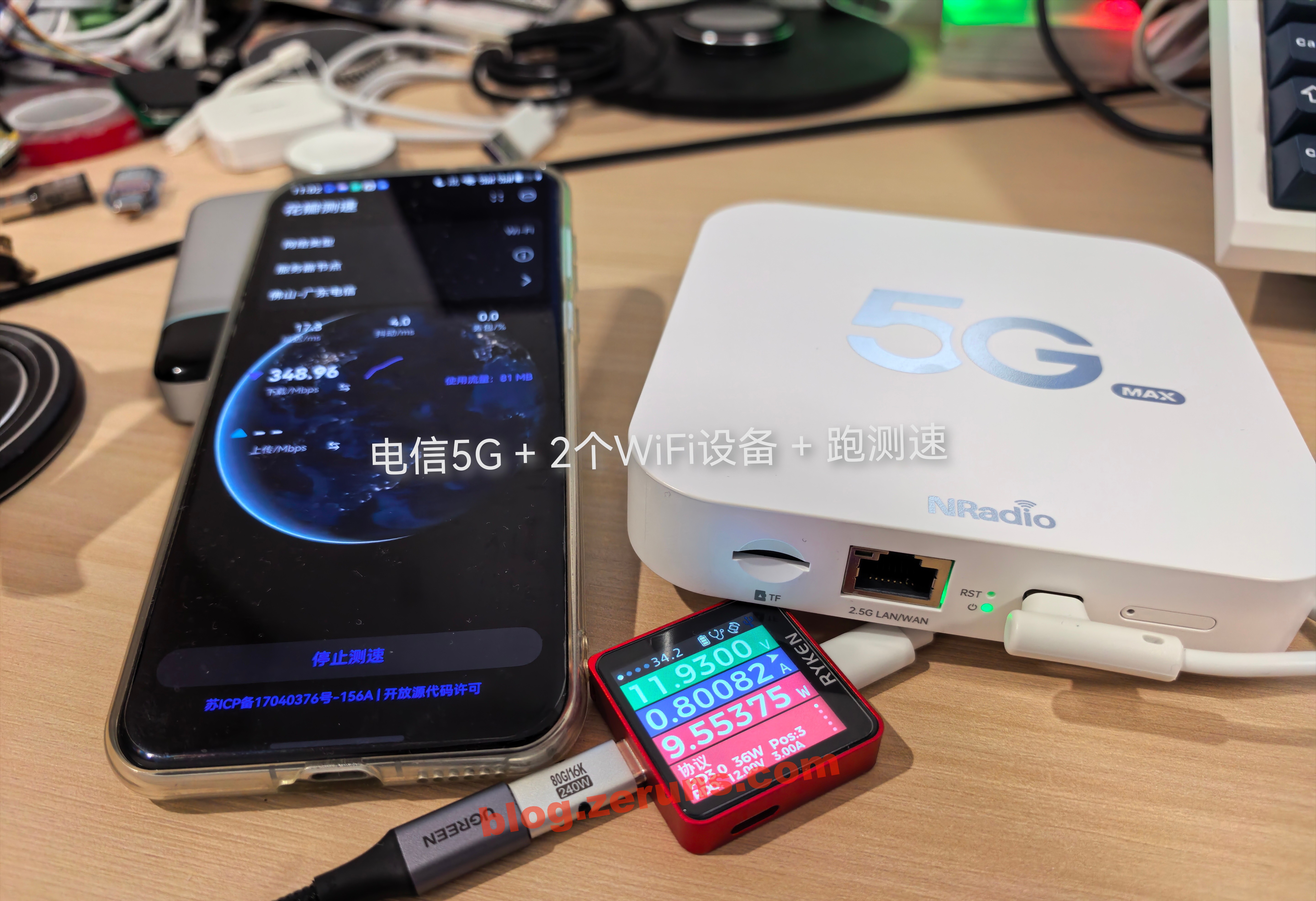
On China Telecom 5G, with two WiFi devices connected and speed testing, power consumption is around 9.5W.
Data Plan Pricing
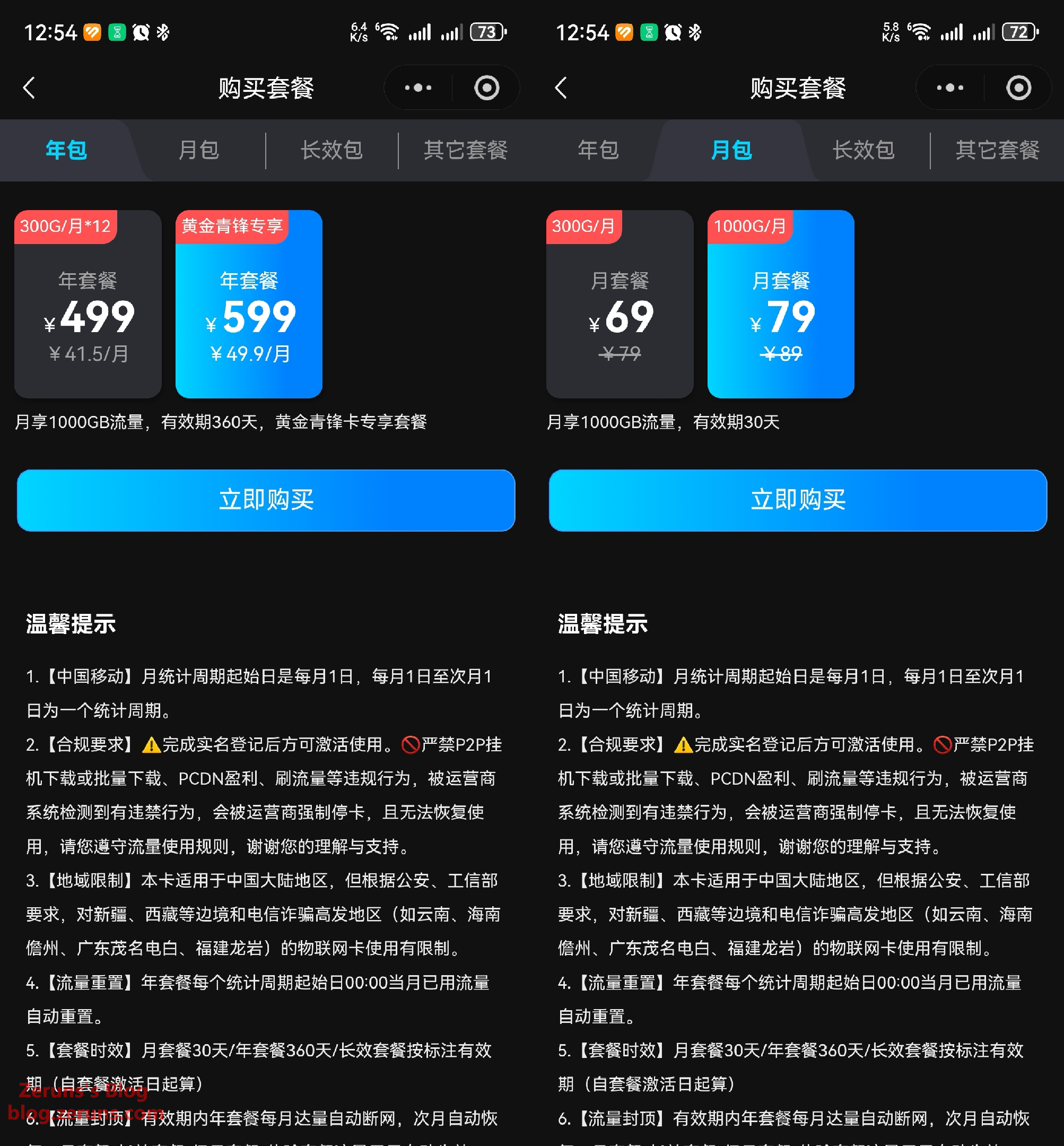
The version I purchased includes one built-in data SIM and supports two additional SIM cards. The built-in card is from China Mobile.
1TB per month, annual plan 599 yuan (approximately 49.9 yuan/month), monthly plan 79 yuan/month, reasonable pricing.
Web Interface
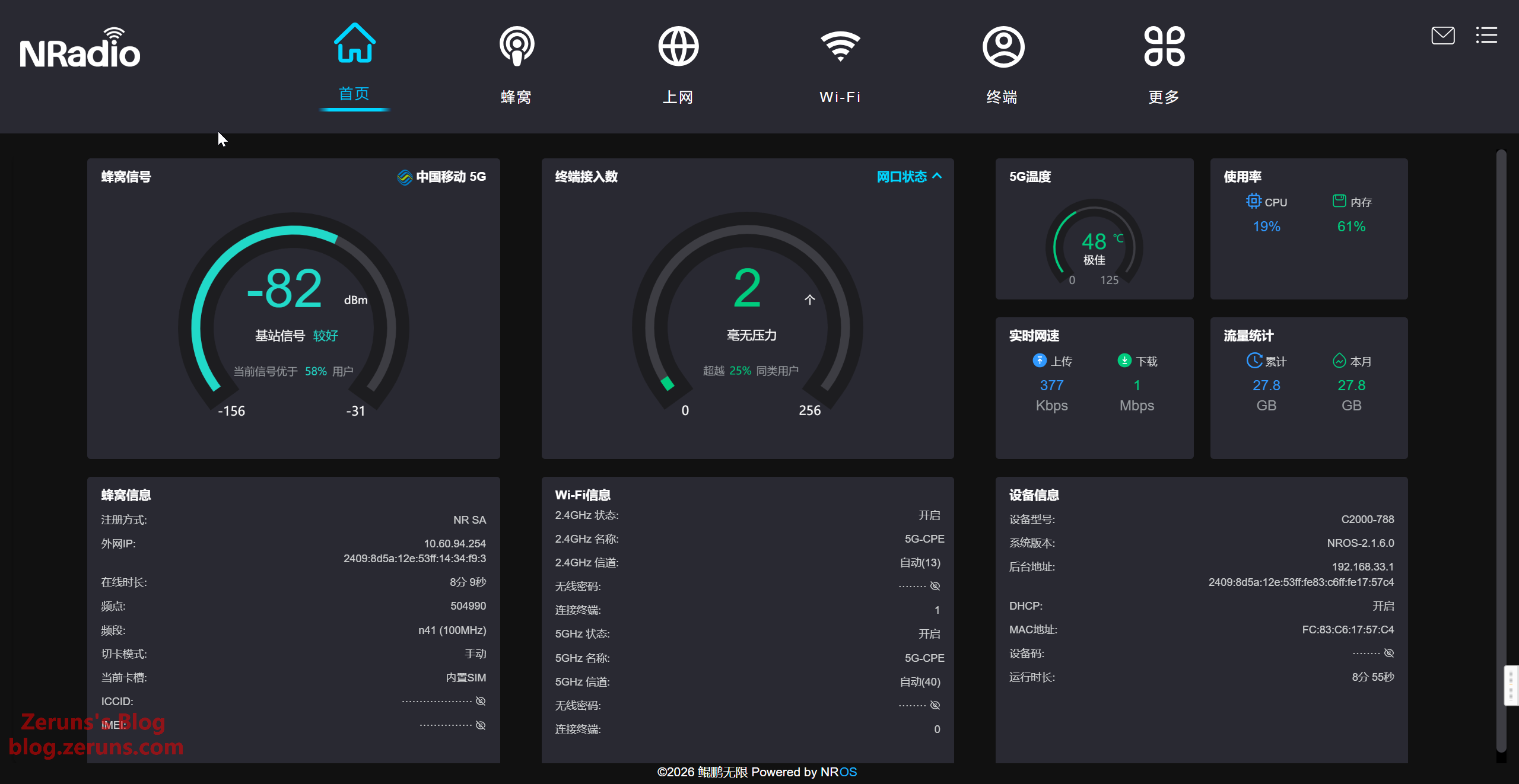
Homepage showing basic device and network information.
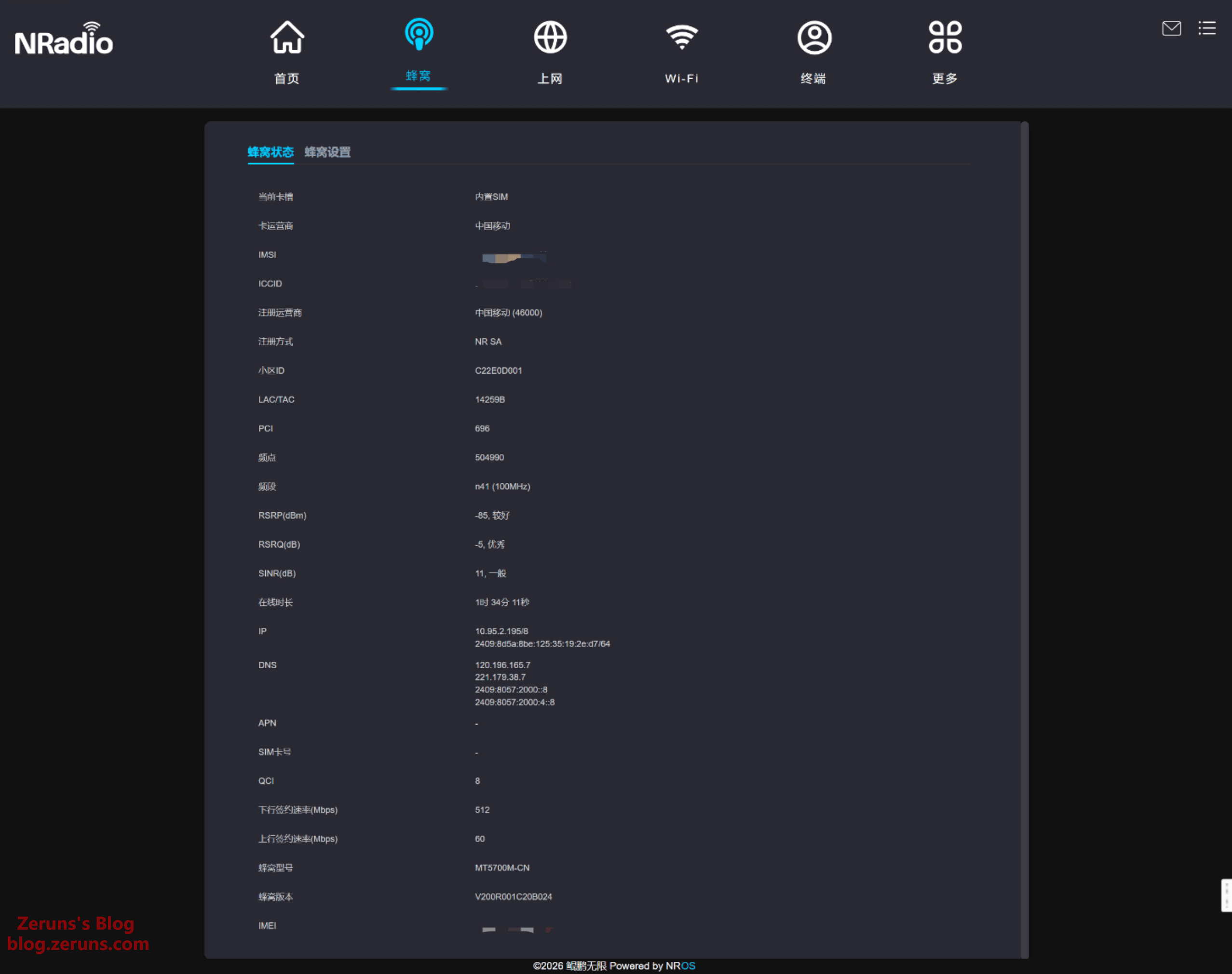
Cellular status page displaying detailed cellular network information (RSRP signal strength, cell ID, network type, IP, DNS, carrier, RSRQ, SINR, frequency channel, band, etc.).
Cellular ~350-450 Mbps (based on 30/40MHz) | China Radio and Television, China Mobile (jointly built and shared) | FDD low-band (700MHz). Extremely low propagation loss and extremely wide coverage. It is the main force for China’s 5G to penetrate下沉 markets and is often used for VoNR voice services. |
| n41 | 2515-2675 MHz | ~1.5 Gbps+ (based on 100/160MHz) | China Mobile | TDD mid-to-high band. The core backbone of China Mobile’s 5G network. Balances good coverage with extremely high data capacity, used for continuous coverage in urban areas, county towns, and major roads. |
| n78 | 3300-3600 MHz | ~1.5-1.7 Gbps+ (based on 100MHz) | China Telecom, China Unicom, China Radio and Television | TDD mid-to-high frequency band (3.5GHz). The globally dominant 5G band. Provides extremely wide bandwidth, primarily serving high-density urban hotspots (commercial districts, offices, universities) with high data throughput requirements. |
4G Frequency (LTE) Comparison Table
| Band Number | Frequency Range | Peak Rate | Domestic Operators | Characteristics and Typical Scenarios |
|---|---|---|---|---|
| B1 | 1920-1980 MHz (uplink) 2110-2170 MHz (downlink) |
~150 Mbps (single carrier 20MHz) | China Unicom, China Telecom | FDD backbone. Originally a 3G core band, this higher-frequency band is mainly used for 4G basic capacity coverage in medium/large cities and high-traffic areas. |
| B3 | 1710-1785 MHz (uplink) 1805-1880 MHz (downlink) |
~150 Mbps (single carrier 20MHz) | China Unicom, China Telecom, China Mobile | FDD core backbone. The world’s most widely used 4G band, serving as the main carrier for 4G networks with balanced coverage and speed. |
| B5 | 824-849 MHz (uplink) 869-894 MHz (downlink) |
~75 Mbps (single carrier 10MHz) | China Telecom, China Unicom | FDD low-band. Long propagation distance, used mainly for rural wide coverage and low-speed device access like NB-IoT (Narrowband IoT). |
| B8 | 880-915 MHz (uplink) 925-960 MHz (downlink) |
~75 Mbps (single carrier 10MHz) | China Mobile, China Unicom | FDD low-band. Repurposed from 2G/3G, providing deep indoor coverage (elevators, basements) and VoLTE voice service in remote areas. |
| B28 | 703-748 MHz (uplink) 758-803 MHz (downlink) |
~150 Mbps (single carrier 20MHz) | China Radio and Television (partially shared with China Mobile) | FDD low-band. Mainly used in remote areas, forested regions, or sea zones to provide extremely wide 4G signal coverage. |
| B34 | 2010-2025 MHz | ~50 Mbps (single carrier 15MHz) | China Mobile | TDD band. Repurposed from the original TD-SCDMA. Narrow bandwidth, primarily serving as hotspot capacity supplement or IoT access. |
| B38 | 2570-2620 MHz | ~100 Mbps (single carrier 20MHz) | China Mobile | TDD high-frequency band. Higher signal attenuation but good interference resistance, mainly used for capacity absorption in dense urban hotspots (train stations, pedestrian streets). |
| B39 | 1880-1920 MHz | ~100 Mbps (single carrier 20MHz) | China Mobile | TDD backbone band. Moderate frequency, balancing coverage and capacity. Commonly used for continuous urban coverage and indoor distribution systems. |
| B40 | 2300-2400 MHz | ~100 Mbps (single carrier 20MHz) | China Mobile, China Telecom, China Unicom | TDD indoor band. Primarily used by Chinese carriers for indoor distribution systems. Commonly found in malls, subways, and other enclosed high-traffic spaces. |
| B41 | 2515-2675 MHz | ~300 Mbps+ (multi-carrier aggregation) | China Mobile, China Telecom, China Unicom | TDD high-capacity backbone band. Extremely abundant resources, often using carrier aggregation (CA) to provide very high 4G speeds, primarily targeting extreme high-traffic scenarios in dense urban areas. |
Recommended Reading
- Cost-effective and affordable VPS/cloud server recommendations: https://blog.zeruns.com/archives/383.html
- Minecraft server setup guide: https://blog.zeruns.com/tag/mc/
- Discourse forum setup guide, beginner-friendly deployment of open-source Discourse community forums: https://blog.zeruns.com/archives/919.html
- Cross-border e-commerce independent store setup guide, WordPress foreign trade website building guide: https://blog.zeruns.com/archives/889.html
- Step-by-step tutorial for deploying Halo blogs with 1Panel panel: https://blog.zeruns.com/archives/858.html
- [Open Source] Buck-Boost DCDC adjustable power supply based on SC8703 (voltage and current adjustable, supports PD fast charging input): https://blog.zeruns.com/archives/929.html
English Version of the Article: https://blog.zeruns.top/archives/88.html