EMC Common Mode Choke Selection and Working Principle

1. Mechanism of EMI Common-Mode Current Generation

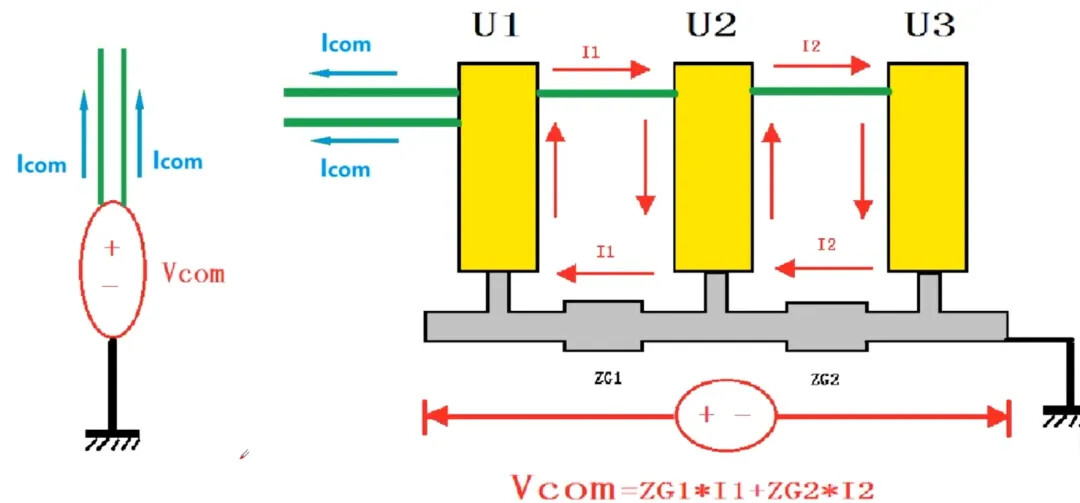
a. Differential currents generate differential-mode electromagnetic fields, inducing common-mode current on traces within the differential loop area;

b. (Main source of common-mode current/radiation) Operating current flows through the board’s ground plane. Due to ground impedance, a common-mode voltage (ground potential difference) is formed across the ground, which drives port signals and generates common-mode current on cables;

c. Parasitic loops formed between cables and earth ground induce common-mode current via magnetic coupling;

d. Switching power supplies generate common-mode current through distributed parameters such as heatsink and transformer parasitic capacitance;

e. High-frequency noise on high-speed signal/power planes couples into adjacent layer traces, forming common-mode interference.

2. Working Principle of Common-Mode Choke

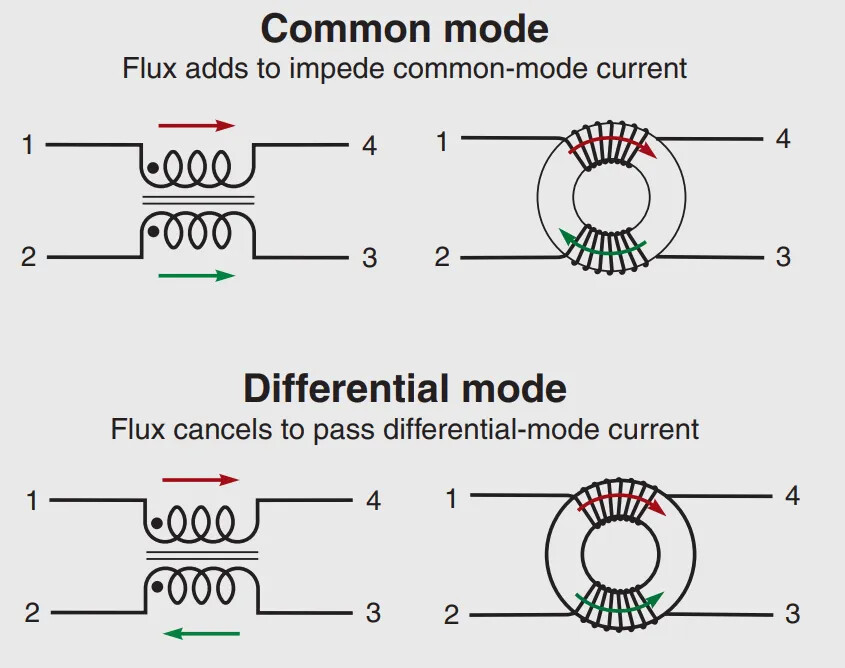
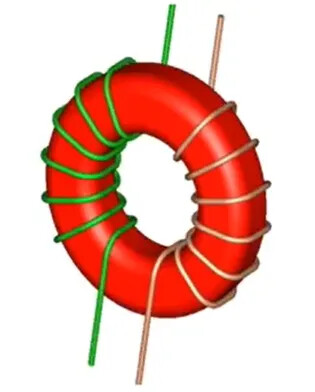
According to the right-hand screw rule, when differential-mode current passes through the windings of a common-mode choke, two opposing and canceling magnetic fields are generated. When common-mode current flows through the windings, two reinforcing magnetic fields are produced, increasing the overall impedance of the coil and thereby attenuating the common-mode current.

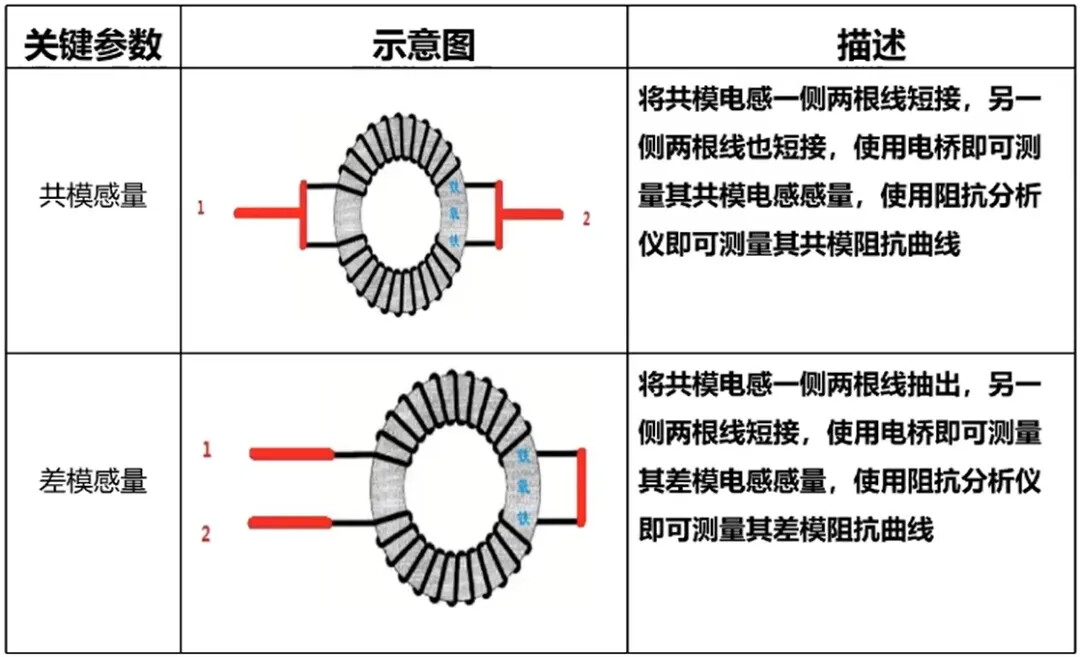
3. Measurement of Common-Mode Inductance

4. Winding Methods for Common-Mode Chokes

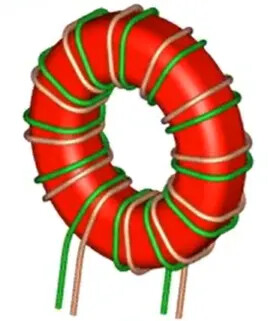
a. Bifilar winding (twisted pair) – high symmetry, relatively low differential-mode impedance

b. Separate winding (sectional) – lower symmetry, relatively higher differential-mode impedance

5. Selection of Common-Mode Choke Parameters

a. AC/DC Power Supply Applications

Common-mode inductance – used for power filtering; larger inductance values provide better filtering performance
Differential-mode leakage inductance – inductance imbalance caused by winding asymmetry
Rated current – operating current should be below rated value; consider temperature rise and derating design
Rated voltage – nominal operating voltage under normal conditions
DC resistance (DCR) – causes power loss and heating; lower is better
Withstand voltage – maximum voltage that can be applied between like windings for a specified duration
Insulation resistance – resistance between separate windings

b. Differential Signal Applications

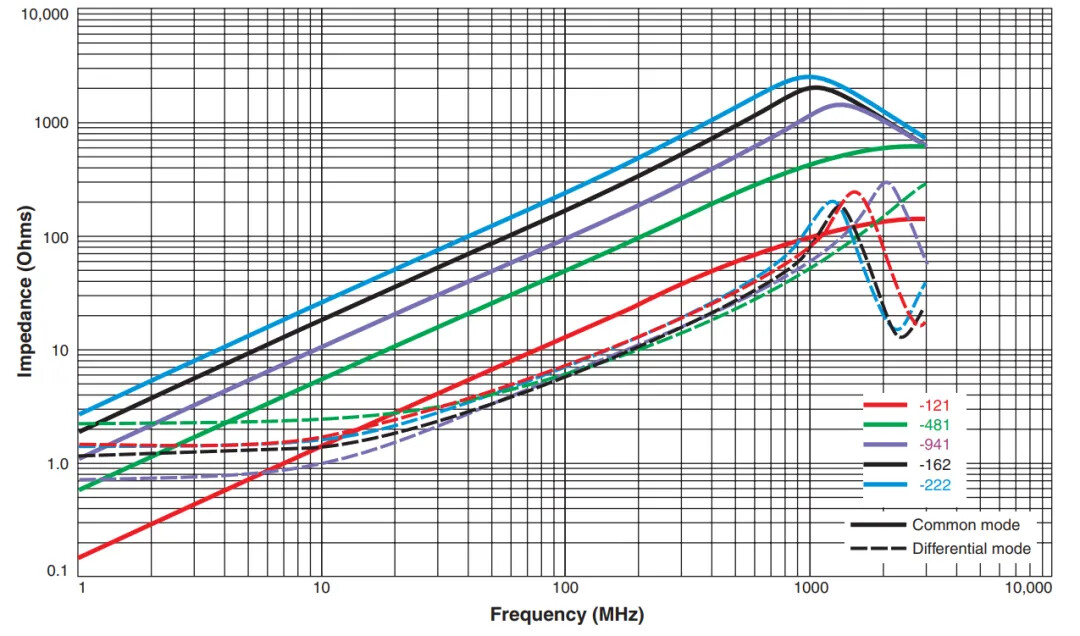
Common-mode impedance – higher impedance at target frequencies provides better filtering of common-mode noise
Differential-mode impedance – affects signal integrity; should closely match transmission line impedance. In high-speed digital applications, keep differential-mode impedance as low as possible. Eye diagram and insertion loss testing may be required when necessary.

6. Applications of Common-Mode Chokes

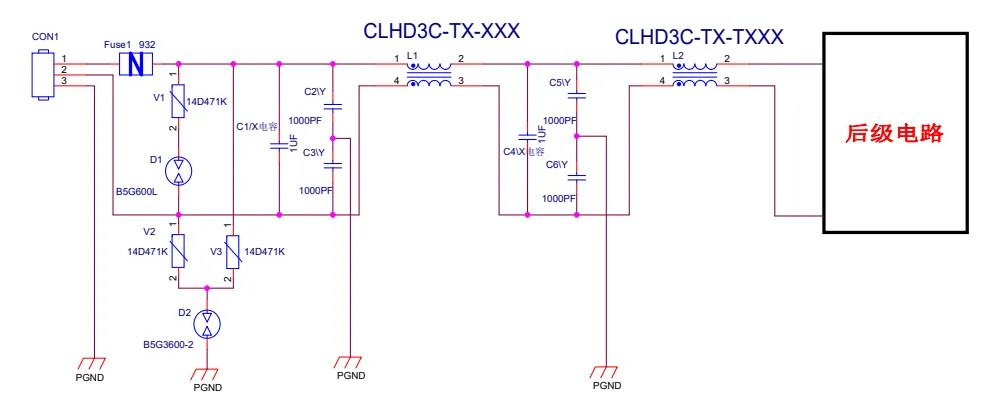
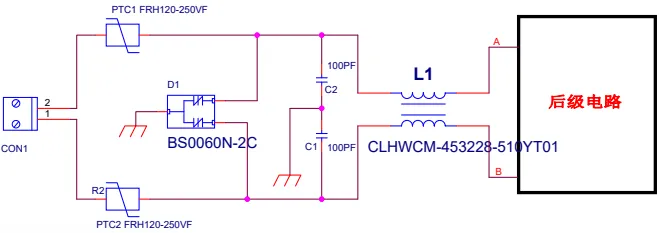
a. EMC Reference Circuit for AC110–220V Input

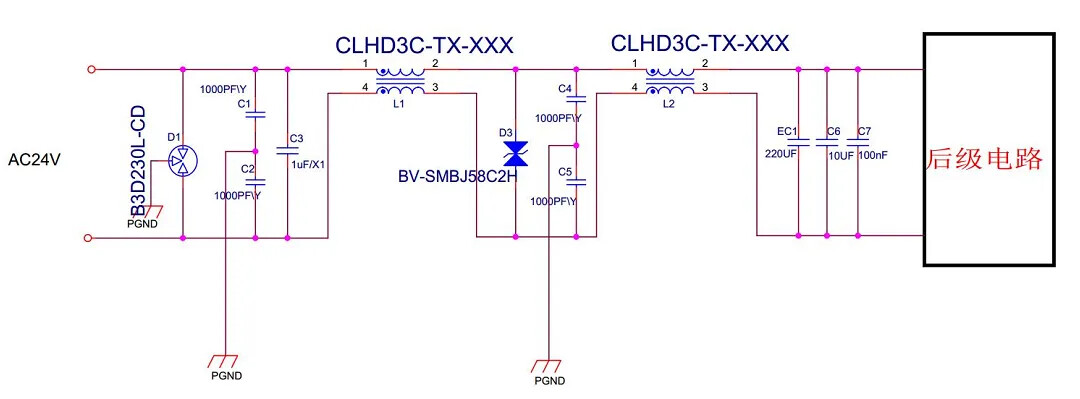
b. EMC Reference Circuit for AC24V Input

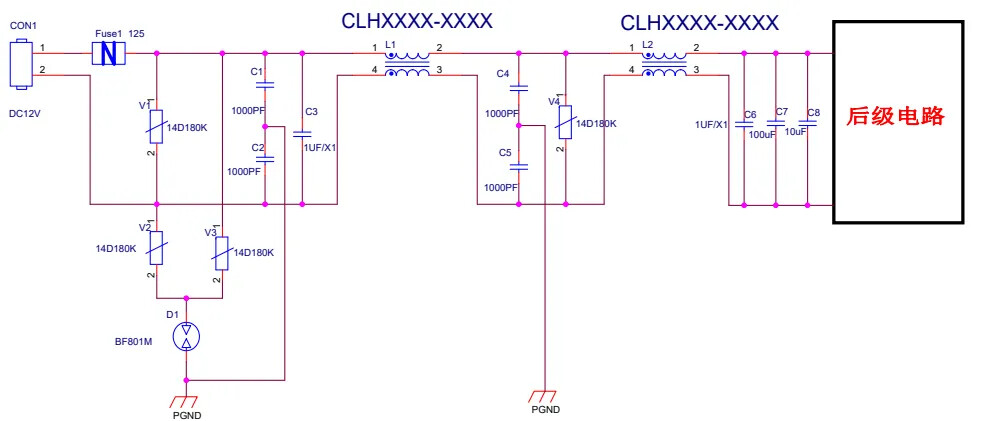
c. EMC Reference Circuit for DC12V Input

d. EMC Reference Circuit for CAN Interface

e. EMC Reference Circuit for 485 Interface

2 Likes