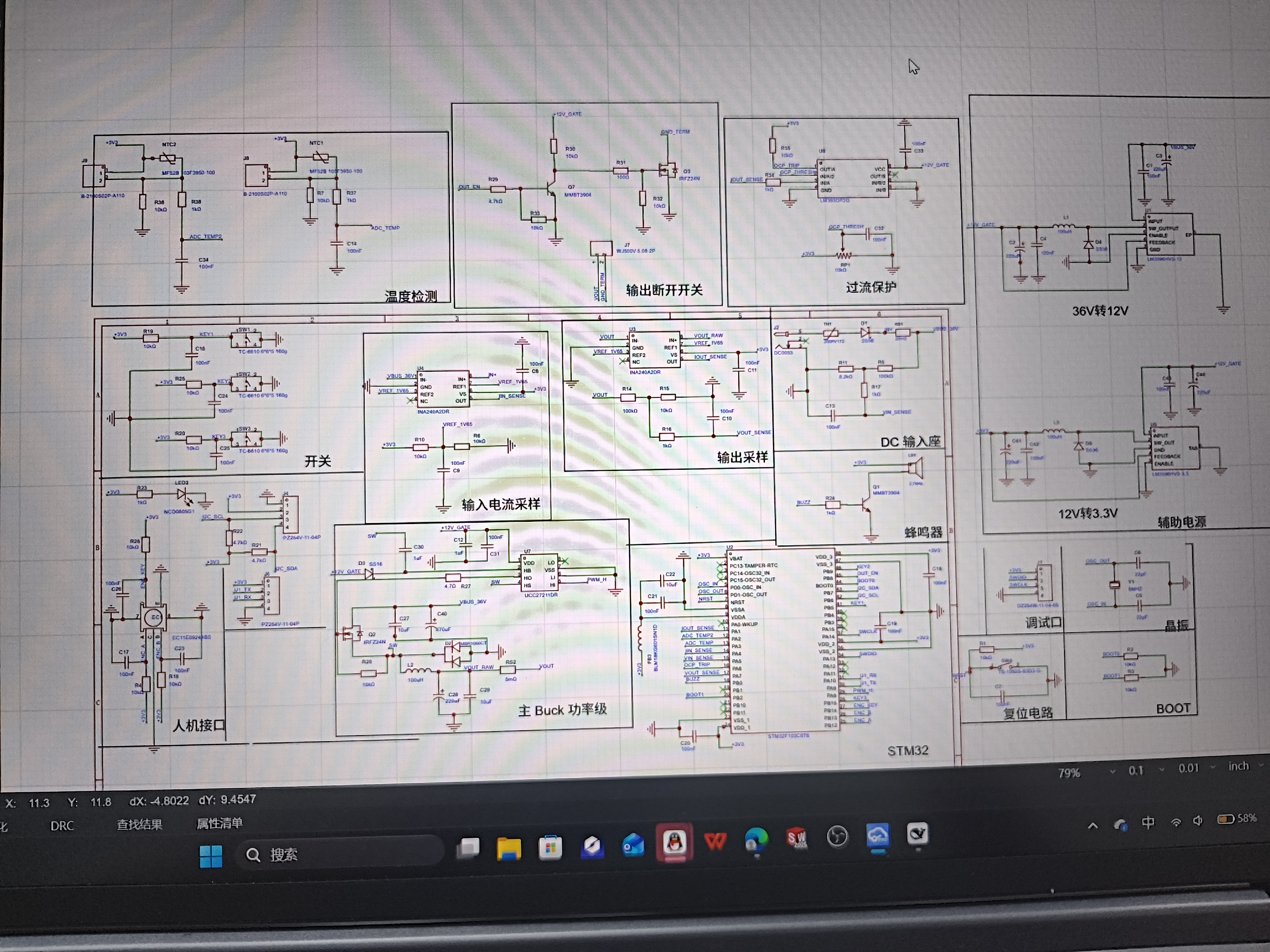
- ¿No das ningún detalle concreto de tu pregunta y no aportas tus propias reflexiones ni dudas? ¿Y directamente gorroneas a los demás para que te hagan una revisión completa del esquemático?
- La imagen ni siquiera es una captura de pantalla, está tan borrosa… ¿es que ni la miras después de hacerle la foto? (Consejo: LCEDA (立创EDA) tiene una función de exportación que permite exportar el esquemático como imagen/PDF)
Lectura recomendada: https://bbs.eeclub.top/t/topic/109
We need to translate the given English text into Spanish. The target locale is “es”. We need to follow the instructions: preserve Markdown, HTML, etc. The text includes a list with bullets, some inline code-like formatting (but not code), and emphasis. We should translate naturally, matching the informal tone. The source uses informal “Hey”, “I’ll bite”, “you”, “your”, etc. So in Spanish, we should use informal “tú” forms, not “usted”. Also, we should preserve the structure: asterisks for bullet points, and the line breaks.
We need to be careful with technical terms: “schematic” → “esquemático” or “esquema”? In electronics, “schematic” is often “esquema” or “esquemático”. “PCB” not mentioned. “EasyEDA” is a brand, keep as is. “File → Export” should be translated? The instruction says preserve links, images, etc. But here “File → Export” is a menu path, maybe we can translate “File” as “Archivo”? But it’s a UI element. Typically, in translations, UI menu items are translated. However, the instruction says “Do not translate code snippets or programming language names”, but this is not code, it’s a menu path. But it’s part of the software interface. We could translate to “Archivo → Exportar” but that might not match the actual software if it’s in English. But the original says “In EasyEDA it’s literally File → Export”. If we translate, it becomes “En EasyEDA es literalmente Archivo → Exportar”. That seems fine. But we need to ensure we don’t alter the meaning. The instruction says “Preserve all links, images, and other media references without translation.” Here “File → Export” is not a link or media, it’s text. So we can translate.
Also, “ERC” stands for Electrical Rule Check, keep as ERC.
“STM32” is a microcontroller, keep as is. “buck controller” → “controlador buck” or “controlador reductor”? In Spanish, “buck converter” is often “convertidor reductor” or “convertidor buck”. I’ll use “convertidor buck” as it’s common. “isolation” → “aislamiento”.
“input current-sense topology” → “topología de detección de corriente de entrada”.
“gate drive” → “driver de puerta” or “excitación de puerta”? I’ll use “driver de puerta” as it’s common in electronics.
The tone is informal, so use “tú”. For example, “I’ll bite” → “Voy a entrar al trapo” or “Me lanzo” but we need to be natural. “I’ll bite” means I’ll respond. Maybe “Vale, voy a responder” or “Acepto el anzuelo”. But we can say “Bueno, voy a picar” but that’s literal. Better: “Voy a responder” or “Me animo”. Actually, “I’ll bite” is idiomatic meaning “I’ll take the bait” or “I’ll respond”. In Spanish, “Voy a morder el anzuelo” is too literal. Maybe “Me voy a lanzar” or “Voy a contestar”. I’ll go with “Voy a responder” but that loses the idiomatic flavor. Or “Voy a entrar al trapo” is colloquial. But careful: “entrar al trapo” is more like “to take the bait” in an argument. I think “Voy a responder” is safe and natural.
“I’m not trying to pile on” → “no quiero sumarme a las críticas” or “no quiero echarte más leña al fuego”. “pile on” means to add more criticism. So “no pretendo sumarme a las críticas” or “no quiero ser uno más en la crítica”. I’ll use “no quiero sumarme a las críticas”.
“that photo really is impossible to review” → “esa foto es realmente imposible de revisar”. “I can barely read the net names” → “Apenas puedo leer los nombres de las redes”. “net names” in PCB context, “net” is “red” in Spanish. “component values” → “valores de los componentes”.
“If you want a real review, give people something to work with:” → “Si quieres una revisión de verdad, dale a la gente algo con lo que trabajar:” or “danos algo con lo que trabajar”. Since it’s addressing the person, informal “tú”. “give people something to work with” → “dar a la gente algo con lo que trabajar”. But we can say “danos algo con lo que trabajar” if it’s directed at the person. The original says “give people”, but it’s a general statement. I’ll keep it as “dale a la gente algo con lo que trabajar”.
Bullet points:
- Export the schematic as a PDF or high-res PNG. In EasyEDA it’s literally File → Export — takes five seconds, and the output is readable.
→ “* Exporta el esquema como PDF o PNG de alta resolución. En EasyEDA es literalmente Archivo → Exportar — tardas cinco segundos, y el resultado es legible.”
Note: “high-res” → “alta resolución”. “takes five seconds” → “tardas cinco segundos” or “se tarda cinco segundos”. I’ll use “tardas cinco segundos” to match the informal tone.
-
Post your spec: input range (you wrote 36V, but what’s the absolute max, and any transients?), output voltage/current, efficiency target, why an STM32 instead of a dedicated buck controller, and whether you need isolation.
→ “* Publica tus especificaciones: rango de entrada (escribiste 36V, pero ¿cuál es el máximo absoluto, y hay transitorios?), tensión/corriente de salida, objetivo de eficiencia, por qué un STM32 en lugar de un controlador buck dedicado, y si necesitas aislamiento.” -
Run ERC first and clear the floating/single-pin nets, so nobody has to guess what’s a mistake and what’s intentional.
→ “* Ejecuta primero el ERC y elimina las redes flotantes/de un solo pin, para que nadie tenga que adivinar qué es un error y qué es intencional.”
Then break it up — ask one concrete question per post. “Is my input current-sense topology OK?” or “is my gate drive safe?” will get you far better answers than dumping the whole sheet and asking “is this fine?”.
→ “Luego divídelo — haz una pregunta concreta por publicación. «¿Está bien mi topología de detección de corriente de entrada?» o «¿es seguro mi driver de puerta?» obtendrás respuestas mucho mejores que volcar todo el esquema y preguntar «¿esto está bien?».”
Note: Use Spanish quotation marks «» as per instruction 8 for quoted text. The original uses double quotes. We should use «» for the quoted questions. Also, the phrase “will get you far better answers” → “obtendrás respuestas mucho mejores”. We need to ensure the sentence flows: “haz una pregunta concreta por publicación. «…» o «…» obtendrás respuestas mucho mejores…” Actually, the original has a period after the first quoted question, then “or”, then second quoted question, then “will get you far better answers”. So in Spanish: “Luego divídelo — haz una pregunta concreta por publicación. «¿Está bien mi topología de detección de corriente de entrada?» o «¿es seguro mi driver de puerta?» obtendrás respuestas mucho mejores que volcar todo el esquema y preguntar «¿esto está bien?».” But note: The original has a period after the first quoted question, then “or” begins a new sentence? Actually: “ask one concrete question per post. "Is my input current-sense topology OK?" or "is my gate drive safe?" will get you far better answers…” So the quoted questions are part of the same sentence. In Spanish, we can keep the structure: “haz una pregunta concreta por publicación. «¿Está bien mi topología de detección de corriente de entrada?» o «¿es seguro mi driver de puerta?» obtendrás respuestas mucho mejores…” But the period after the first quoted question might be odd. Better to combine: “haz una pregunta concreta por publicación: «¿Está bien mi topología de detección de corriente de entrada?» o «¿es seguro mi driver de puerta?» obtendrás respuestas mucho mejores…” But the original uses a period. To preserve structure, we can keep the period and start a new sentence with “O”. But that would be “O «¿es seguro…?» obtendrás…” That’s a bit weird. I think it’s acceptable to follow the original punctuation: “haz una pregunta concreta por publicación. «¿Está bien mi topología de detección de corriente de entrada?» o «¿es seguro mi driver de puerta?» obtendrás respuestas mucho mejores…” It’s understandable.
Finally: “From what I can make out it’s a digitally controlled buck with input current sensing — nothing obviously wrong, but I genuinely can’t confirm any values. Repost a proper export and I’ll go through it block by block.”
→ “Por lo que puedo distinguir, es un buck controlado digitalmente con detección de corriente de entrada — nada obviamente incorrecto, pero sinceramente no puedo confirmar ningún valor. Vuelve a publicar una exportación adecuada y lo revisaré bloque por bloque.”
Note: “digitally controlled buck” → “buck controlado digitalmente”. “input current sensing” → “detección de corriente de entrada”. “nothing obviously wrong” → “nada obviamente incorrecto” or “nada que esté obviamente mal”. “I genuinely can’t confirm any values” → “sinceramente no puedo confirmar ningún valor”. “Repost a proper export” → “Vuelve a publicar una exportación adecuada”. “go through it block by block” → “lo revisaré bloque por bloque”.
Now, we need to ensure we preserve the line breaks. The original has a blank line between paragraphs and bullet list items have double line breaks? Looking at the source: after the first bullet there is an empty line, then the second bullet, then an empty line, then the third bullet. In markdown, that might create separate paragraphs. But we should preserve that. So we’ll include the empty lines.
The output should be a JSON object with key “output”. So we’ll write the translation as a string, escaping double quotes and newlines as needed.
Let’s construct the translation carefully.
We need to be mindful of the instruction: “Do not add any content besides the translation.” So we just output the JSON.
Now, let’s write the full translation in Spanish.
I’ll start:
“Hey, I’ll bite — and I’m not trying to pile on, but that photo really is impossible to review. I can barely read the net names, let alone the component values.”
→ “Oye, voy a responder — y no quiero sumarme a las críticas, pero esa foto es realmente imposible de revisar. Apenas puedo leer los nombres de las redes, y mucho menos los valores de los componentes.”
Or “ni mucho menos” instead of “y mucho menos”. I’ll use “ni mucho menos”.
Then blank line.
“If you want a real review, give people something to work with:”
→ “Si quieres una revisión de verdad, dale a la gente algo con lo que trabajar:”
Then blank line.
Then bullet list. In markdown, bullets are with asterisks and a space. We’ll keep that.
- Export the schematic as a PDF or high-res PNG. In EasyEDA it’s literally File → Export — takes five seconds, and the output is readable.
→ “* Exporta el esquema como PDF o PNG de alta resolución. En EasyEDA es literalmente Archivo → Exportar — tardas cinco segundos, y el resultado es legible.”
Then blank line (as in original, there’s an empty line between bullets? Actually the original has a blank line after the first bullet, before the second bullet. So we’ll include an empty line.
- Post your spec: input range (you wrote 36V, but what’s the absolute max, and any transients?), output voltage/current, efficiency target, why an STM32 instead of a dedicated buck controller, and whether you need isolation.
→ “* Publica tus especificaciones: rango de entrada (escribiste 36V, pero ¿cuál es el máximo absoluto, y hay transitorios?), tensión/corriente de salida, objetivo de eficiencia, por qué un STM32 en lugar de un controlador buck dedicado, y si necesitas aislamiento.”
Then blank line.
- Run ERC first and clear the floating/single-pin nets, so nobody has to guess what’s a mistake and what’s intentional.
→ “* Ejecuta primero el ERC y elimina las redes flotantes/de un solo pin, para que nadie tenga que adivinar qué es un error y qué es intencional.”
Then blank line.
“Then break it up — ask one concrete question per post. "Is my input current-sense topology OK?" or "is my gate drive safe?" will get you far better answers than dumping the whole sheet and asking "is this fine?".”
→ “Luego divídelo — haz una pregunta concreta por publicación. «¿Está bien mi topología de detección de corriente de entrada?» o «¿es seguro mi driver de puerta?» obtendrás respuestas mucho mejores que volcar todo el esquema y preguntar «¿esto está bien?».”
Then blank line.
“From what I can make out it’s a digitally controlled buck with input current sensing — nothing obviously wrong, but I genuinely can’t confirm any values. Repost a proper export and I’ll go through it block by block.”
→ “Por lo que puedo distinguir, es un buck controlado digitalmente con detección de corriente de entrada — nada obviamente incorrecto, pero sinceramente no puedo confirmar ningún valor. Vuelve a publicar una exportación adecuada y lo revisaré bloque por bloque.”
Now, we need to format as JSON. We’ll escape double quotes inside the string. The string will contain double quotes for Spanish quotation marks? We used «» so no double quotes. But the JSON string itself uses double quotes, so we need to escape any double quotes inside. There are none except maybe the ones in the original? We replaced them with «». So we can just wrap the whole thing in double quotes. But we need to escape newlines as \n. And also escape backslashes? Not needed.
We’ll produce a single line JSON with \n for newlines. But the output can be pretty-printed? The instruction says “reply with valid JSON only”. So we can output a compact JSON. However, to make it readable, we can keep newlines in the JSON string as \n. That’s fine.
Let’s construct the JSON.
{“output”: “Oye, voy a responder — y no quiero sumarme a las críticas, pero esa foto es realmente imposible de revisar. Apenas puedo leer los nombres de las redes, ni mucho menos los valores de los componentes.\n\nSi quieres una revisión de verdad, dale a la gente algo con lo que trabajar:\n\n* Exporta el esquema como PDF o PNG de alta resolución. En EasyEDA es literalmente Archivo → Exportar — tardas cinco segundos, y el resultado es legible.\n\n* Publica tus especificaciones: rango de entrada (escribiste 36V, pero ¿cuál es el máximo absoluto, y hay transitorios?), tensión/corriente de salida, objetivo de eficiencia, por qué un STM32 en lugar de un controlador buck dedicado, y si necesitas aislamiento.\n\n* Ejecuta primero el ERC y elimina las redes flotantes/de un solo pin, para que nadie tenga que adivinar qué es un error y qué es intencional.\n\nLuego divídelo — haz una pregunta concreta por publicación. «¿Está bien mi topología de detección de corriente de entrada?» o «¿es seguro mi driver de puerta?» obtendrás respuestas mucho mejores que volcar todo el esquema y preguntar «¿esto está bien?».\n\nPor lo que puedo distinguir, es un buck controlado digitalmente con detección de corriente de entrada — nada obviamente incorrecto, pero sinceramente no puedo confirmar ningún valor. Vuelve a publicar una exportación adecuada y lo revisaré bloque por bloque.”}
Check: In the bullet list, there is a blank line between each bullet in the original. In markdown, a blank line between list items might cause them to be separate paragraphs rather than a single list. But we are preserving exactly that. So it’s fine.
Also, note the original has “EasyEDA” and “File → Export”. I translated “File” to “Archivo” and “Export” to “Exportar”. That’s fine.
Now, ensure we have no extra spaces or newlines. The JSON string should not have literal newlines, only \n. I’ve used \n in the string. That’s correct.
Now, we need to output only the JSON. So final answer.
But wait: The instruction says “For any quoted text, use the target language’s native quotation marks — for example German „…“, French «…», Japanese 「…» — rather than ASCII quotes.” We used «» for Spanish, which is correct. Good.
Also, we need to ensure we didn’t translate “ERC”, “STM32”, “EasyEDA”, “PDF”, “PNG”, “GMT” etc. We kept them. Good.
Now, we should double-check the translation for naturalness. “Oye, voy a responder” is a bit literal for “Hey, I’ll bite”. Maybe “Vale, voy a responder” or “Vale, me lanzo”. But “Oye” is informal and matches “Hey”. “Voy a responder” is fine. “no quiero sumarme a las críticas” - good. “ni mucho menos” is correct.
“dale a la gente algo con lo que trabajar” - good.
“tardas cinco segundos” - informal, good.
“tensión/corriente de salida” - in Spanish, “voltaje” is common but “tensión” is also used. Both are fine. I’ll keep “tensión”.
“controlador buck dedicado” - good.
“redes flotantes/de un solo pin” - good.
“para que nadie tenga que adivinar qué es un error y qué es intencional.” - good.
“Luego divídelo” - “break it up” could be “divídelo” or “sepáralo”. “divídelo” is fine.
“haz una pregunta concreta por publicación” - good. “por publicación” for “per post”.
“obtendrás respuestas mucho mejores que volcar todo el esquema” - good. “volcar” means to dump. Good.
“¿esto está bien?” - good.
“Por lo que puedo distinguir” - good.
“buck controlado digitalmente” - good.
“detección de corriente de entrada” - good.
“nada obviamente incorrecto” - good.
“sinceramente no puedo confirmar ningún valor” - good.
“Vuelve a publicar una exportación adecuada” - good.
“lo revisaré bloque por bloque” - good.
All seems natural.
Now, produce the JSON. Ensure no trailing spaces. Also, the JSON should be a single line? It can have newlines if we format it, but to be safe, I’ll output a single line with \n escapes. That’s valid JSON.
So final output:
{“output”: “Oye, voy a responder — y no quiero sumarme a las críticas, pero esa foto es realmente imposible de revisar. Apenas puedo leer los nombres de las redes, ni mucho menos los valores de los componentes.\n\nSi quieres una revisión de verdad, dale a la gente algo con lo que trabajar:\n\n* Exporta el esquema como PDF o PNG de alta resolución. En EasyEDA es literalmente Archivo → Exportar — tardas cinco segundos, y el resultado es legible.\n\n* Publica tus especificaciones: rango de entrada (escribiste 36V, pero ¿cuál es el máximo absoluto, y hay transitorios?), tensión/corriente de salida, objetivo de eficiencia, por qué un STM32 en lugar de un controlador buck dedicado, y si necesitas aislamiento.\n\n* Ejecuta primero el ERC y elimina las redes flotantes/de un solo pin, para que nadie tenga que adivinar qué es un error y qué es intencional.\n\nLuego divídelo — haz una pregunta concreta por publicación. «¿Está bien mi topología de detección de corriente de entrada?» o «¿es seguro mi driver de puerta?» obtendrás respuestas mucho mejores que volcar todo el esquema y preguntar «¿esto está bien?».\n\nPor lo que puedo distinguir, es un buck controlado digitalmente con detección de corriente de entrada — nada obviamente incorrecto, pero sinceramente no puedo confirmar ningún valor. Vuelve a publicar una exportación adecuada y lo revisaré bloque por bloque.”}
De la parte que se puede ver, te doy algunos puntos que «una vez dibujada la placa no se pueden cambiar» y que hay que fijar antes de rutear:
-
Lazo caliente del Buck principal: los capacitores de entrada deben estar pegados al Drain del MOS de lado alto y al Source del MOS de lado bajo; el área del lazo cuanto más pequeña, mejor; la zona de cobre del nodo SW debe ser lo más pequeña posible, no la conviertas en antena emisora.
-
Muestreo de corriente (la parte de muestreo de corriente de entrada): la resistencia de muestreo debe conectarse con el método Kelvin de cuatro hilos; las entradas diferenciales del amplificador deben tener la misma longitud y rutearse pegadas a la resistencia; bajo ninguna circunstancia permitas que la tierra de alta corriente pase por el punto de muestreo; el RC de salida del amplificador debe estar lo más cerca posible del pin del ADC.
-
Capacitor de bootstrap: la capacidad debe ser al menos 10 veces la Qg total del MOS o más; además, confirma que se recargue por completo en cada ciclo de conmutación; no escatimes en la pequeña resistencia en serie.
-
Tiempo muerto y Vgs: con el driver de bootstrap, ten cuidado de que la Vgs del lado alto no supere los 20 V; la rectificación síncrona debe tener tiempo muerto; si los transistores superior e inferior conducen a la vez, es fuegos artificiales.
-
Derrateo por polarización DC: de ninguna manera calcules la capacidad de esa fila de MLCC de 36 V según el valor nominal; un X7R de 50 V a 36 V puede perder más de la mitad de su capacidad; se recomienda poner en paralelo electrolíticos + MLCC en la entrada.
-
Tierra: separa la tierra de potencia y la de señal, únelas en un solo punto debajo del IC del Buck; no conectes de cualquier manera la tierra de muestreo y la tierra de referencia del ADC.
-
LDO de 3V3: para reducir linealmente desde 12 V, primero calcula la disipación de potencia y la resistencia térmica del encapsulado; si puedes, pon cobre de disipación.
La imagen está muy borrosa, no se pueden ver los modelos concretos; por ahora, revisa estos puntos tú mismo.