ACASIS TBU405Pro Thunderbolt 4/3 M.2 Enclosure + Western Digital (WD) SN7100 1TB SSD – Unboxing, Review, and Teardown, Suitable as an External Drive for Mac mini
The enclosure was provided by the manufacturer for testing (contacted via Bilibili; this is the second product I’ve received for review—the first was the iKuai Q3000 router, whose review is still pending). I also purchased a WD SSD myself to replace the system drive in my Windows PC (my old system drive, with 500GB capacity, already had 400GB used).
There are rumors about using an M.2 to PCIe adapter to connect a graphics card through this enclosure.
- RIHAO USB4 Enclosure + HP FX900Pro 2TB SSD Unboxing and Review: https://blog.zeruns.com/archives/842.html
- Apple Mac Mini M4 Mini Desktop Review and Teardown: https://blog.zeruns.com/archives/851.html
- Tutorial: Migrating macOS to an External Drive on Mac Mini: https://blog.zeruns.com/archives/854.html
TBU405Pro M1 Enclosure
Purchase Links:
- JD.com: https://u.jd.com/8a71OxK
- Taobao: https://s.click.taobao.com/qgVI2ls
- Pinduoduo: https://p.pinduoduo.com/sKFV00Lx
Product Specifications
- Brand: ACASIS
- Model: TBU405Pro M1
- Supported Drives: M.2 2280/2260/2242/2230 NVMe
- Internal Interface: M.2 M-Key
- USB Specification: Thunderbolt 3/4 / USB4 / USB 3.0/3.1/3.2 / 2.0
- USB Transfer Speed: 40Gbps
- Enclosure Material: Aluminum Alloy
- Net Weight: 150g
- Dimensions: 118 x 57 x 18mm
- Warranty: 1 year
Uses a dual-controller design with JHL7440 + RTL9210 chips (data routes through the JHL7440 controller when connected to Thunderbolt 3/4 or USB4 ports, and through the RTL9210 controller for USB 3.0/2.0 connections).
Review Video: https://www.bilibili.com/video/BV1XKPMe1EYL/
Unboxing and Teardown
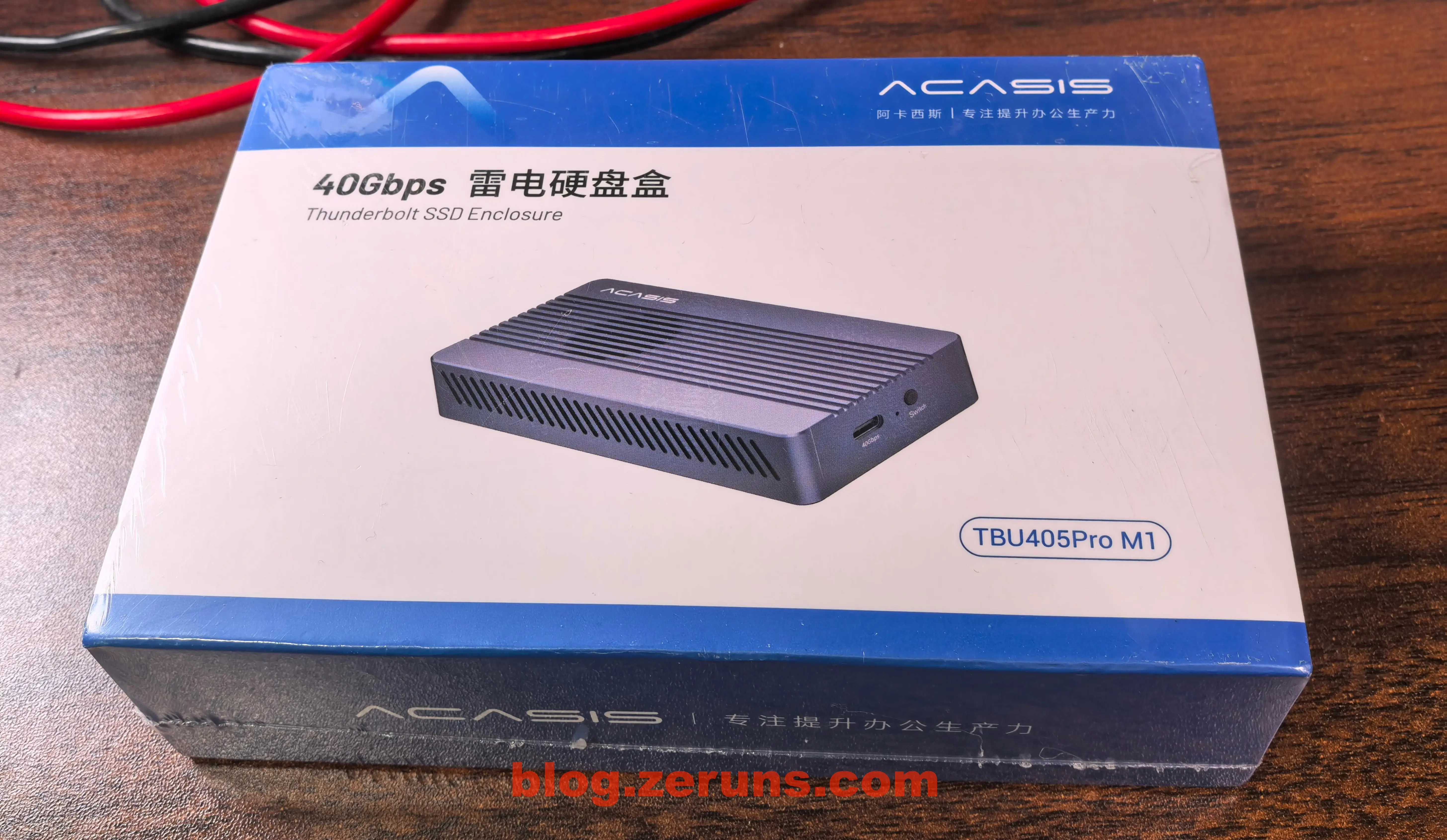
Front of the retail packaging
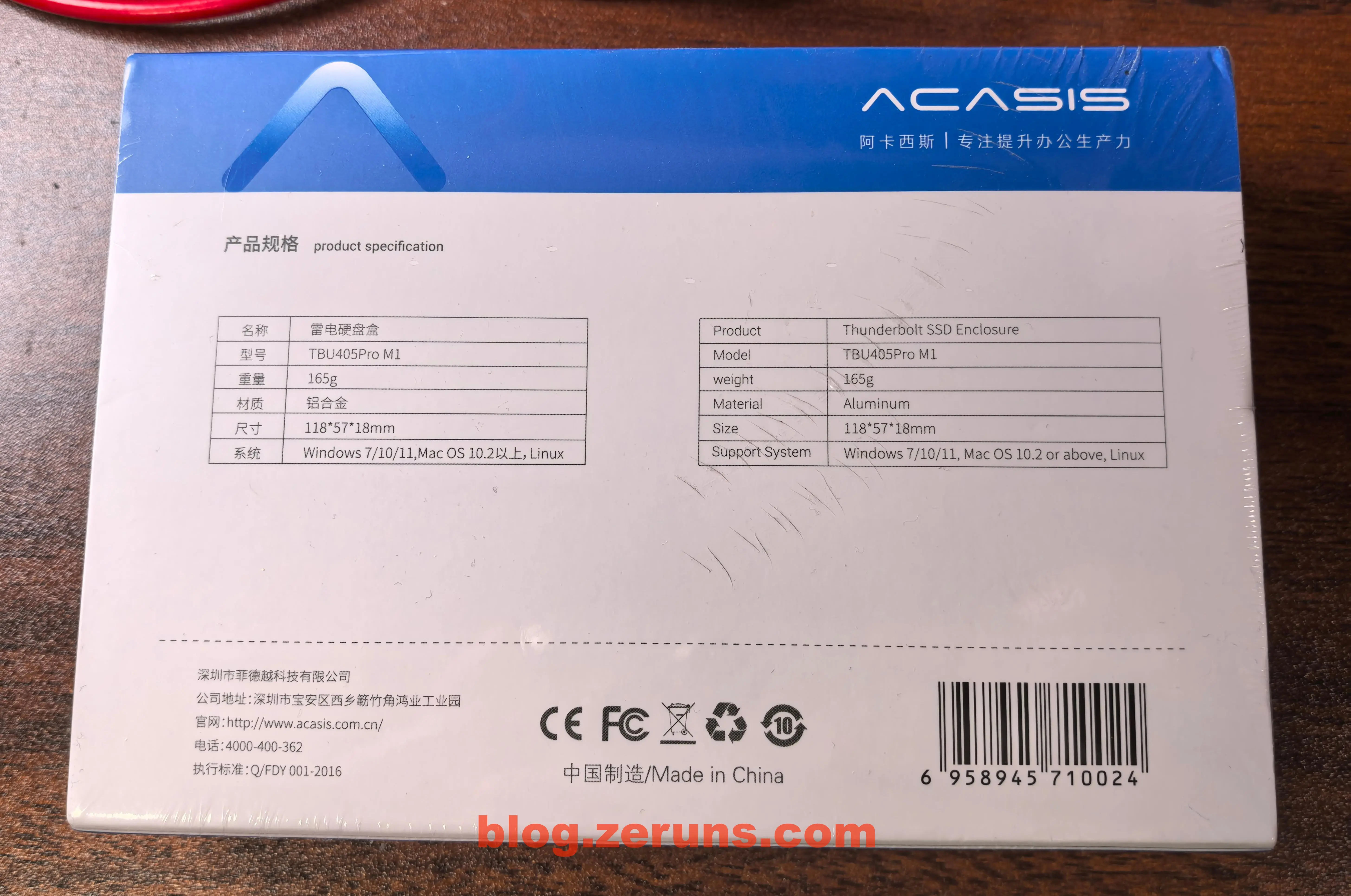
Back of the retail packaging
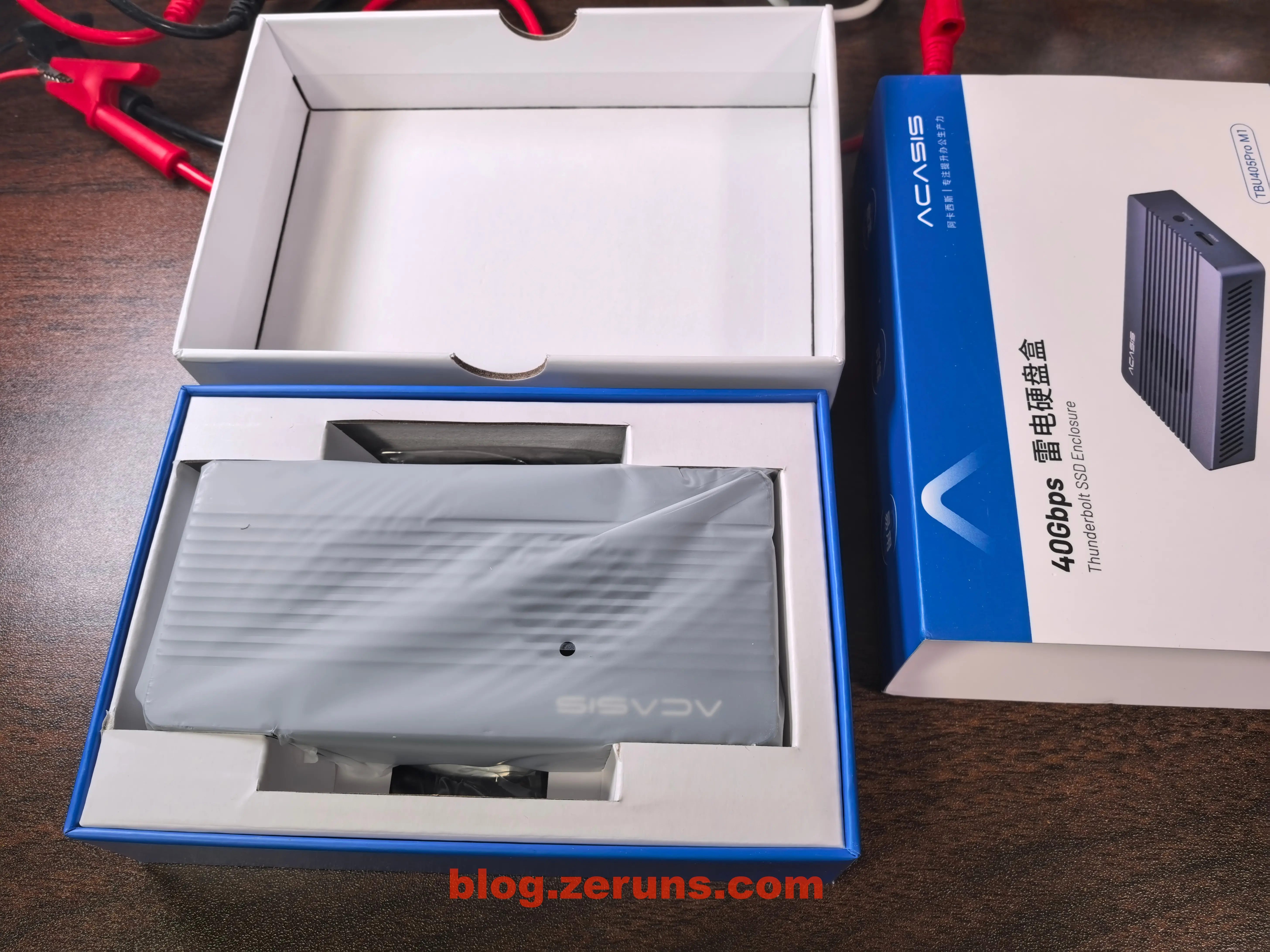
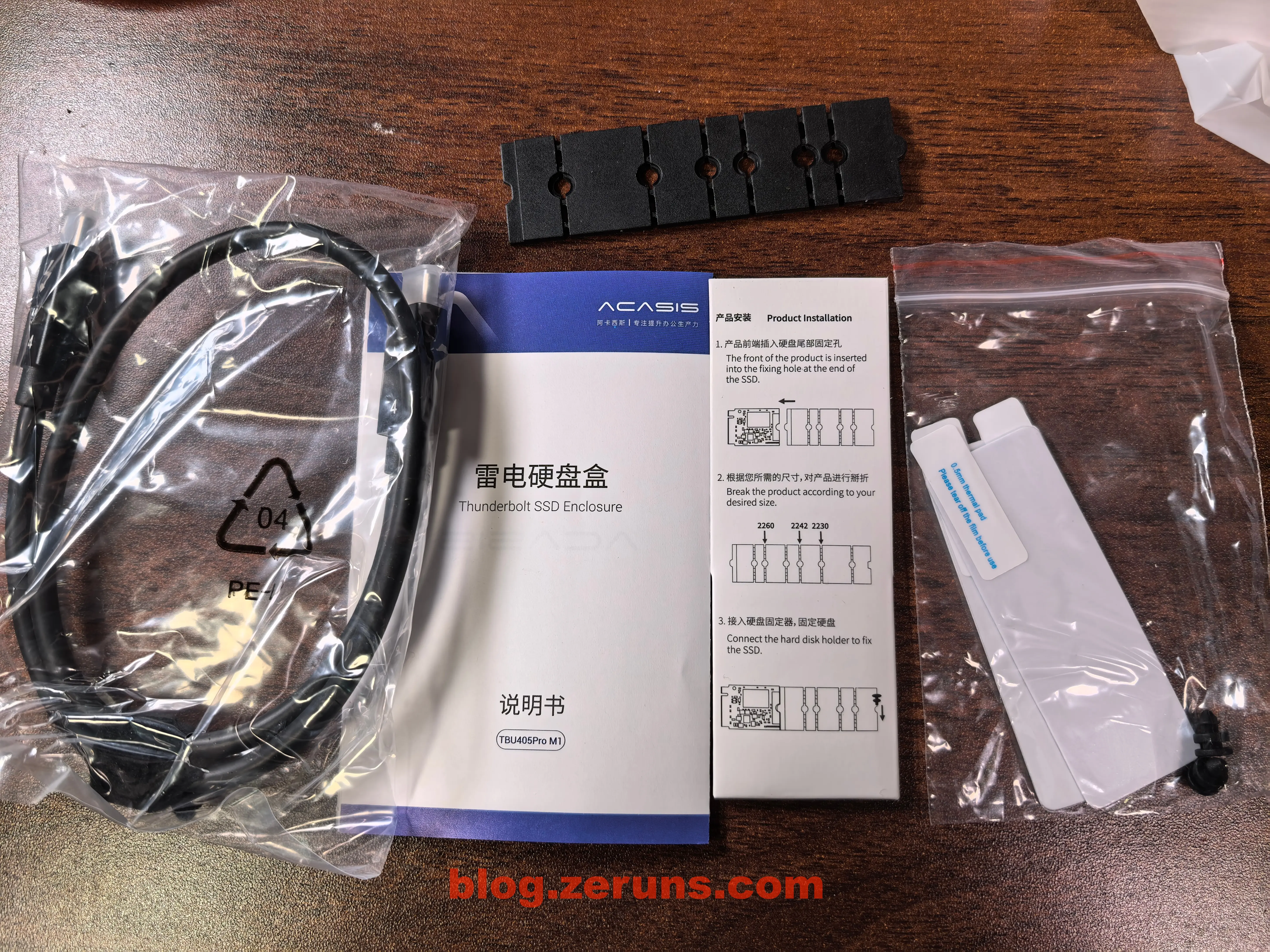
Inside the box: enclosure, Thunderbolt 4 C-to-C cable, user manual, two thermal pads, adhesive screws (for securing the SSD), and a plastic spacer to adapt smaller M.2 drives to 2280 length.
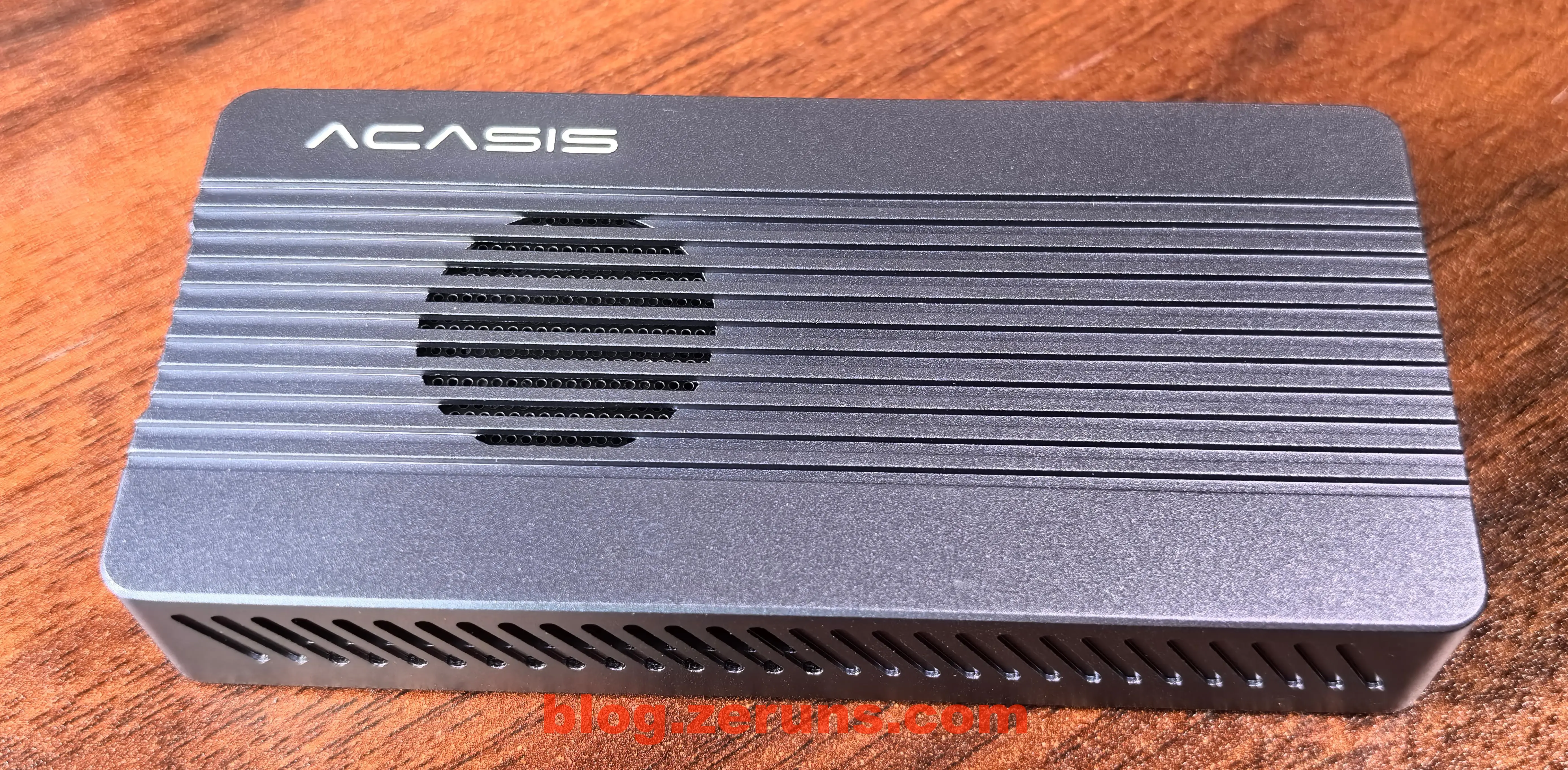
Front view of the enclosure
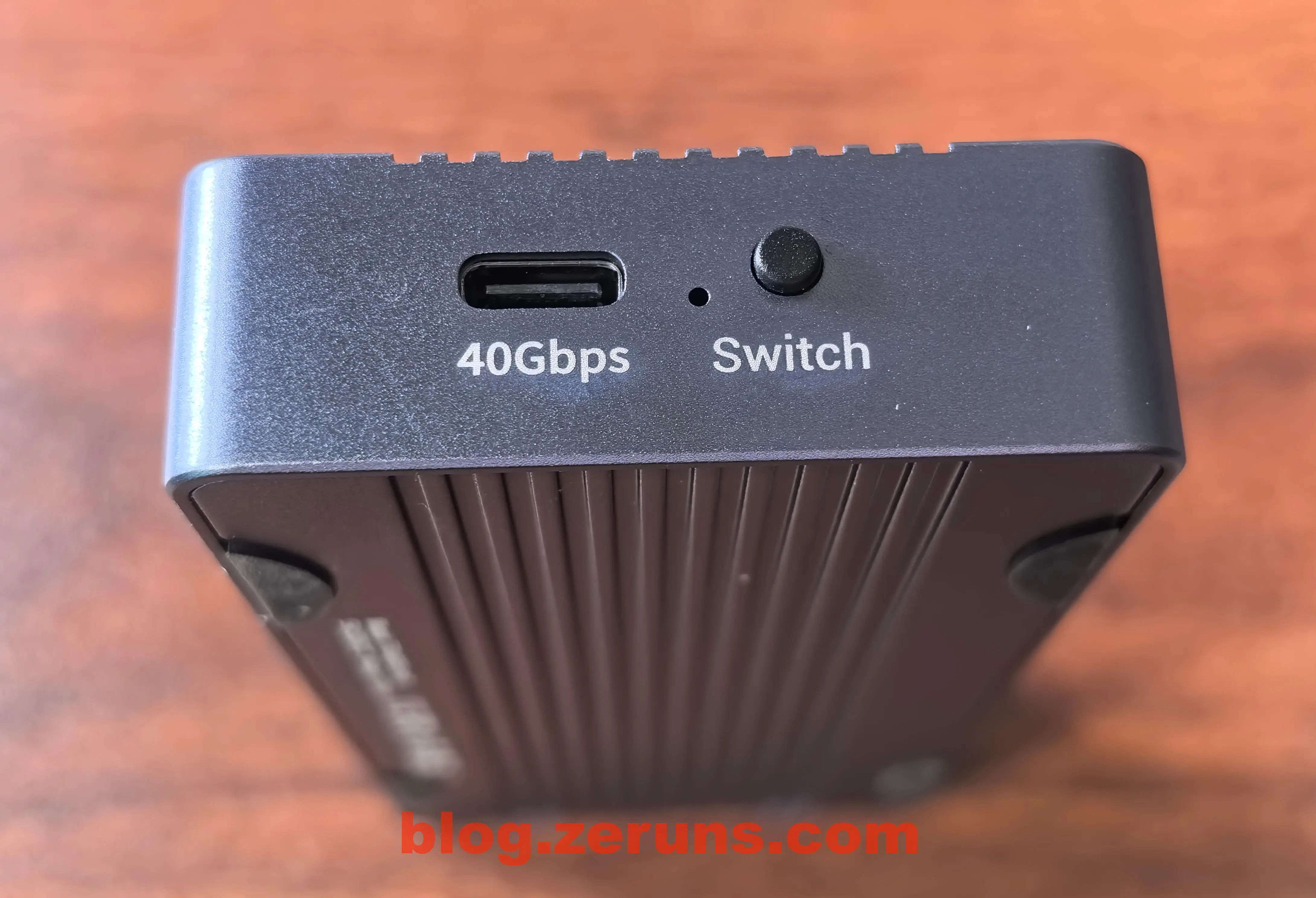
Side view showing the Type-C port and a physical button to turn the fan on/off—a great design feature allowing users to disable the fan and avoid noise (my previous USB4 enclosure had a noticeably loud fan).
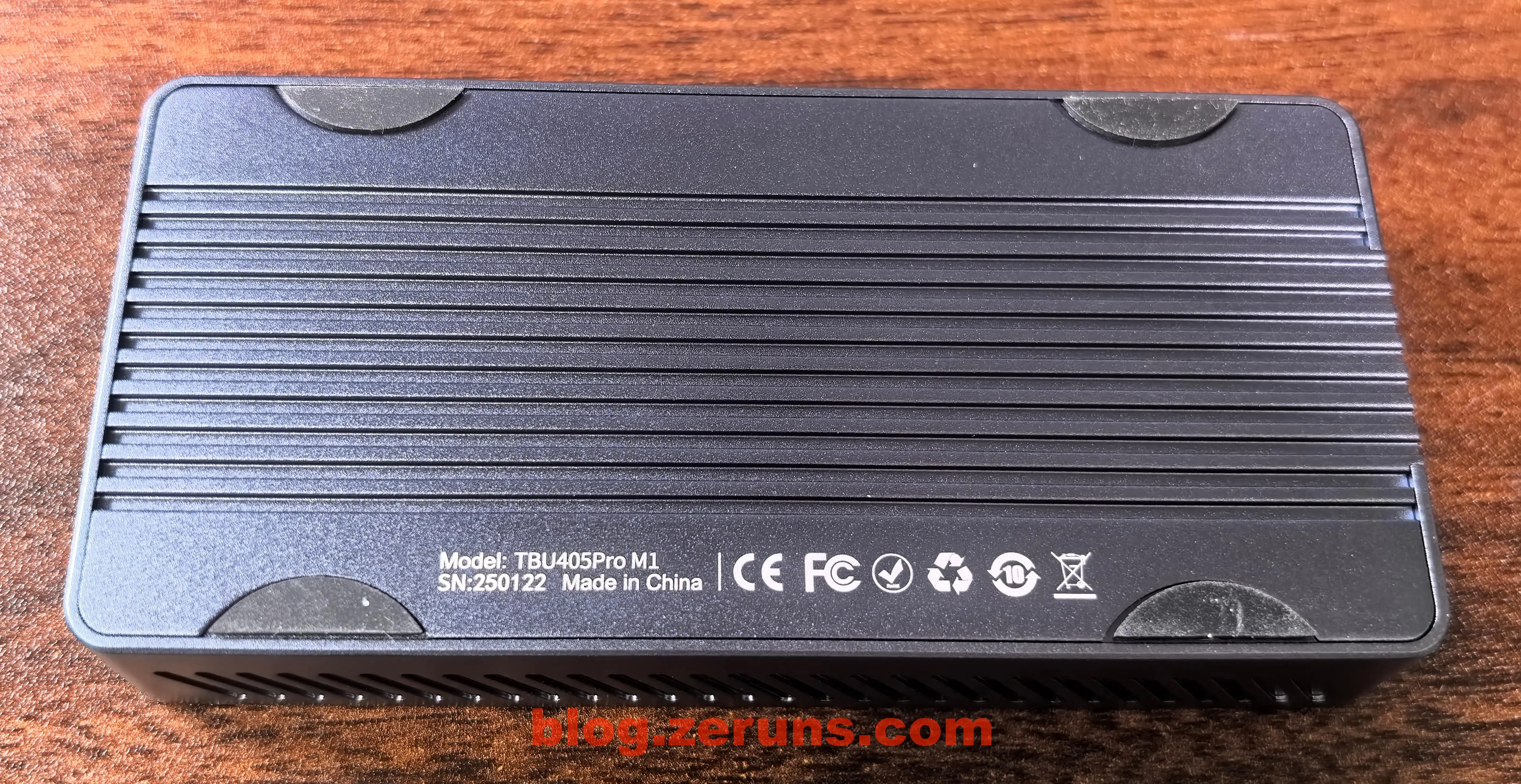
Bottom view showing model and serial number, along with anti-slip rubber feet
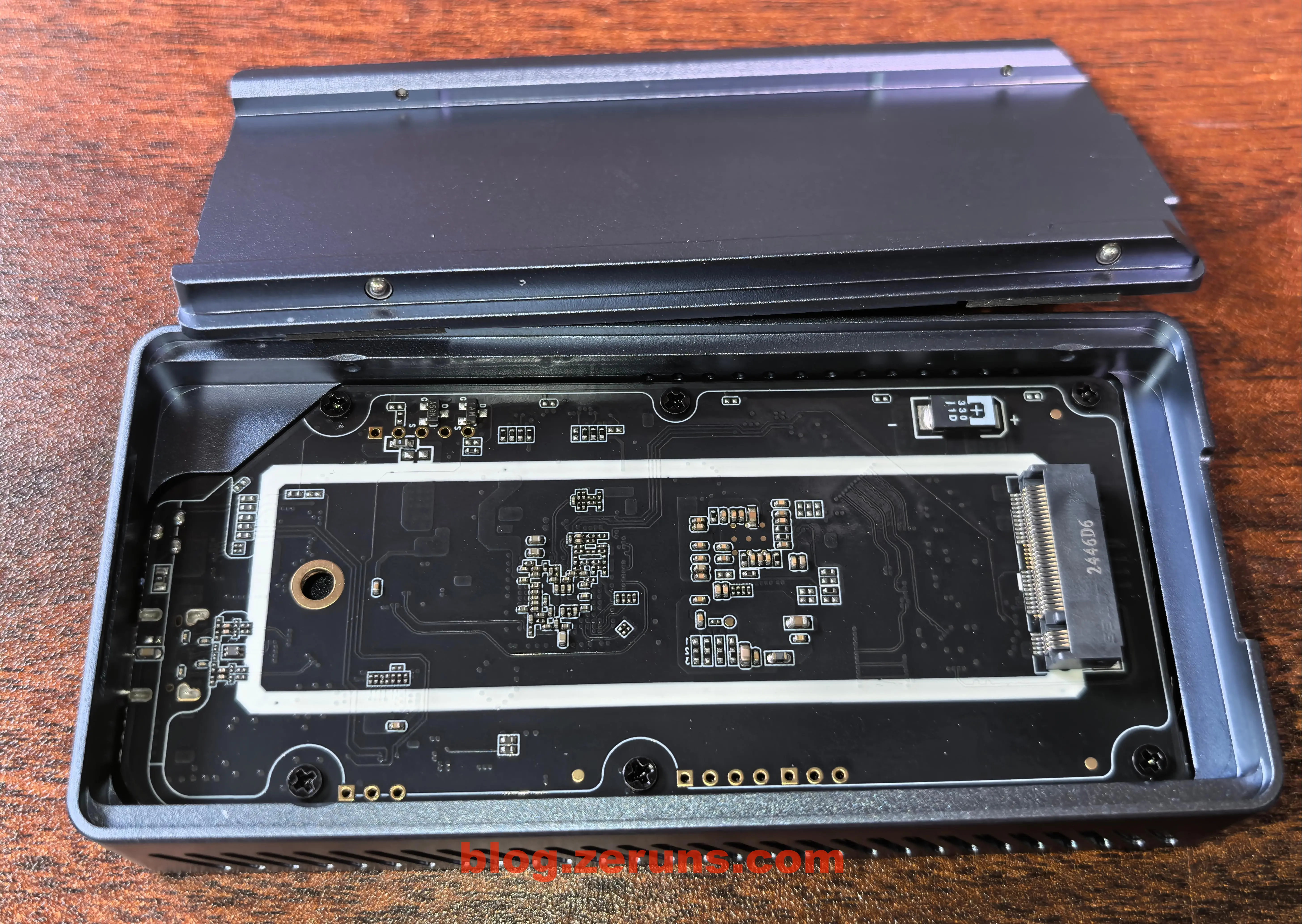
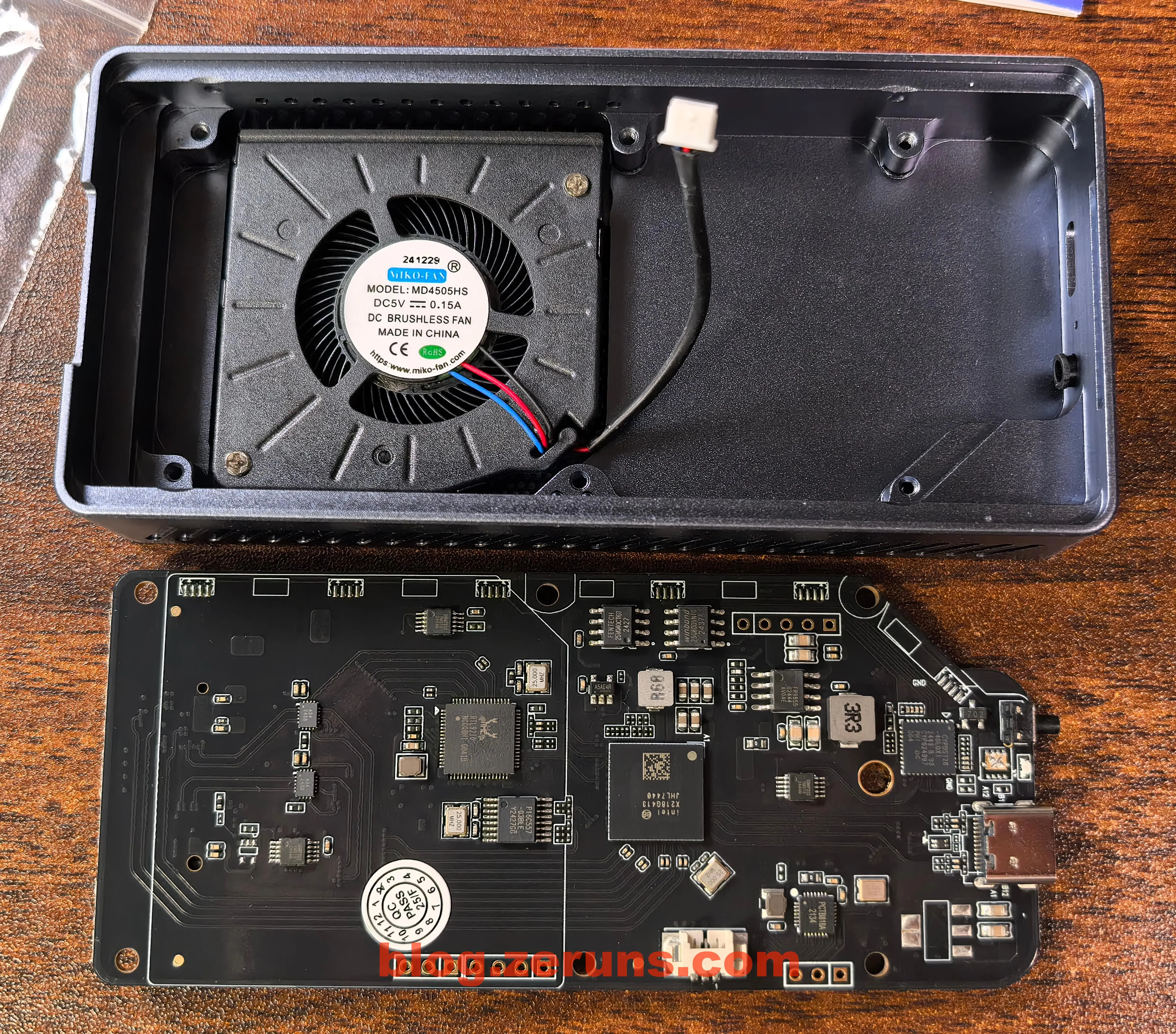
The base cover can be easily pried open—tool-free design—allowing quick SSD installation. On the upper right corner of the circuit board is a large 330μF tantalum capacitor, likely intended to provide brief power during unexpected disconnections to ensure cache data is safely written.
Remove the six Phillips screws securing the PCB, then detach the circuit board. A cooling fan is fixed inside the enclosure—3-pin design, likely supporting speed control.
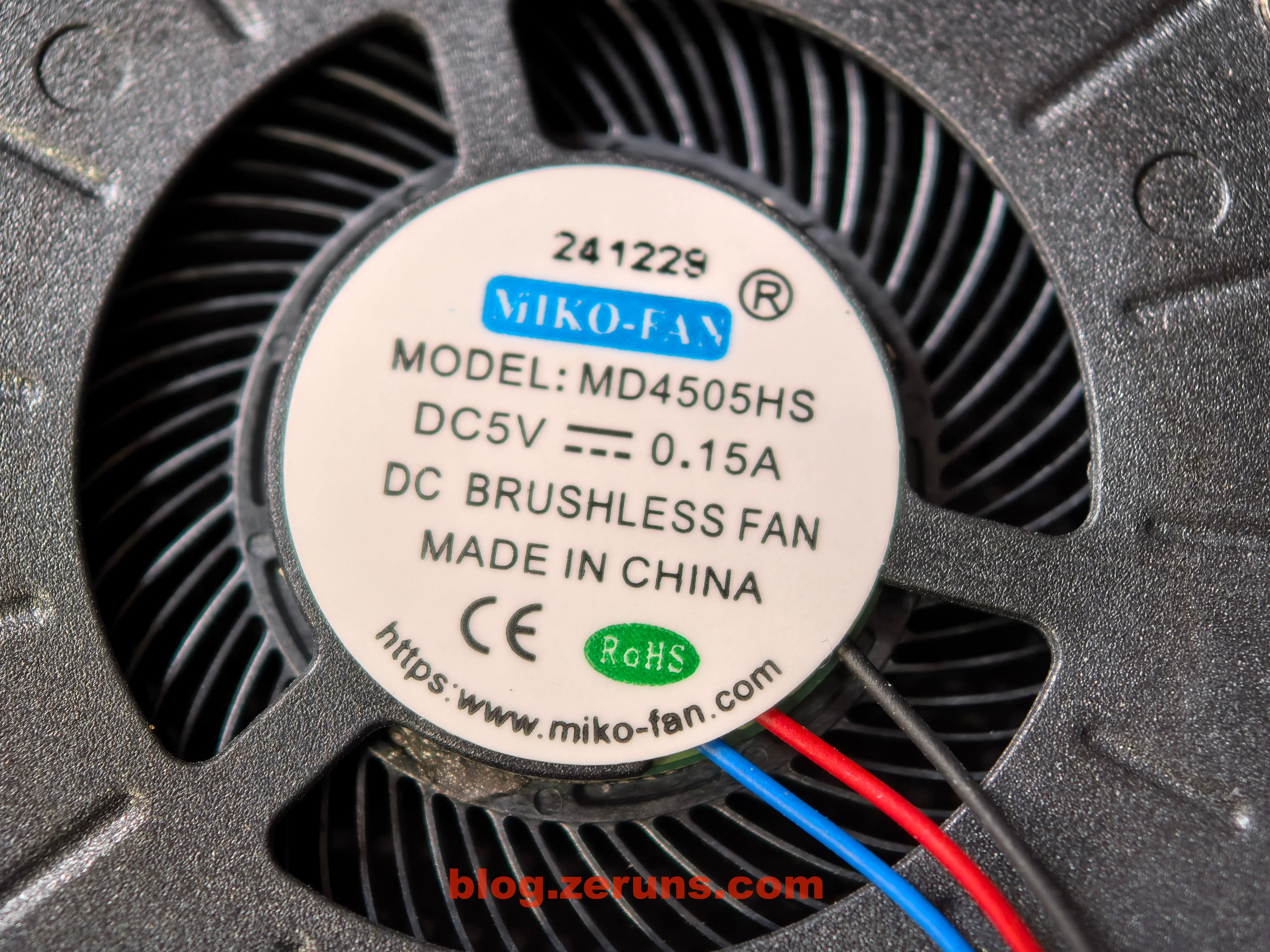
The cooling fan is made by MIKO-FAN (Shenzhen Mikelo Electronics Co., Ltd.), model MD4505HS, rated at 5V / 2A.
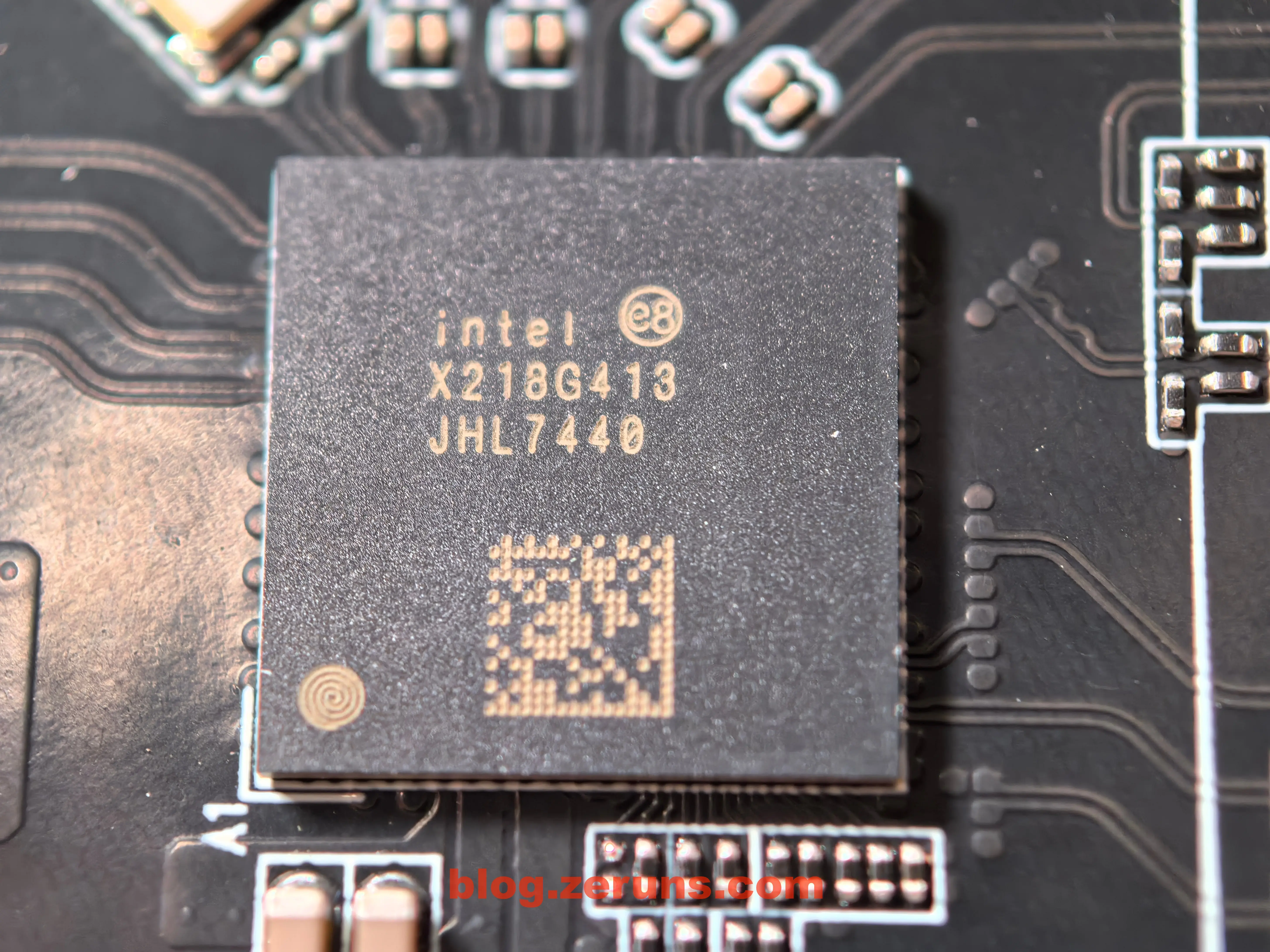
The Thunderbolt 3/4 controller is Intel’s JHL7440 chip, with a PCIe Gen 3×4 backend interface and Thunderbolt™3 frontend (compatible with USB4.0 and Thunderbolt 4 devices), TDP 2.4W.
This chip apparently does not support low-speed protocols like USB 3.0/2.0, hence the need for a secondary controller.
JHL7440 official page: https://url.zeruns.com/os31H
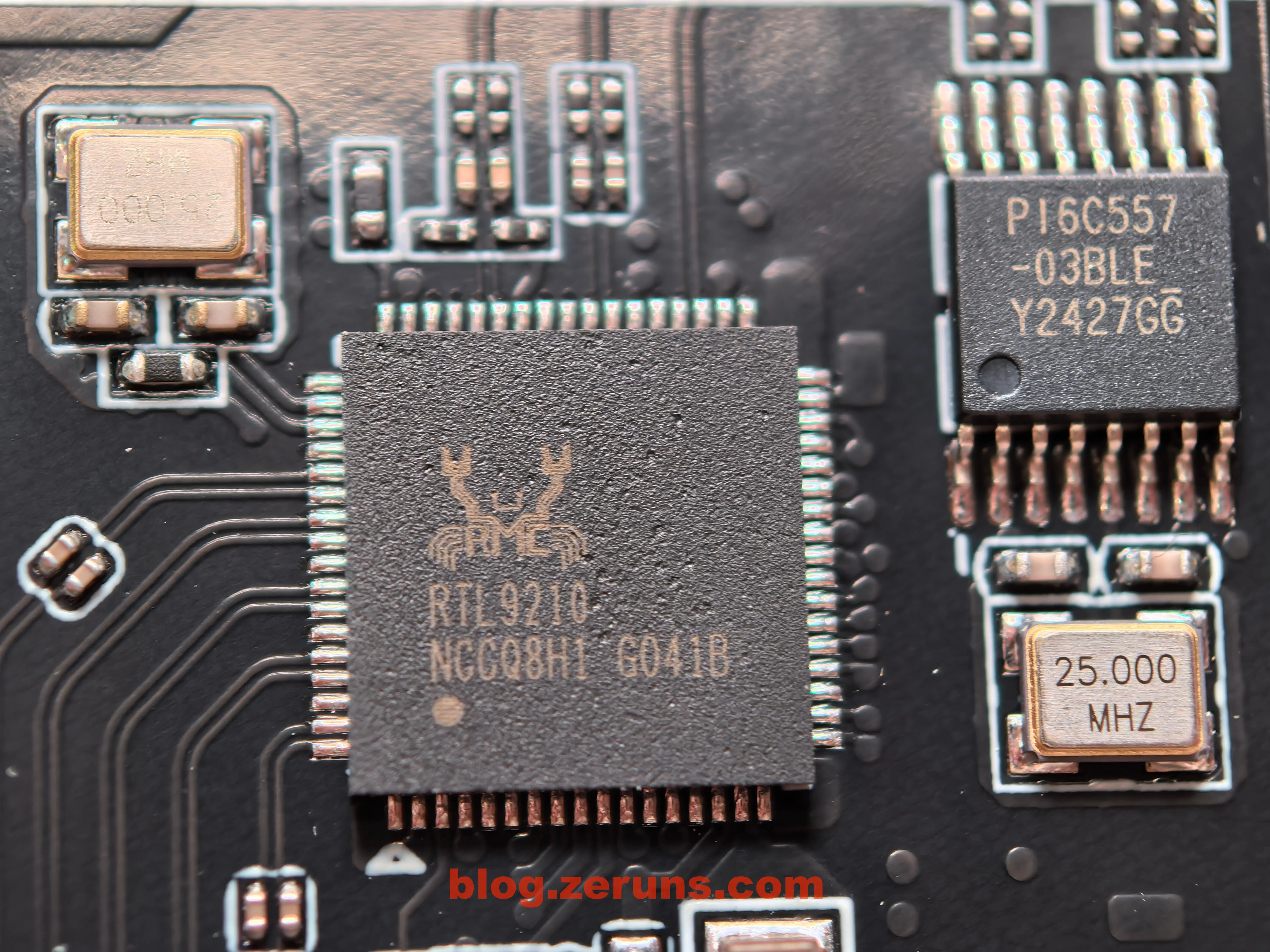
The secondary controller is Realtek’s RTL9210, with USB 3.1 Gen2 (10Gbps) frontend (backward compatible with Gen1 at 5Gbps and USB 2.0), and PCIe 3.0 x2 backend (16Gbps bandwidth), supporting SATA Gen3 (only on B/CG versions—this enclosure does not support SATA).
RTL9210B official page: https://url.zeruns.com/Sc7nr
Adjacent to the RTL9210 is a PI6C557 chip—produced by Diodes Incorporated (formerly Pericom)—a PCIe clock generator designed to reduce electromagnetic interference (EMI), compatible with PCIe and Ethernet protocols. Parameters vary by model suffix.
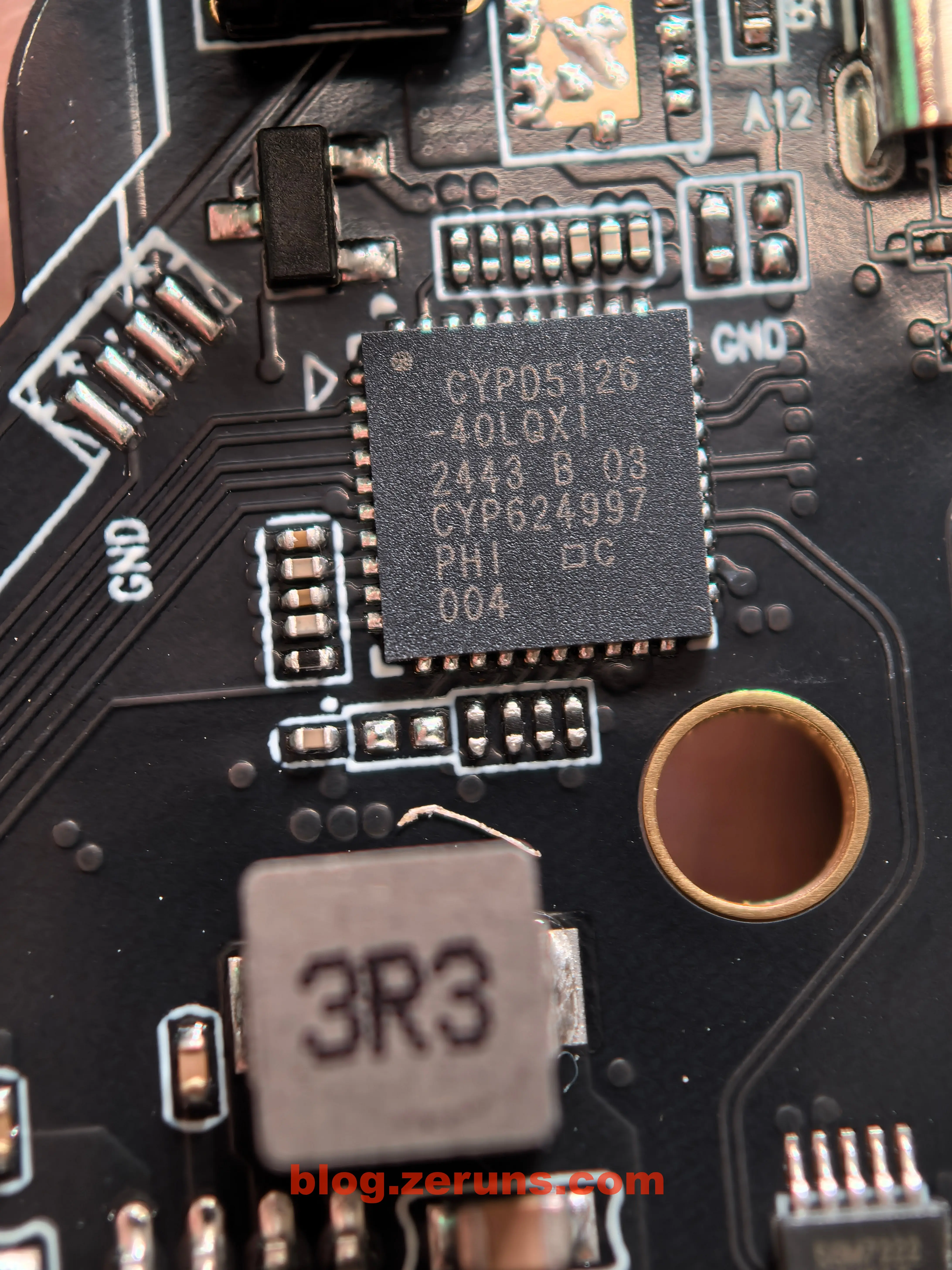
Next to the USB-C port is a CYPD5126-40LQXI chip from Cypress, a high-performance interface IC designed for USB Type-C and Power Delivery (PD) applications. It provides comprehensive connectivity and power management solutions—essentially a power management IC for the USB-C port.
CYPD5126-40LQXI official page: https://url.zeruns.com/4RSfc
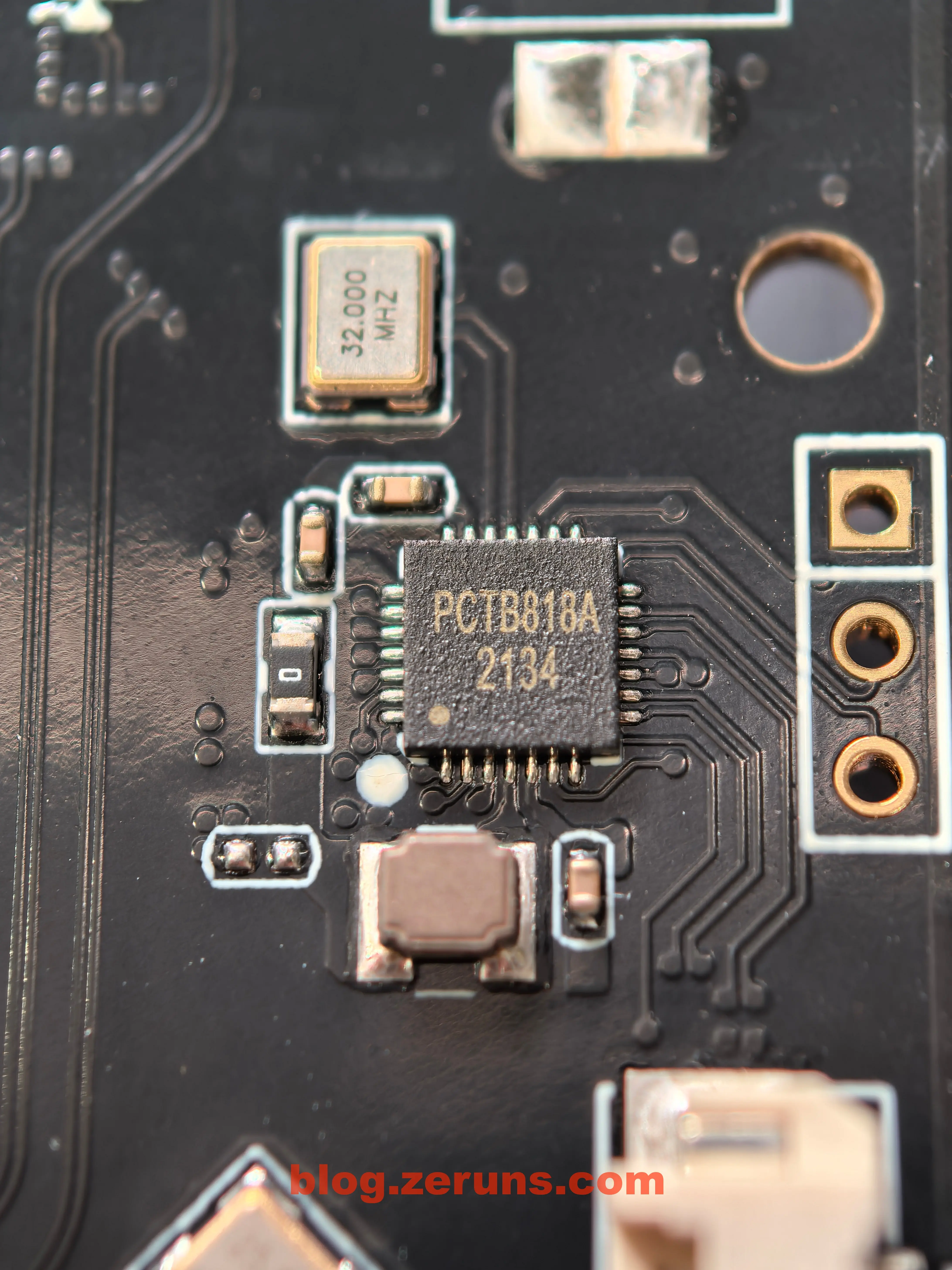
Near the fan connector is a PCTB818A chip—no available public data. It connects to a 32MHz crystal oscillator—possibly a microcontroller integrating DC-DC power and fan control functions?
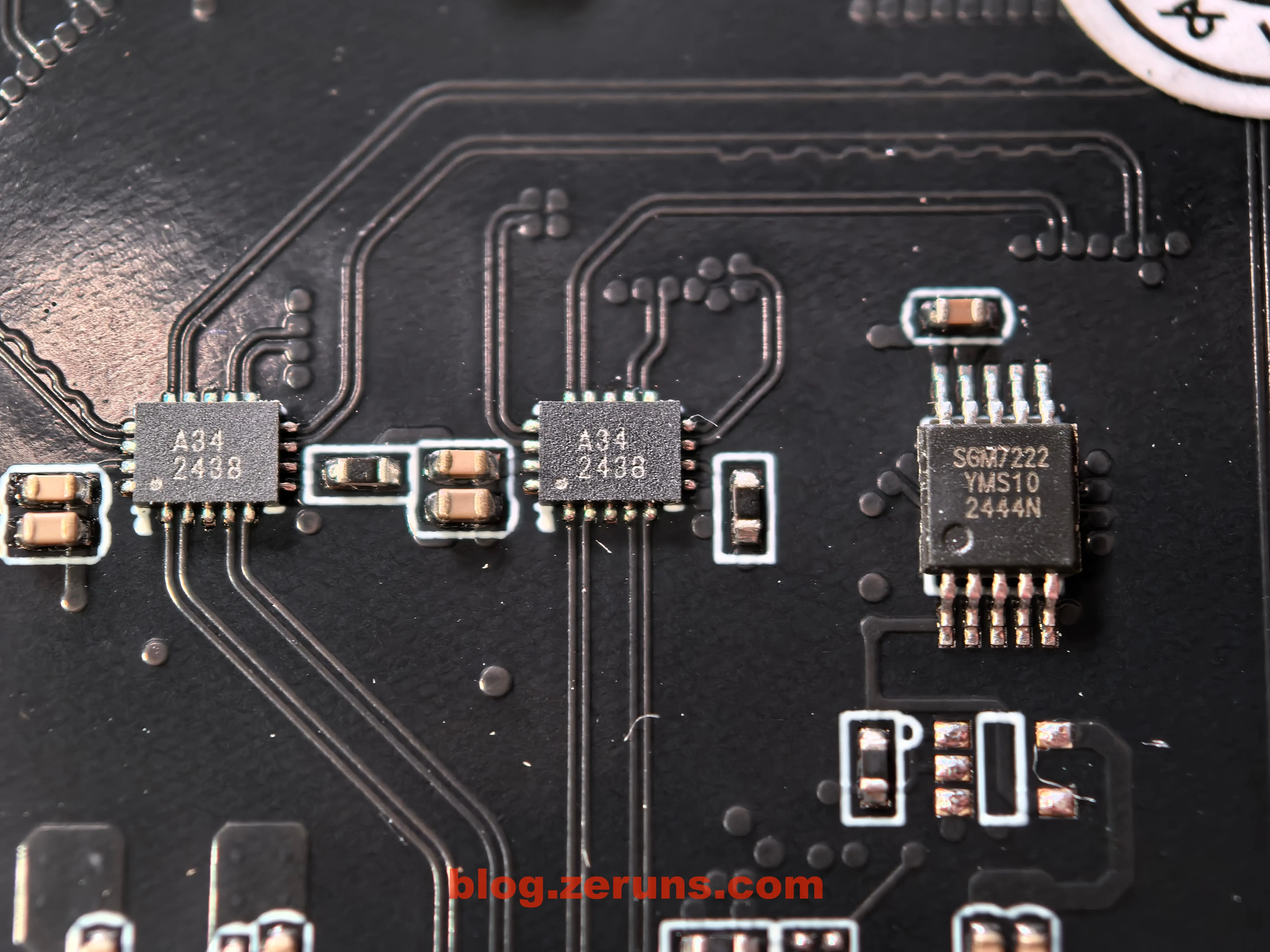
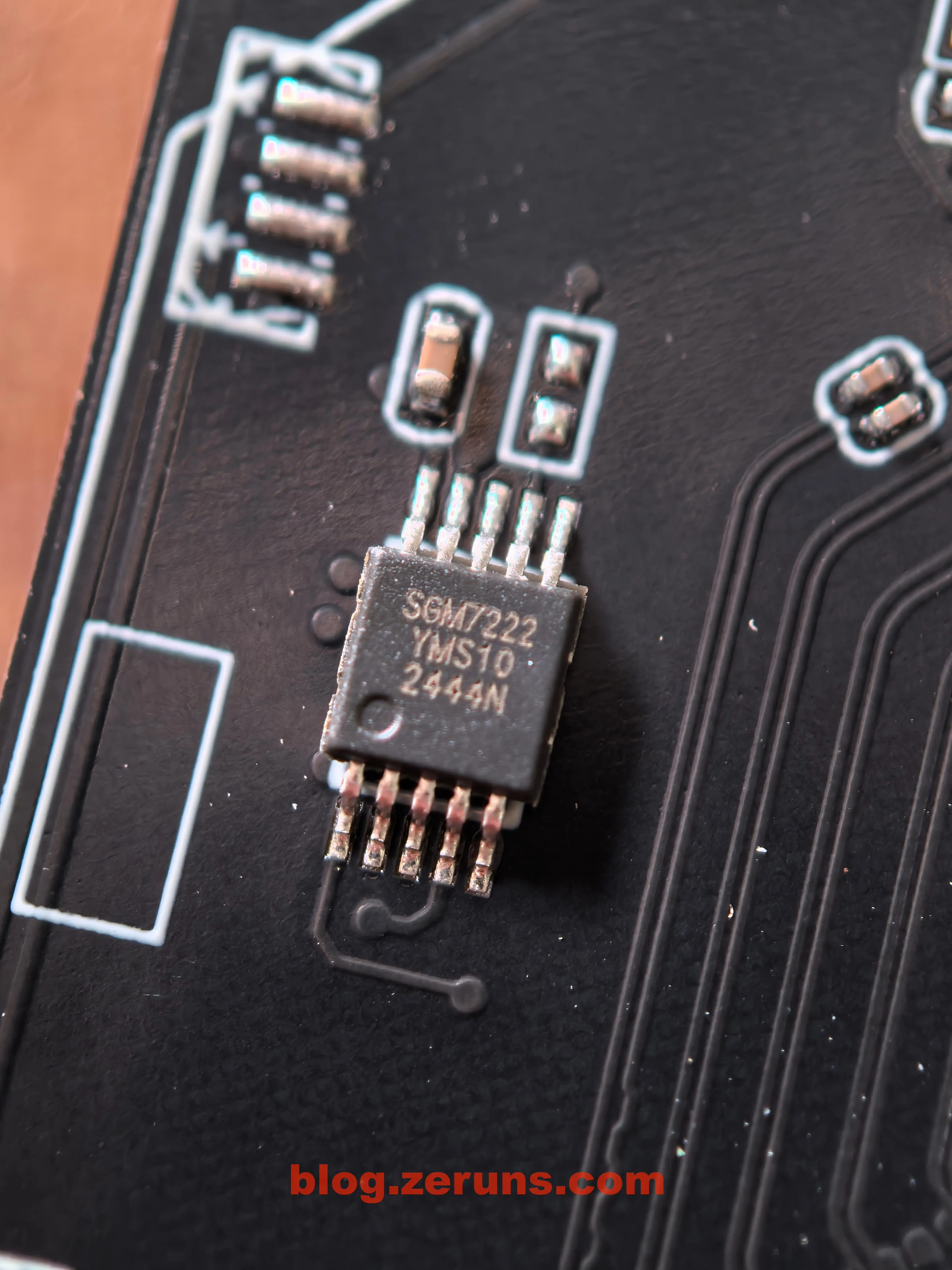
Under the main controller are two unidentifiable chips labeled A34 2438. Nearby is an SGM7222 chip—three of these are present on the board—produced by SGMicro (SGMicro Electronics), a high-speed, low-power dual-pole double-throw (DPDT) analog switch used for signal routing in electronic devices.
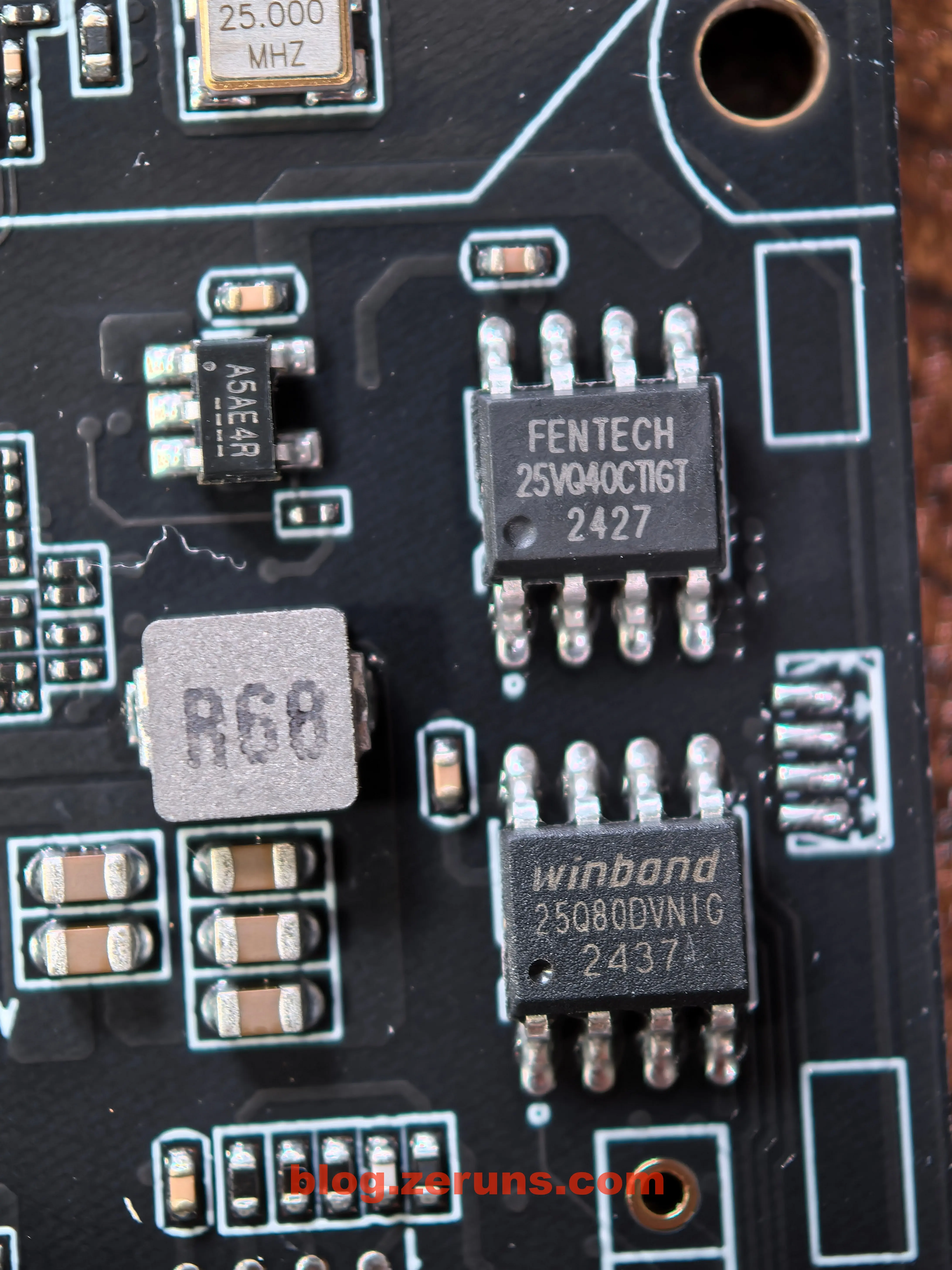
Adjacent to the controllers are two flash memory chips: FENTECH 25VQ40CTIGT and Winbond 25Q80DVNIC—likely storing firmware for the two controllers. Nearby is another chip labeled A5AE4R, next to an inductor—likely a DC-DC power regulator.
Winbond W25Q80RV: 8Mbit (1MByte) serial flash memory.
FENTECH 25VQ40CTIGT: 4Mbit (0.5MByte) serial flash memory.
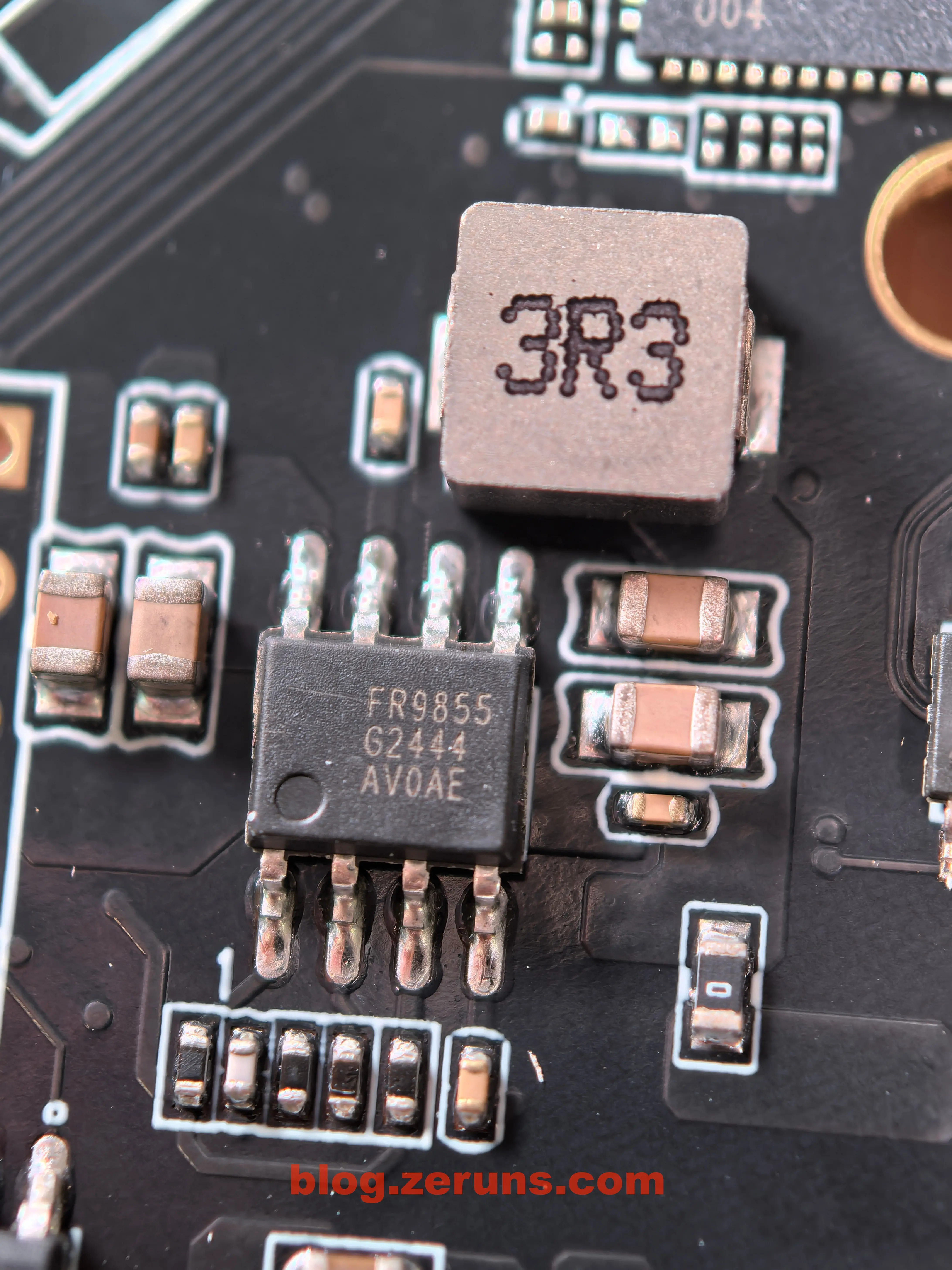
Another chip labeled FR9855 is a synchronous buck DC-DC converter from Fitipower Integrated Technology Inc. (Techpoint).
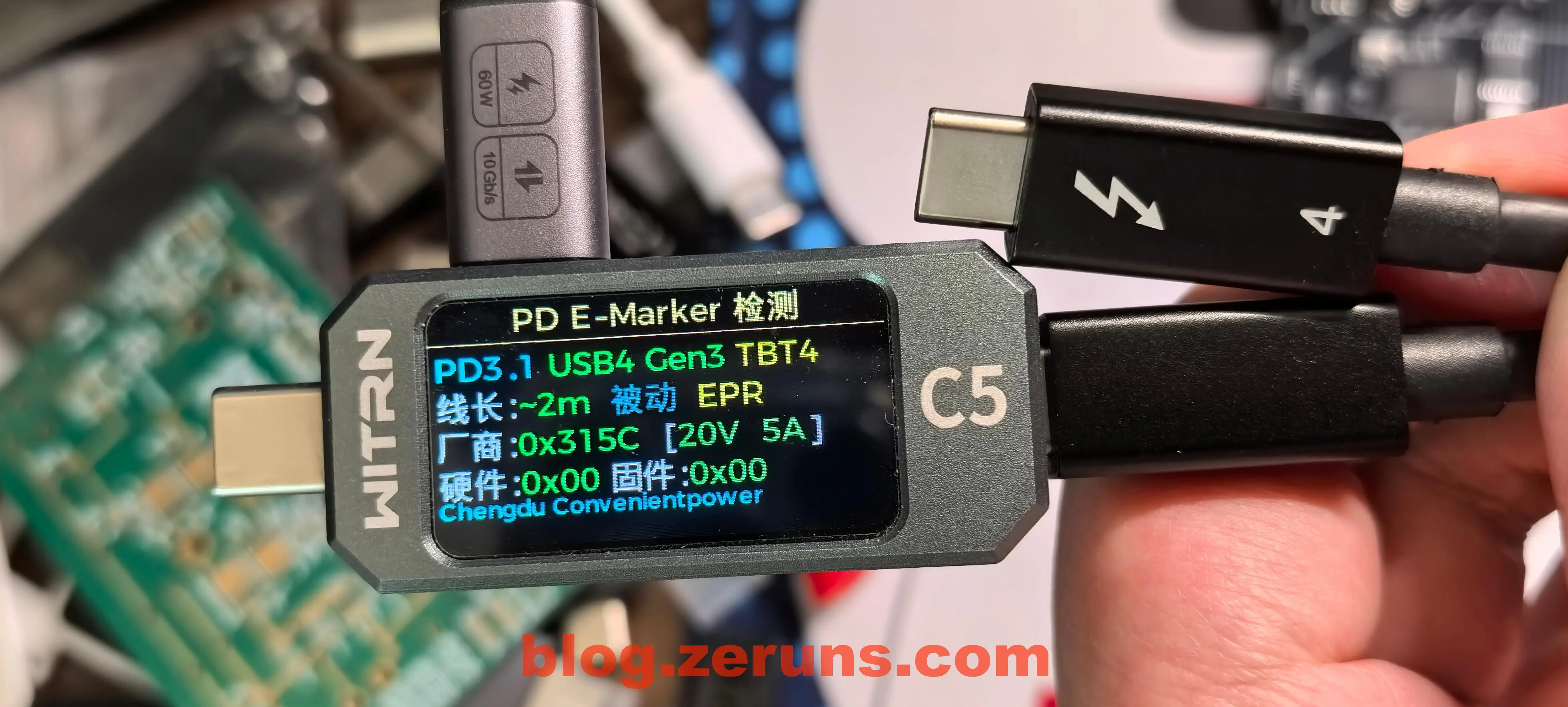
Using the Weijian C5 Tester, the E-Marker data from the included cable was read—supports USB4 Gen3 / TBT4 (Thunderbolt 4), vendor ID 0x315C, supports PD3.1 EPR 20V 5A.
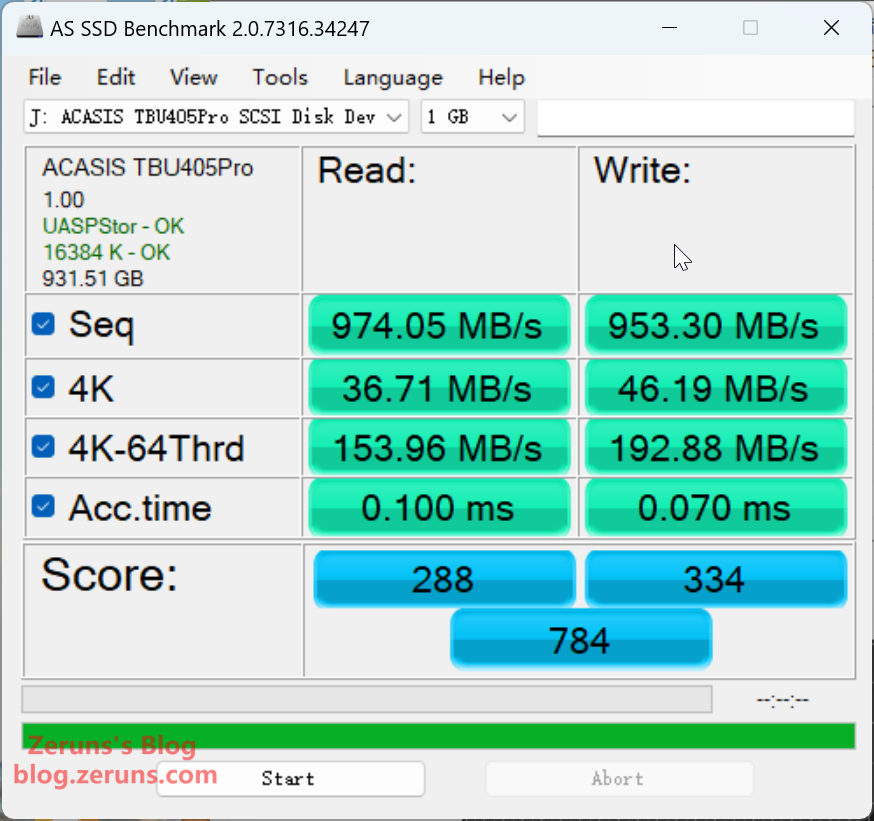
Enclosure Speed Tests
With WD SN7100 SSD connected to a 20Gbps USB-C port on a Windows PC, data routed via RTL9210 controller (limited to 10Gbps, no 20Gbps support). Tested with AS SSD Benchmark: sequential read 974.05MB/s, sequential write 953.3MB/s, 4K random read 36.71MB/s, 4K random write 46.19MB/s.
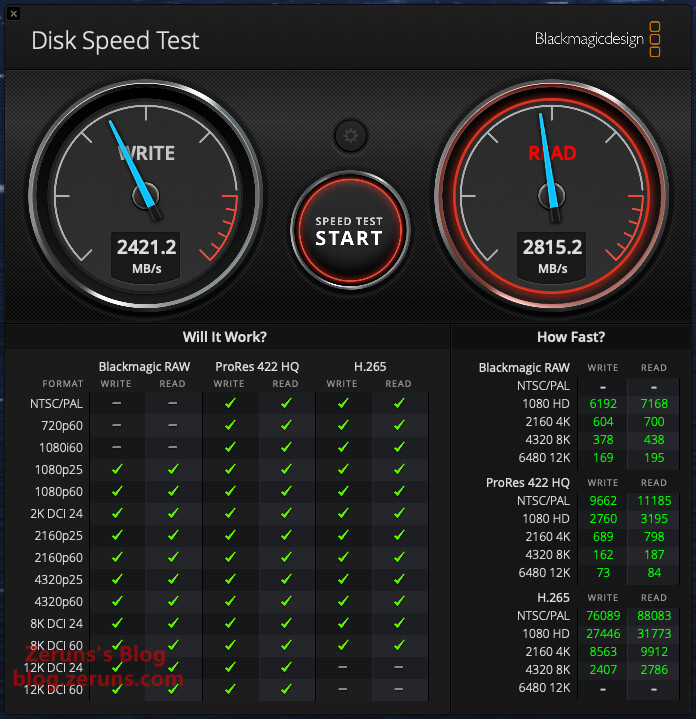
With WD SN7100 SSD connected to a 40Gbps USB-C port on a Mac mini, data routed via JHL7440 controller. Tested with Blackmagic Disk Speed Test: sequential read 2815.2MB/s, sequential write 2421.2MB/s.
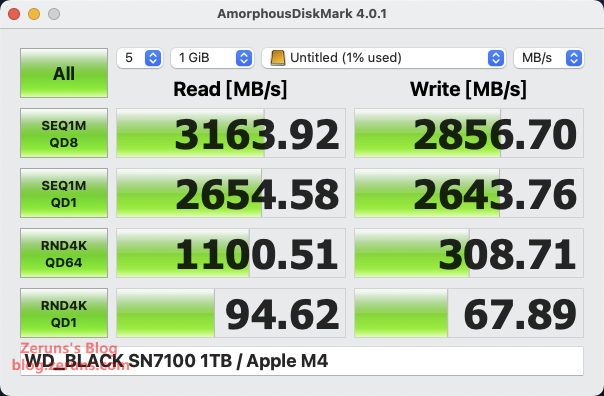
Same setup, tested with AmorphousDiskMark 4.0.1: sequential read 3163.92MB/s, sequential write 2856.7MB/s, 4K random read 94.62MB/s, 4K random write 67.89MB/s.
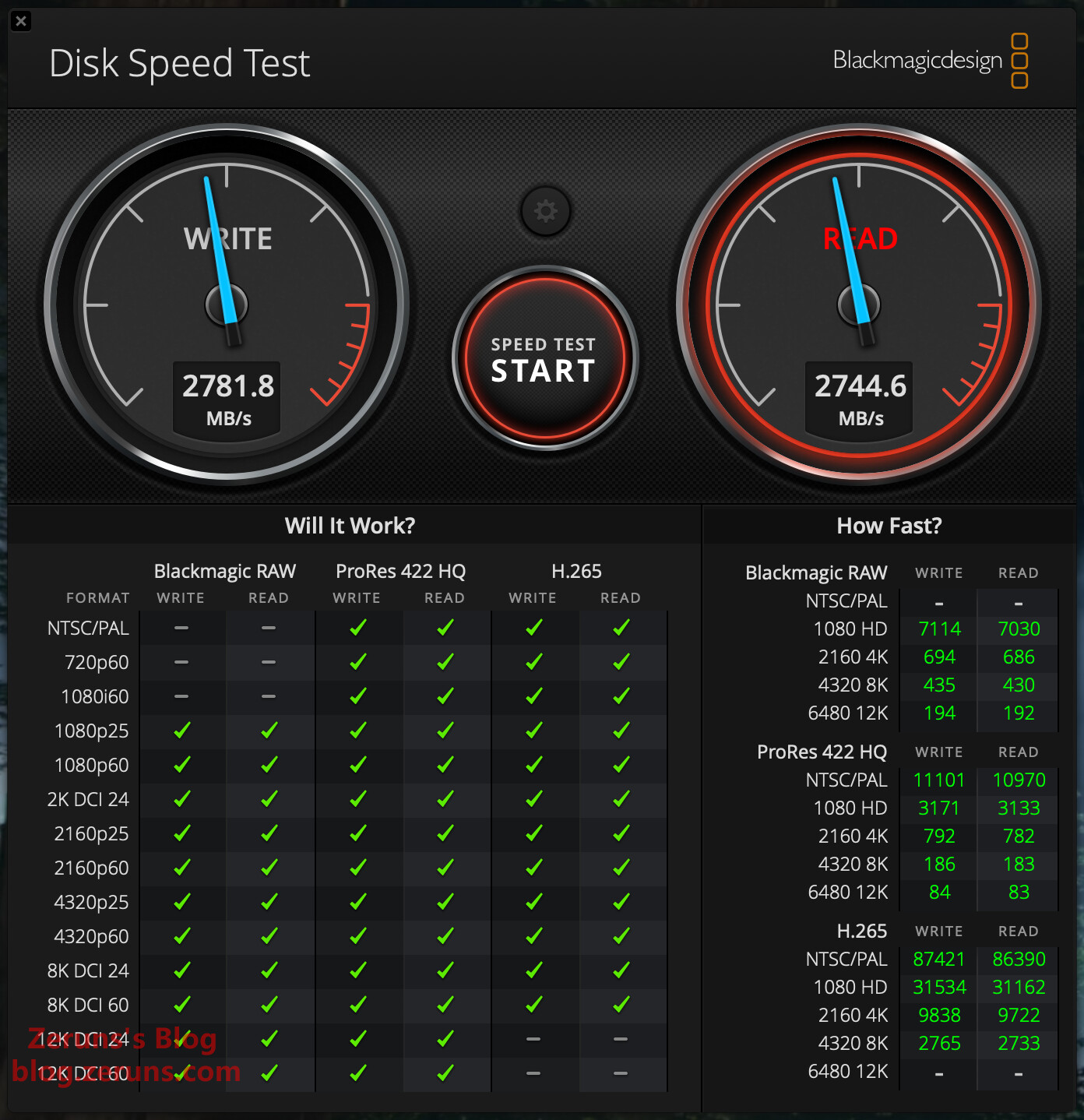
With ZhiTai TiPro7000 SSD connected to Mac mini via 40Gbps port, JHL7440 controller. Blackmagic Disk Speed Test: sequential read 2744.6MB/s, sequential write 2781.8MB/s.
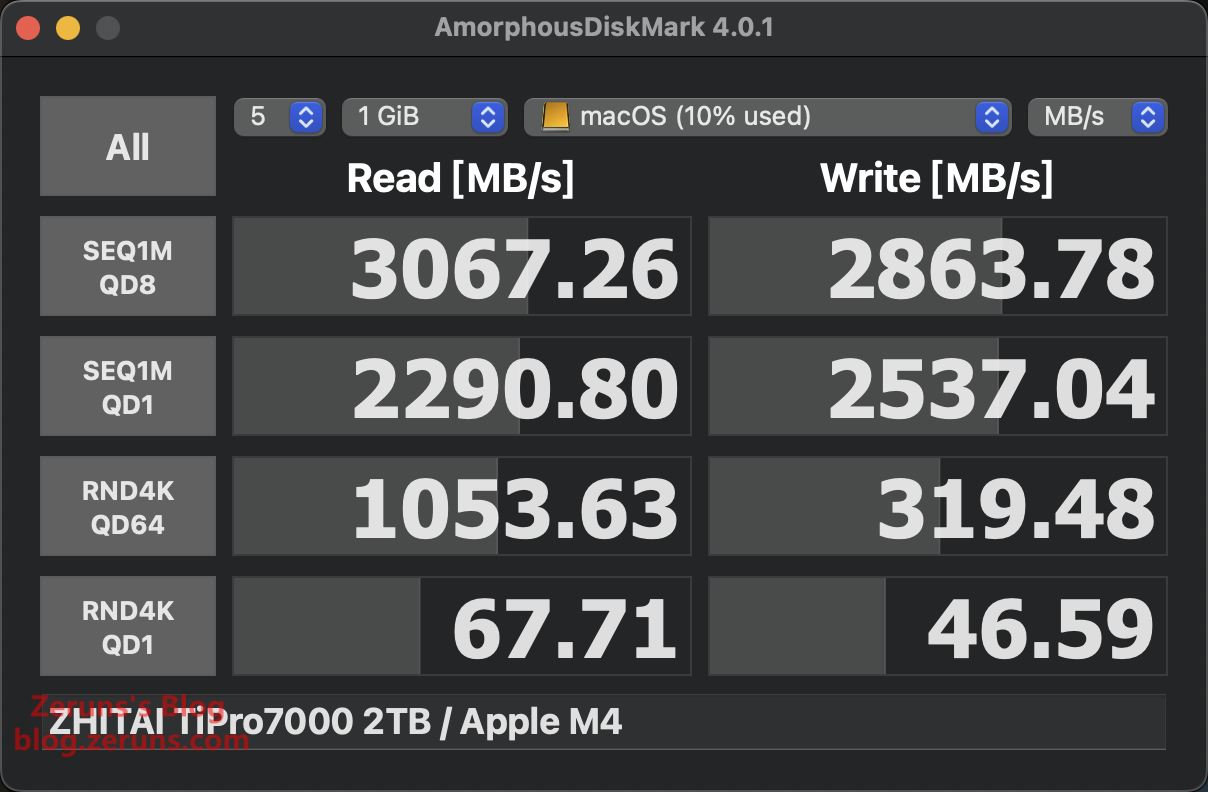
Same setup, tested with AmorphousDiskMark 4.0.1: sequential read 3067.26MB/s, sequential write 2863.78MB/s, 4K random read 67.71MB/s, 4K random write 46.59MB/s. (At this point, macOS had already been migrated to this external drive.)
Thermal Imaging of Enclosure
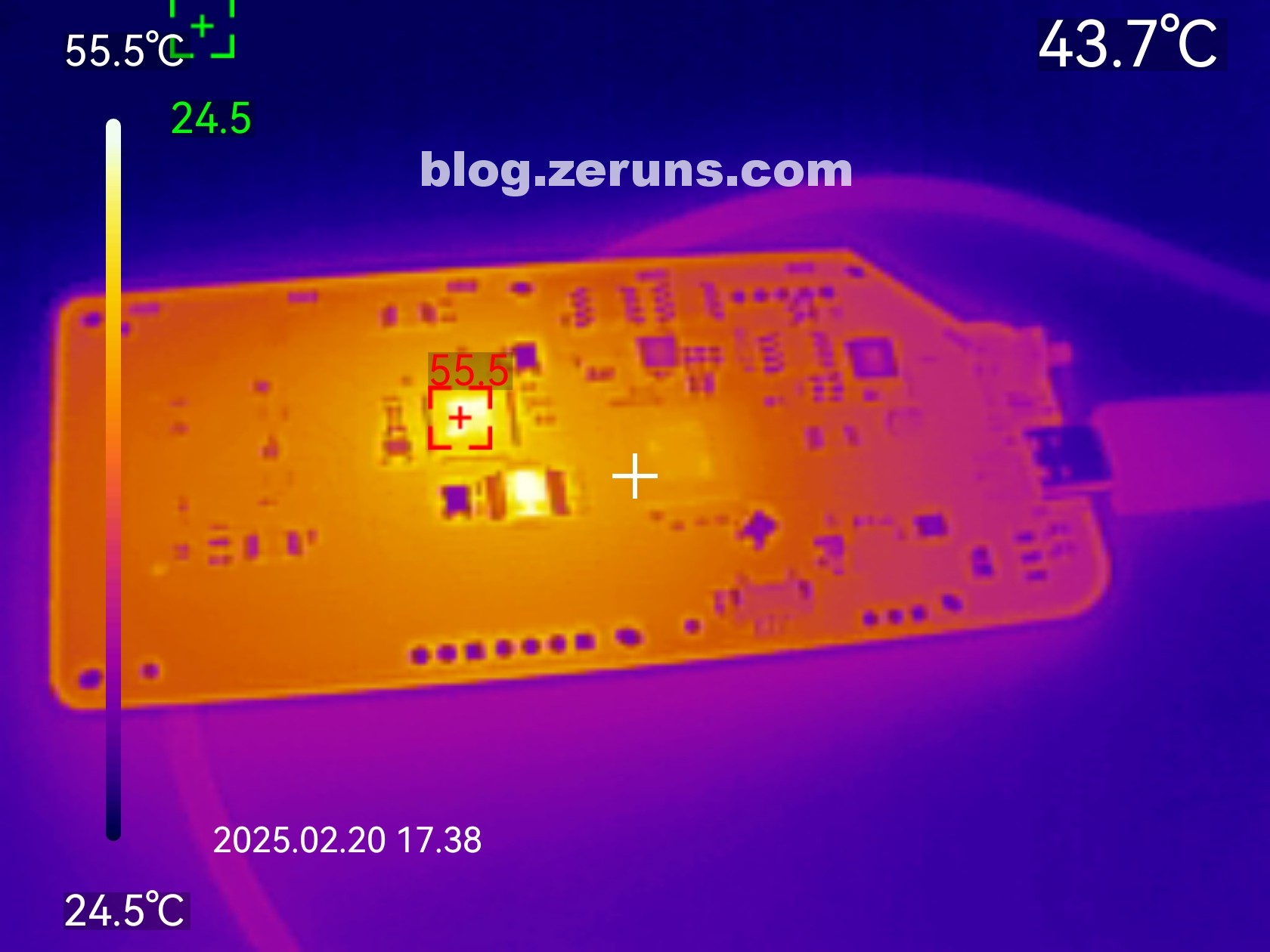
Thermal image of RTL9210 controller at idle (no data transfer), chip temperature ~55°C (ambient ~24°C):
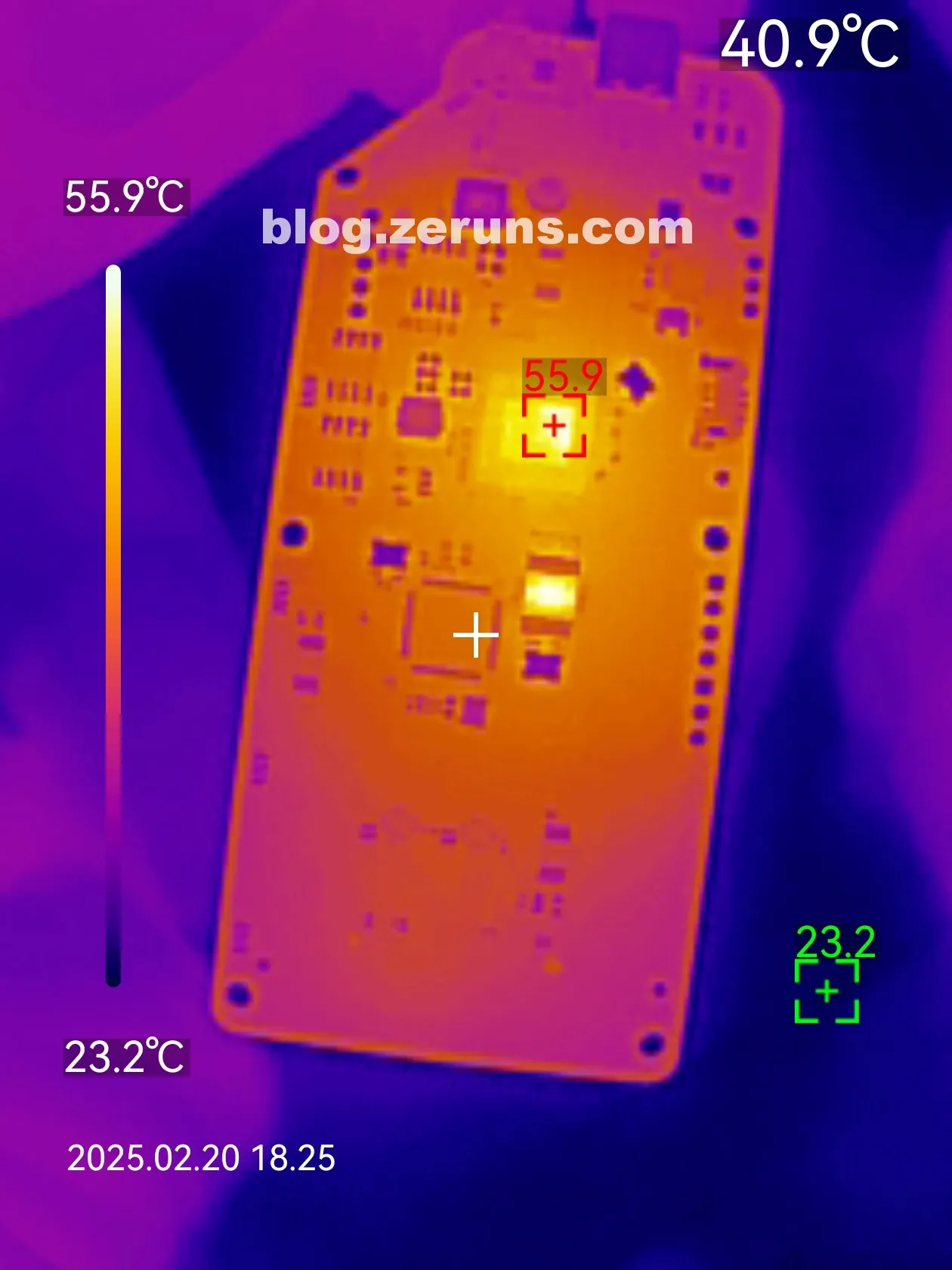
Thermal image of JHL7440 controller at idle, chip temperature ~55°C (ambient ~24°C):
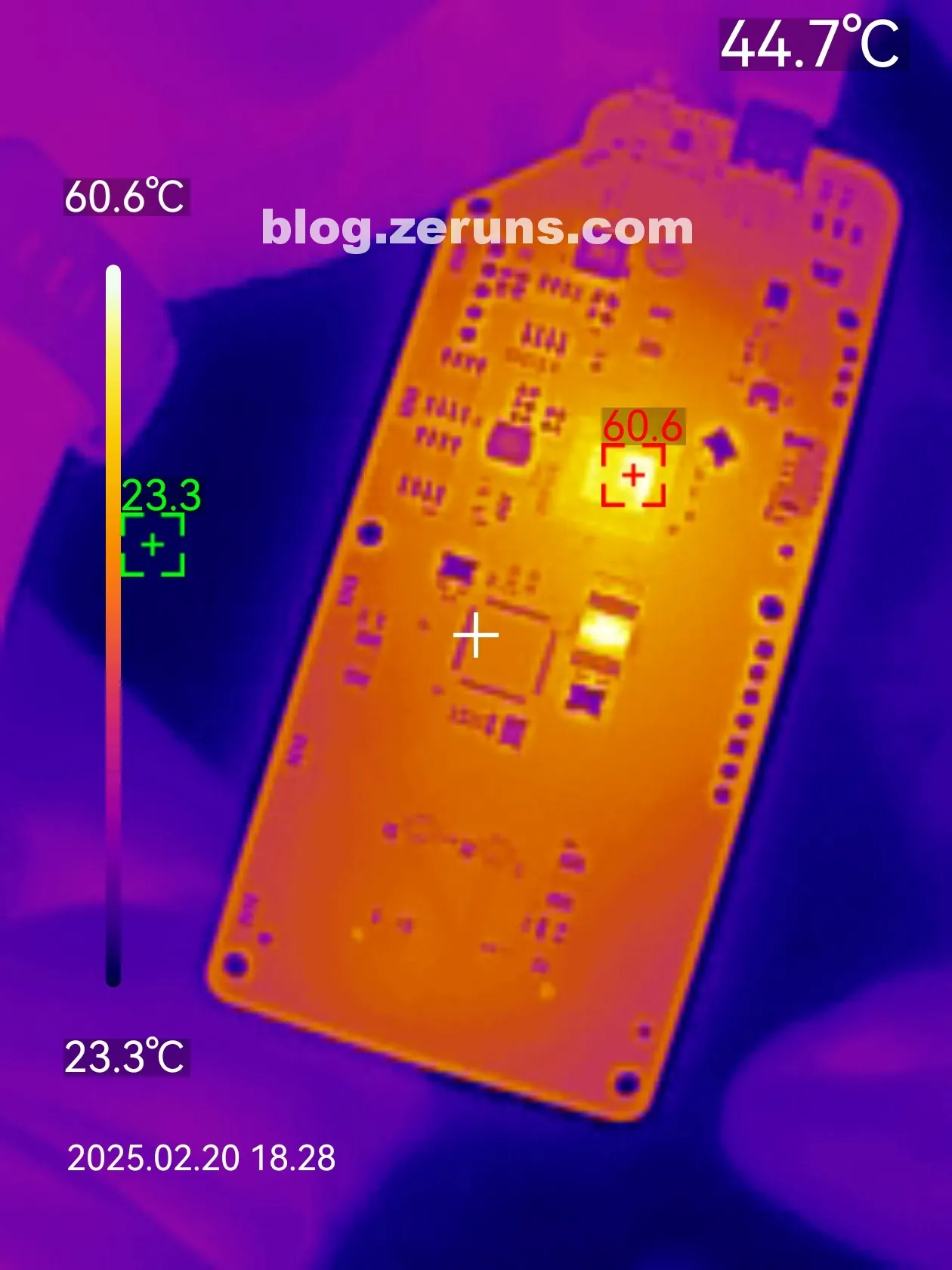
Thermal image of JHL7440 under full load (sustained read/write), chip temperature ~60°C (ambient ~24°C):
Thermal images of enclosure surface under full load—surface temperature ~37°C (ambient ~24°C):
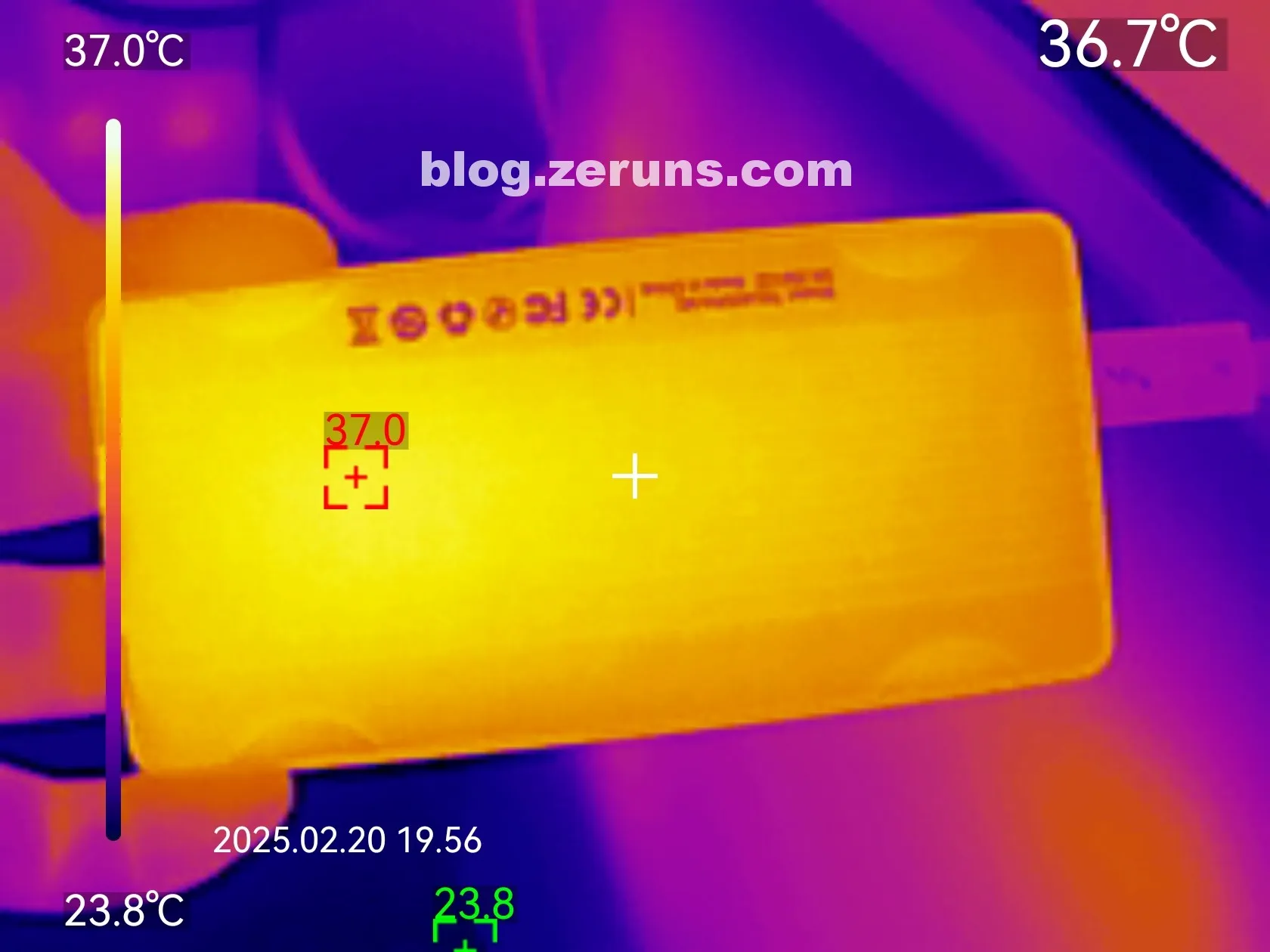
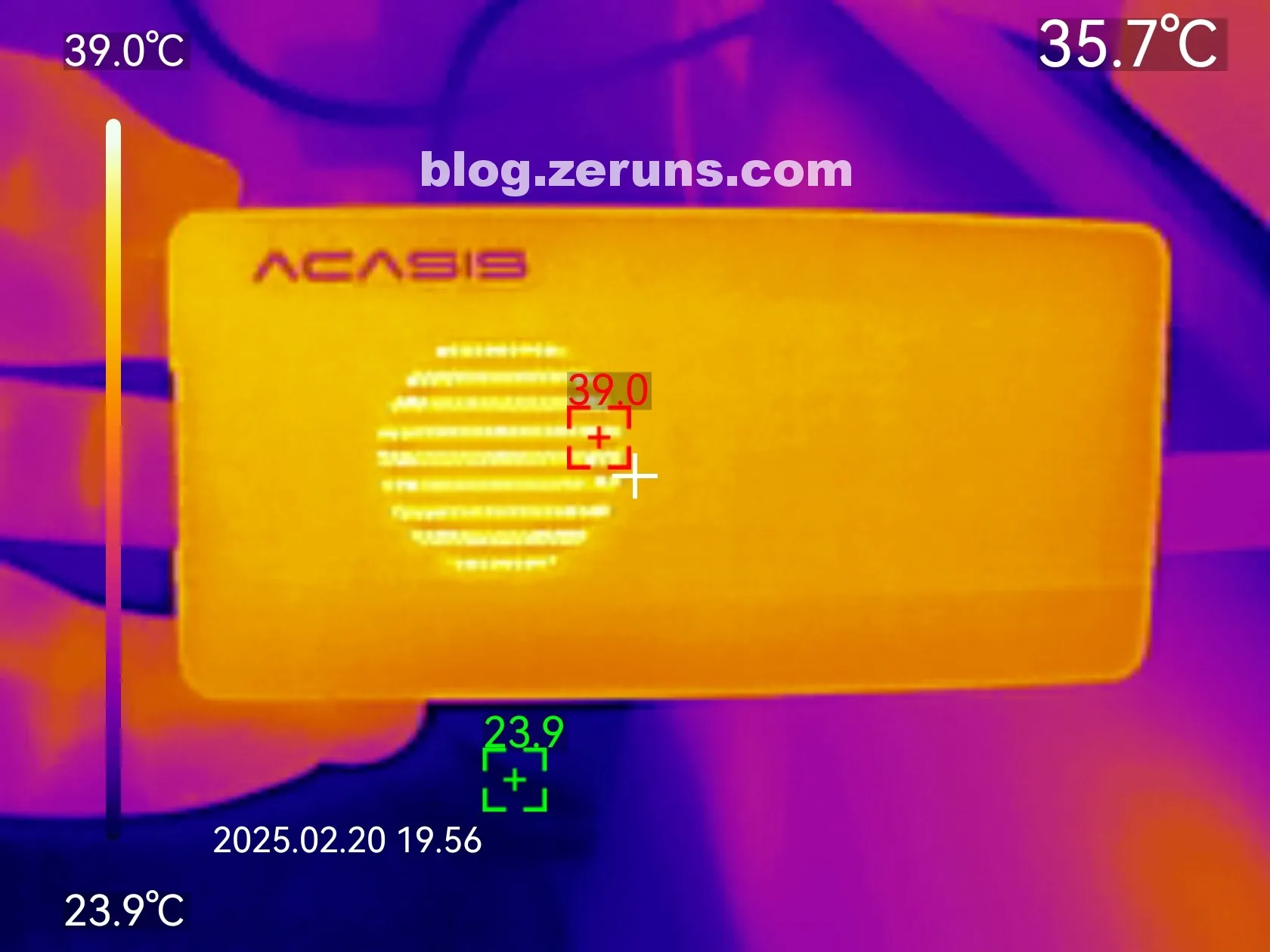
Heat generation is very low—excellent performance, significantly better than my previous enclosure.
Western Digital SN7100 1TB SSD
Purchase Link:- JD.com: https://u.jd.com/8DVKWRr
Specifications
- Interface: PCIe Gen4 x4
- Capacity: 1TB
- Sequential Read Speed (MB/s): 7250
- Sequential Write Speed (MB/s): 6900
- Random Read Speed (IOPS): 1,000K
- Random Write Speed (IOPS): 1,400K
- Dimensions: 80 x 22 x 2.38 mm
- Weight: 5.8 g
- Reliability: 1.75 million hours
- Warranty: 5 years / 600 TBW
Review
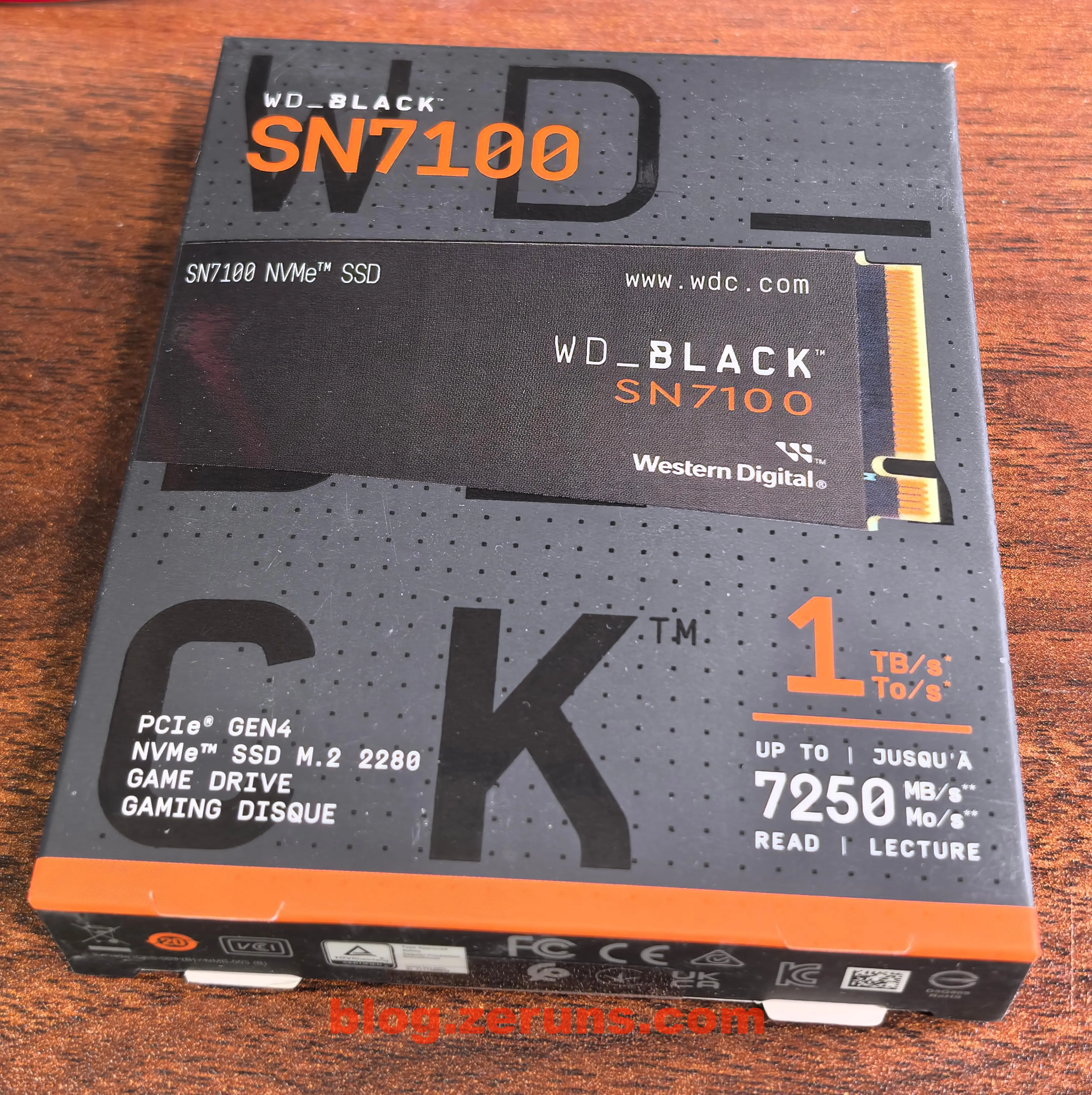
Front of the packaging:
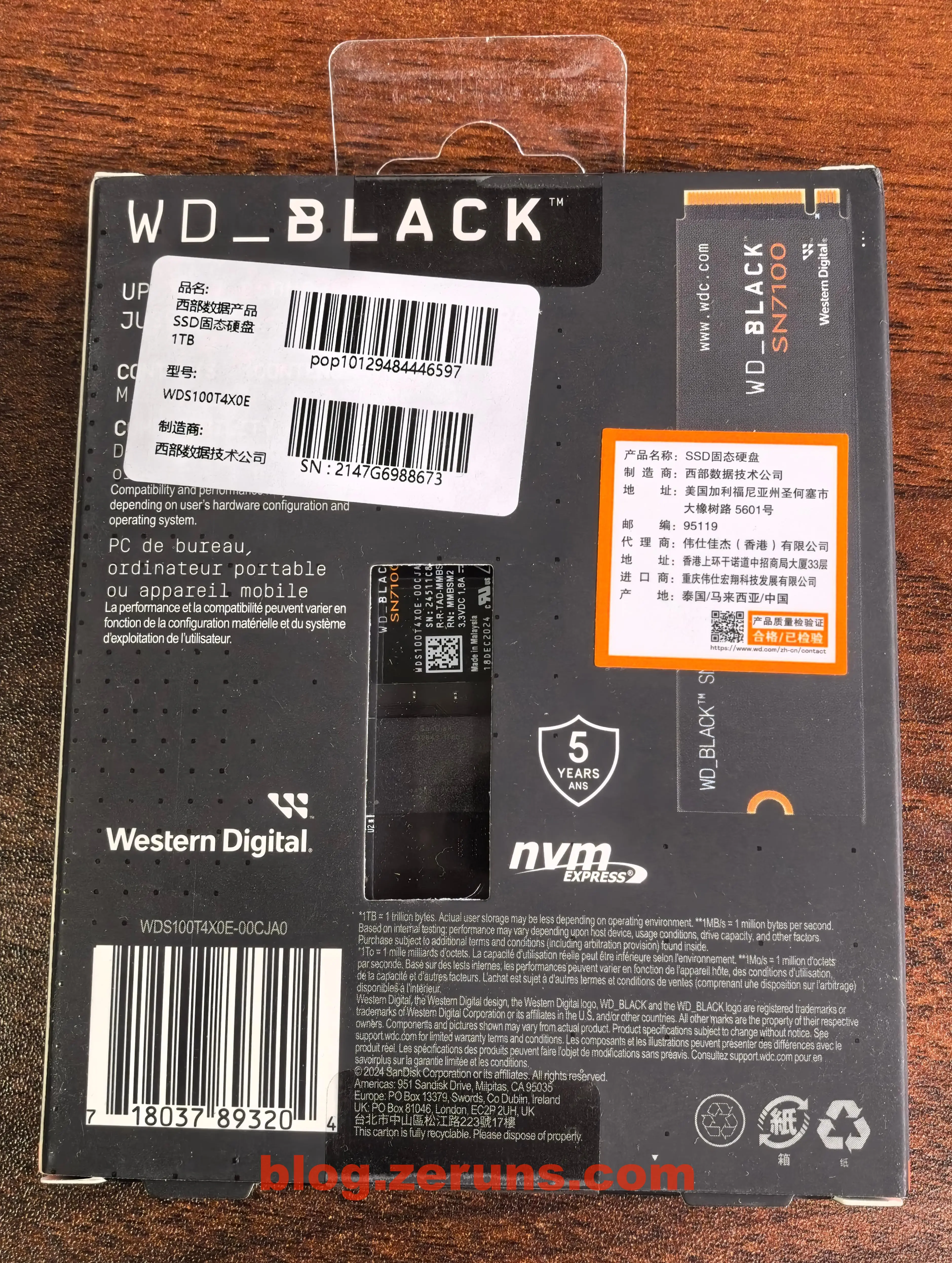
Back of the packaging. The label indicates the manufacturer is Western Digital Technologies, Inc., model number WDS100T4X0E.
After opening the package, the only accessory included is a user manual.
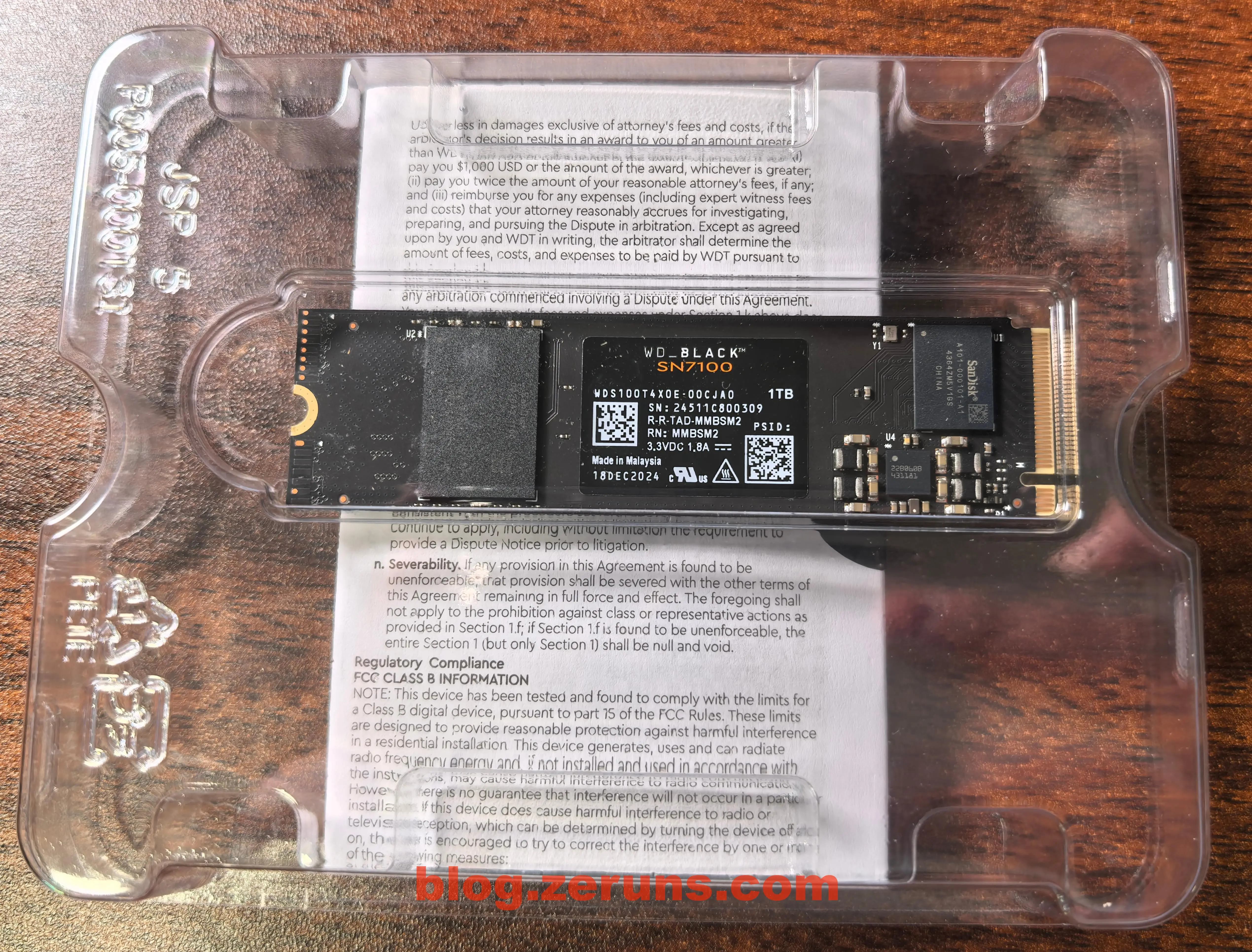
Front side of the SSD. It features only one NAND flash chip, the controller, and a power management IC.
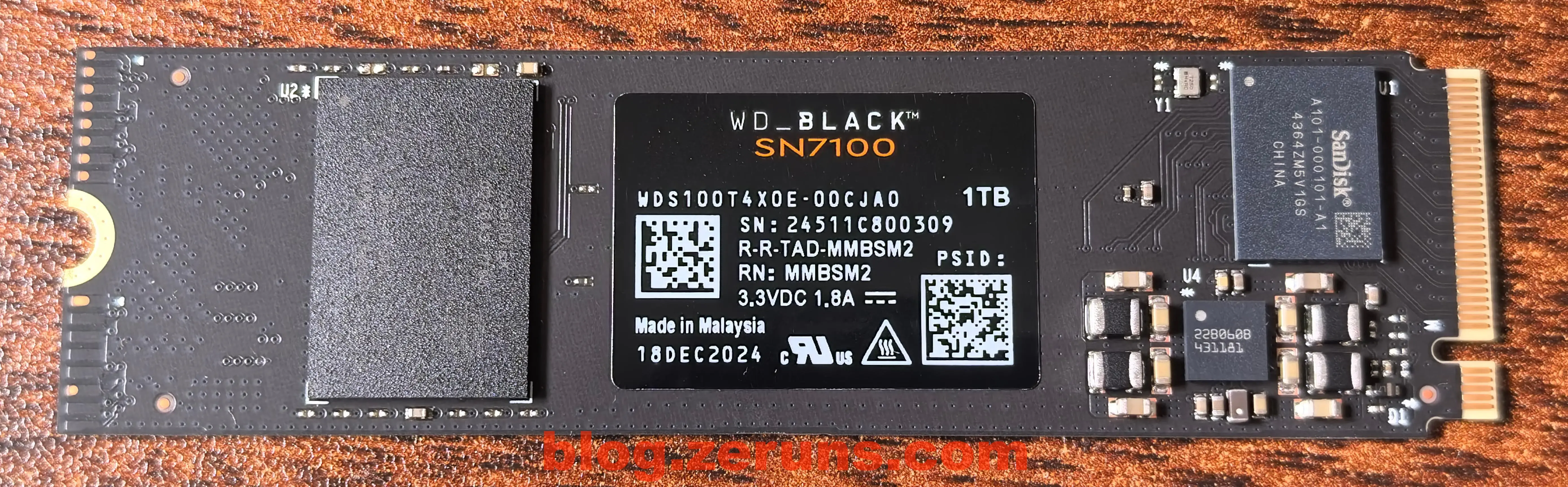
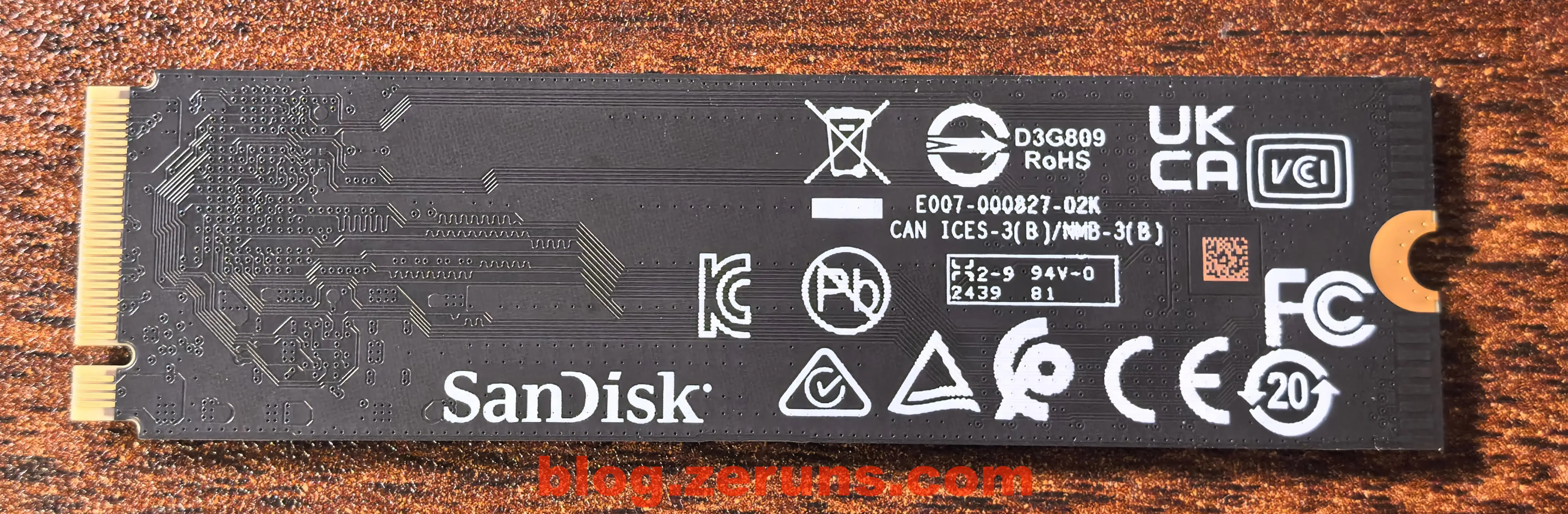
Back side of the SSD. No components are mounted on this side.
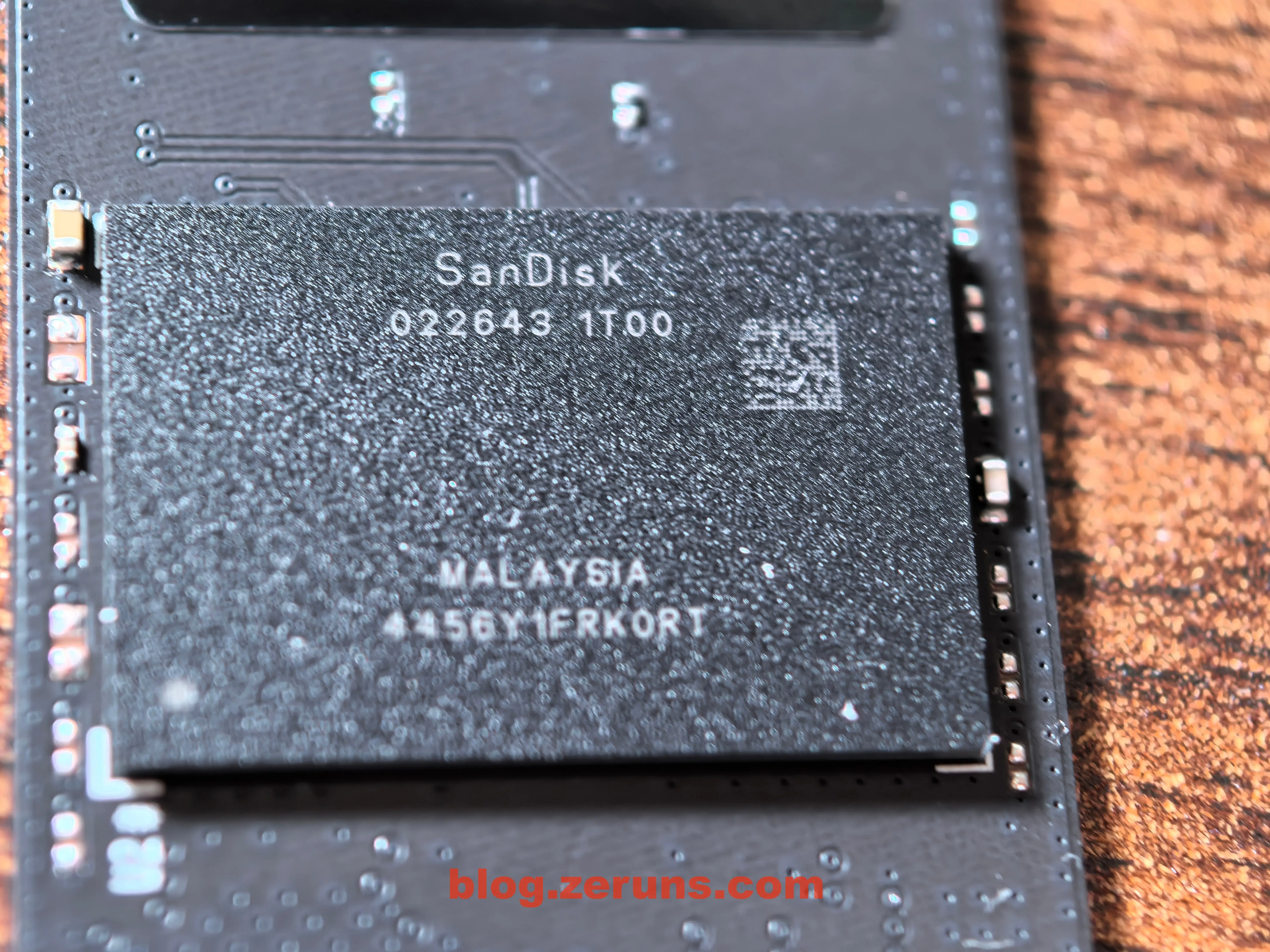
The NAND flash chip is labeled SanDisk 022643 1T00 — the latest generation of 3D NAND TLC flash from SanDisk, a brand under Western Digital. This single die has a capacity of 1TB and uses SanDisk’s newest 218-layer 3D NAND technology. Thanks to innovative lateral shrink techniques, bit density is increased by approximately 50%. Its NAND I/O speed exceeds 3.2 Gb/s, about 60% faster than the previous generation SN770, with around 35% improvement in write performance and read latency. The chip supports NVMe 1.4 and newer NVMe 2.0 standards and is compatible with PCIe 4.0 x4 interfaces. With HMB (Host Memory Buffer) technology, it achieves up to 7250 MB/s sequential read speed and 6900 MB/s sequential write speed, with random read and write performance reaching 1,000K and 1,400K IOPS respectively. Additionally, power consumption and thermal performance are improved over the previous generation.
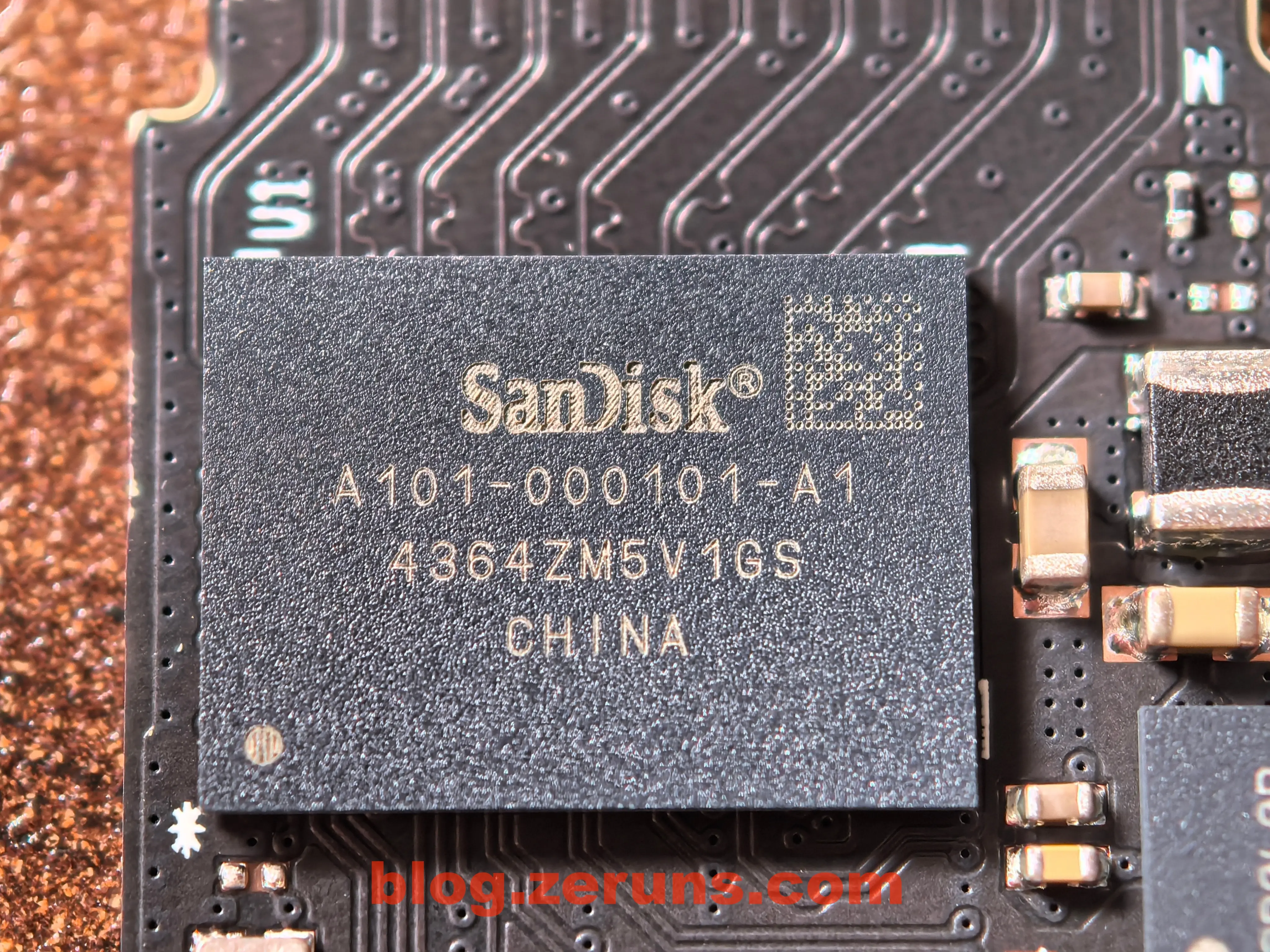
The controller is labeled SanDisk A101-000101-A1, Western Digital’s latest in-house developed Polaris 3 controller (A101-000101-A1). It is a DRAM-less design supporting PCIe Gen4 x4 and NVMe 2.0, powered by a multi-core ARM Cortex-R processor built on TSMC’s 16nm process.
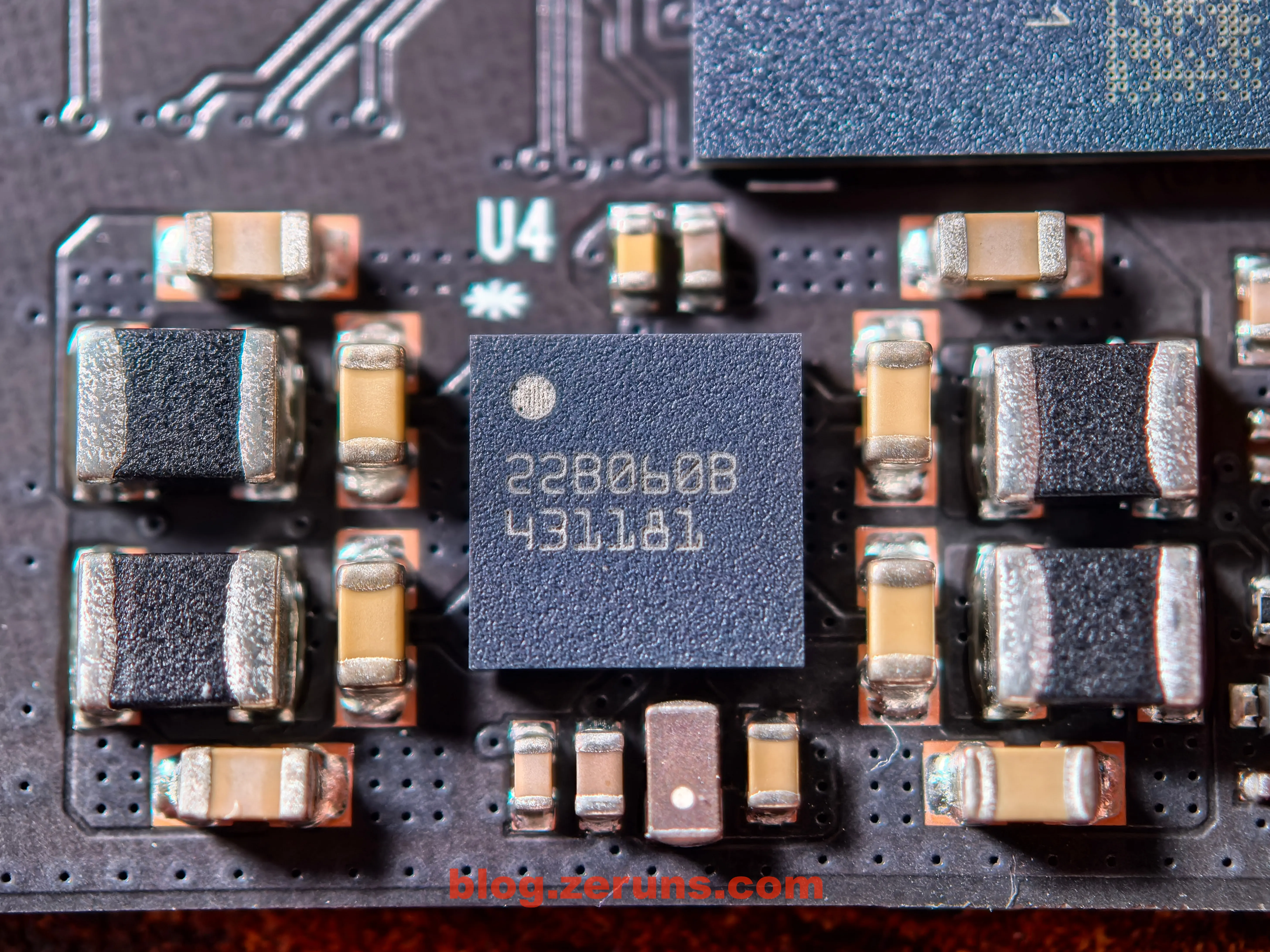
To the right of the controller, the chip marked “22B060B 431181” is the PMIC (Power Management Integrated Circuit), surrounded by MLCC capacitors.
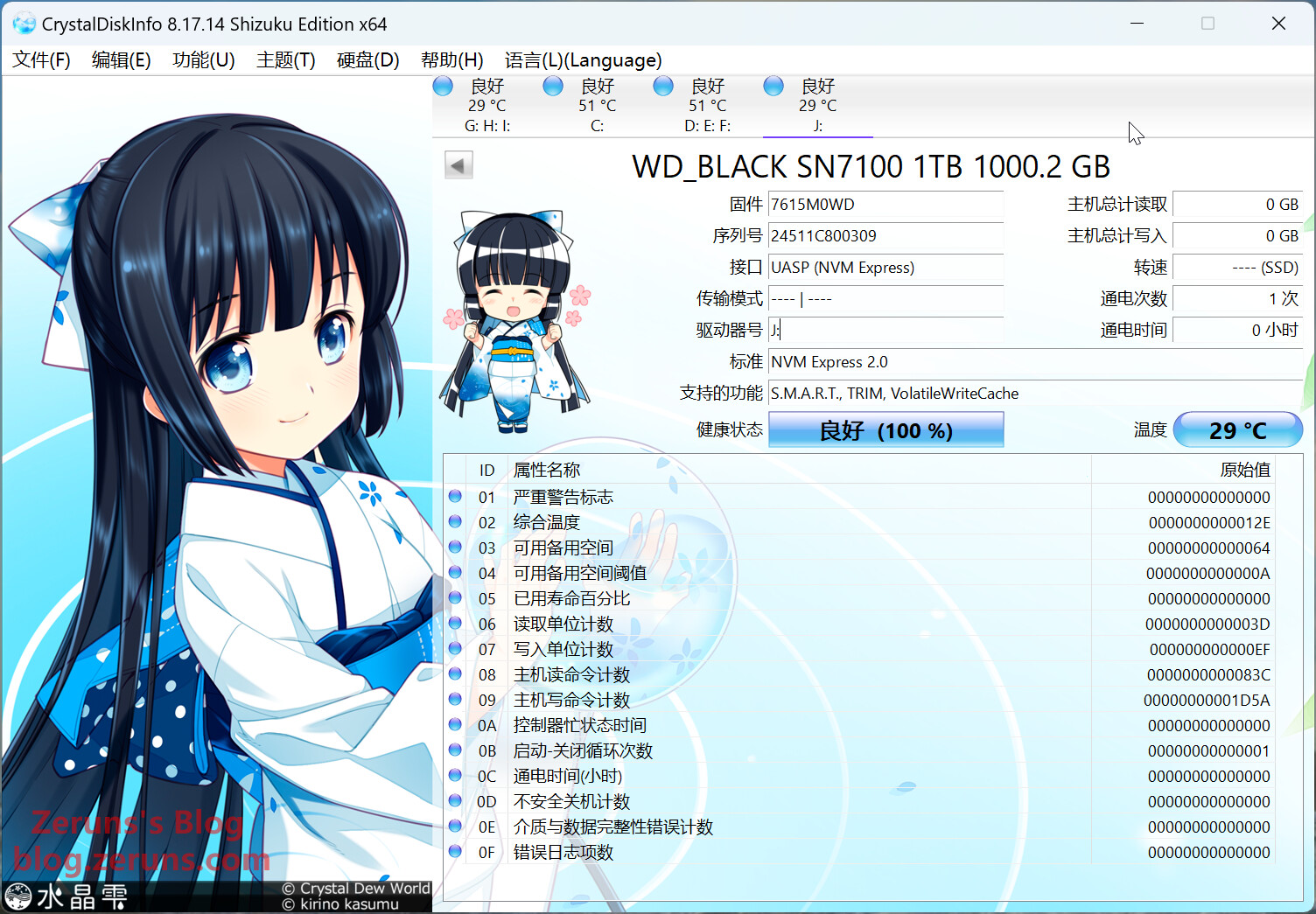
CrystalDiskInfo information as shown below:
Tested on a PC system with an ASUS TUF GAMING B760M-PLUS WIFI D4 motherboard and an Intel i5-14600K CPU. The drive had approximately 400GB of data stored. Using AS SSD Benchmark, the sequential read speed reached 5855.79 MB/s, sequential write speed was 5426.7 MB/s, single-threaded 4K random read speed was 87.92 MB/s, and single-threaded 4K random write speed was 224.33 MB/s.

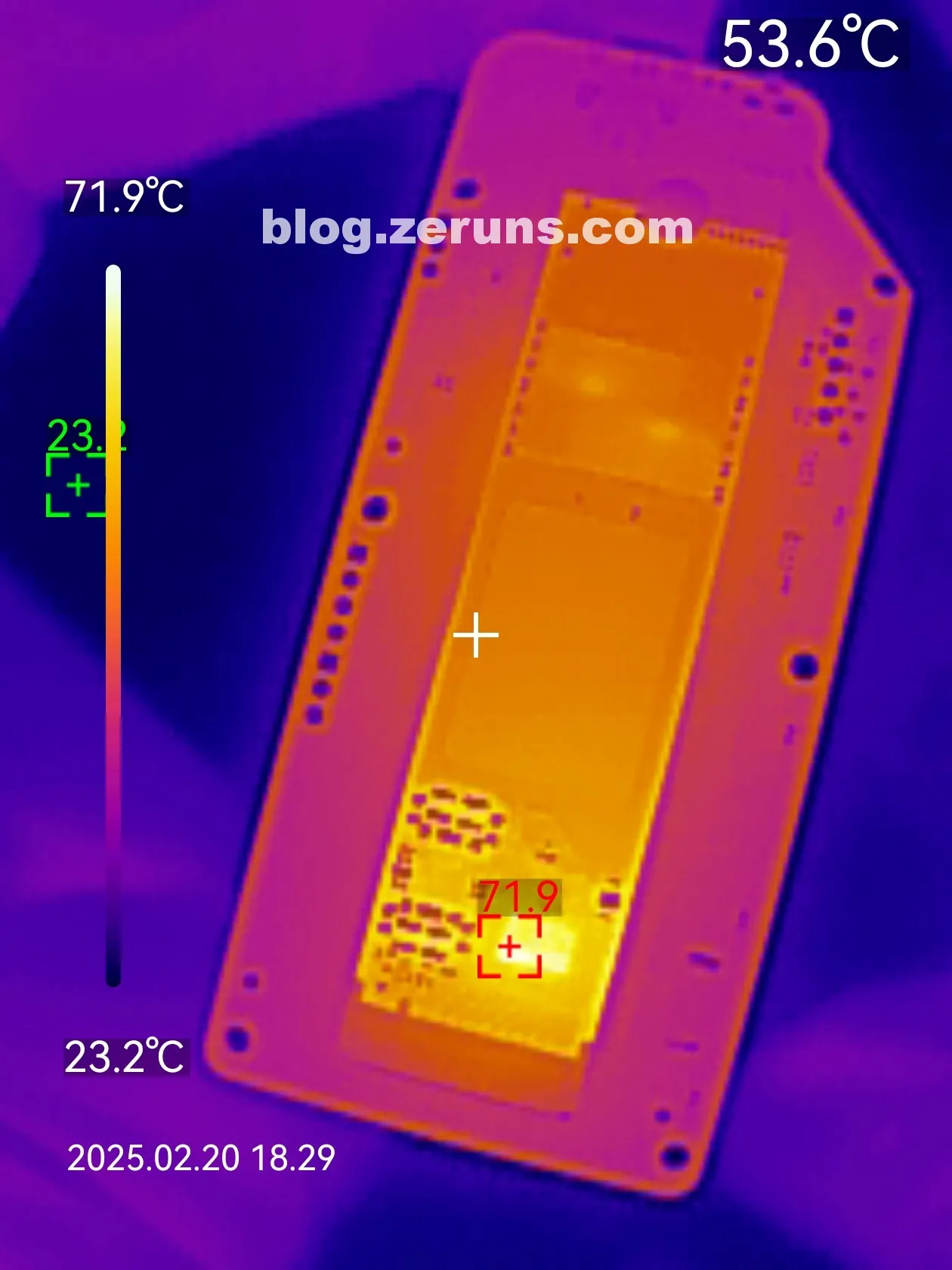
Thermal imaging of the front side during full read/write load. The controller reached a maximum temperature of about 72°C (ambient temperature ~24°C). The controller generates significant heat, while the NAND flash chip remains nearly cool.
Recommended Reading
- Affordable & High-Value VPS/Cloud Server Recommendations: https://blog.zeruns.com/archives/383.html
- Minecraft Server Setup Guide: https://blog.zeruns.com/tag/mc/
- Building a Typecho Personal Blog on a Cloud Server – Step-by-Step Tutorial: https://blog.zeruns.com/archives/749.html
- DeepSeek-R1 Private Deployment Guide | Building an AI Large Language Model on Linux Servers: https://blog.zeruns.com/archives/853.html
- Open-source Synchronous Rectification Buck-Boost Digital Power Supply Based on STM32: https://blog.zeruns.com/archives/791.html
- Open-source 140W+65W Buck-Boost PD3.1 Fast Charging Module (2C+1A Ports), IP6557 + IP6538: https://blog.zeruns.com/archives/801.html
English Version of the Article: https://blog.zeruns.top/archives/46.html